




What is geothermal energy?
Answer
 Verified
630.6k+ views
Hint:The interior of Earth consists of three distinct regions – Crust, Mantle, Outer Core, and Inner Core. The temperature in these regions increases to very higher amounts as one goes down towards the core.
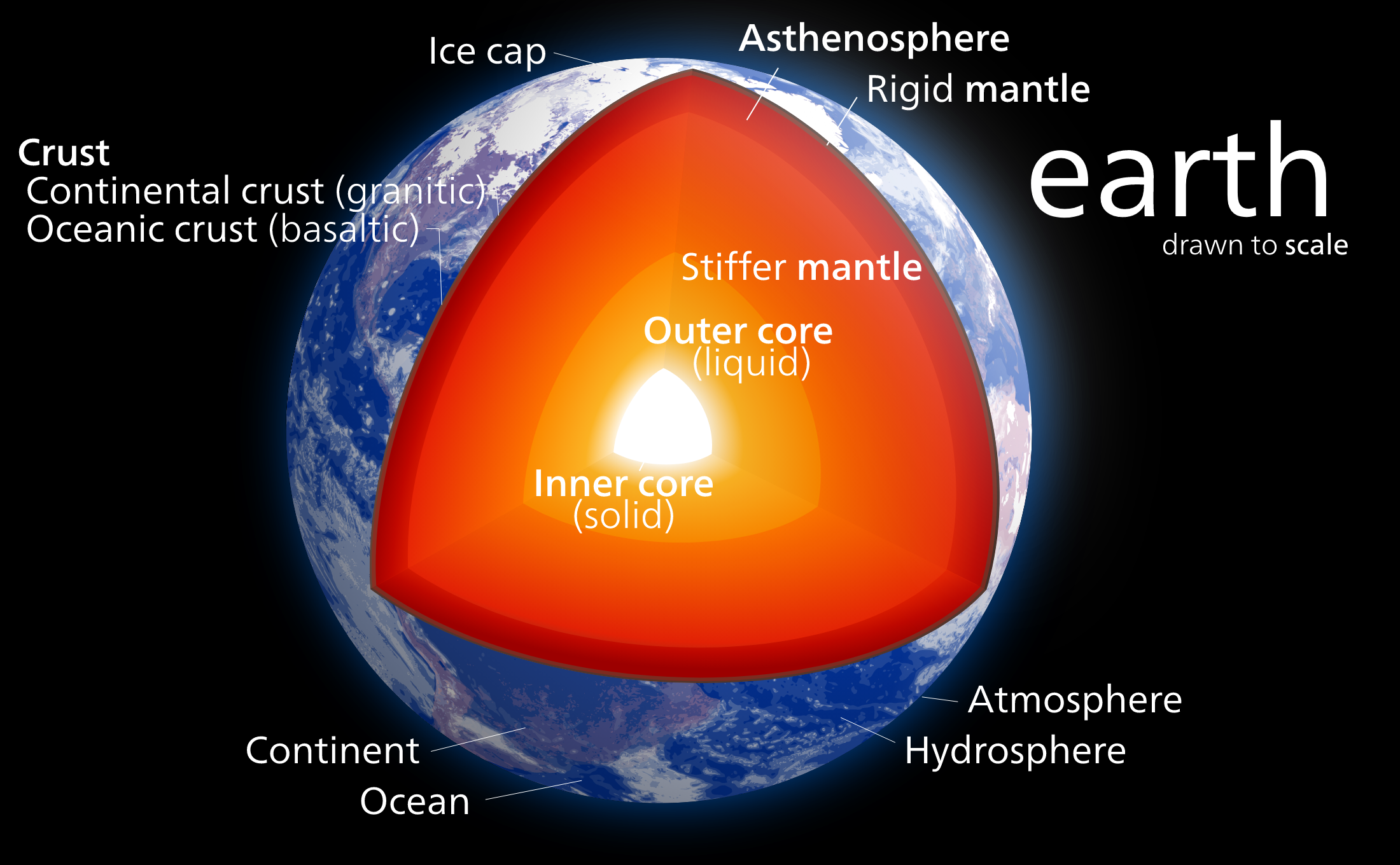
Complete step by step answer:
The geothermal energy is defined as the heat within the Earth. The word geothermal is a combination of two Greek words, geo meaning earth and thermal meaning heat.
The source of the Earth’s interior heat is the thermal energy generated from radioactive decay and the continuous loss of heat from the Earth’s interior. The temperatures at the mantle-core boundary can reach up to a value of ${4000^ \circ }C$. The huge temperature causes the rock to melt and the solid mantle behaves plastically. This causes the heat to move upward in a convective process up to the lower crust. The approximate temperature of the rock and water in the lower crust is about ${400^ \circ }C$.
Geothermal power is cost-efficient, reliable, sustainable, and renewable which opens up a new scope for using it as an alternate source of energy as opposed to conventional sources of energy such as fossil fuels. However, the main disadvantage is that the energy source has been limited to tectonic plate boundaries.
There are two forms in which geothermal energy can be tapped from the earth’s interior – Vapor-dominated and Liquid-dominated forms. Liquid-dominated reservoirs (LDRs) are more common with temperatures greater than 200 °C (392 °F) and are found near young volcanoes surrounding the Pacific Ocean and in rift zones and hot spots. Flash plants are the common way to generate electricity from these sources.
Note: The most natural forms of geothermal energy are hot springs. One of the most famous among them is in the Yellowstone National Park in Wyoming, USA, which is widely known for its huge geothermal features.
Complete step by step answer:
The geothermal energy is defined as the heat within the Earth. The word geothermal is a combination of two Greek words, geo meaning earth and thermal meaning heat.
The source of the Earth’s interior heat is the thermal energy generated from radioactive decay and the continuous loss of heat from the Earth’s interior. The temperatures at the mantle-core boundary can reach up to a value of ${4000^ \circ }C$. The huge temperature causes the rock to melt and the solid mantle behaves plastically. This causes the heat to move upward in a convective process up to the lower crust. The approximate temperature of the rock and water in the lower crust is about ${400^ \circ }C$.
Geothermal power is cost-efficient, reliable, sustainable, and renewable which opens up a new scope for using it as an alternate source of energy as opposed to conventional sources of energy such as fossil fuels. However, the main disadvantage is that the energy source has been limited to tectonic plate boundaries.
There are two forms in which geothermal energy can be tapped from the earth’s interior – Vapor-dominated and Liquid-dominated forms. Liquid-dominated reservoirs (LDRs) are more common with temperatures greater than 200 °C (392 °F) and are found near young volcanoes surrounding the Pacific Ocean and in rift zones and hot spots. Flash plants are the common way to generate electricity from these sources.
Note: The most natural forms of geothermal energy are hot springs. One of the most famous among them is in the Yellowstone National Park in Wyoming, USA, which is widely known for its huge geothermal features.
Recently Updated Pages
Master Class 11 English: Engaging Questions & Answers for Success

Master Class 11 Social Science: Engaging Questions & Answers for Success
Master Class 11 Maths: Engaging Questions & Answers for Success
Master Class 11 Biology: Engaging Questions & Answers for Success
Master Class 11 Physics: Engaging Questions & Answers for Success
Master Class 11 Chemistry: Engaging Questions & Answers for Success
Trending doubts
Explain the Treaty of Vienna of 1815 class 10 social science CBSE
What is the Total Duration of Football Match?
The shortest day of the year in India
In which year voting age was reduced from 21 to 18?
10 examples of evaporation in daily life with explanations
What planets have no moons Which one has only one moon class 10 physics CBSE