




What is a Sigma Molecular orbital?
Answer
 Verified
564k+ views
Hint: We need to know that Albeit the sub-atomic orbital hypothesis is computationally requesting, the standards on which it is based are like those we used to decide electron setups for iotas. The key contrast is that in sub-atomic orbitals, the electrons are permitted to connect with more than each nuclear core in turn. Similarly as with nuclear orbitals, we make an energy-level outline by posting the sub-atomic orbitals arranged by expanding energy. We then, at that point, fill the orbitals with the necessary number of valence electrons as per the Pauli standard. This implies that each sub-atomic orbital can oblige a limit of two electrons with inverse twists.
Complete answer:
We have to remember that sigma bond: sigma bond is framed because of the pivotal covering of two orbitals. Just a single sigma bond can exist between two particles. The Sigma bond is indicated as' \[\sigma \] 'bond. In the Sigma bond the electron thickness is most extreme and it is circularly even about the bond pivot. Free turn about the sigma bond is conceivable. This bond can be autonomously framed, i.e., without the arrangement of a pi bond. Sigma bond is generally solid as contrasted and Pi bond.
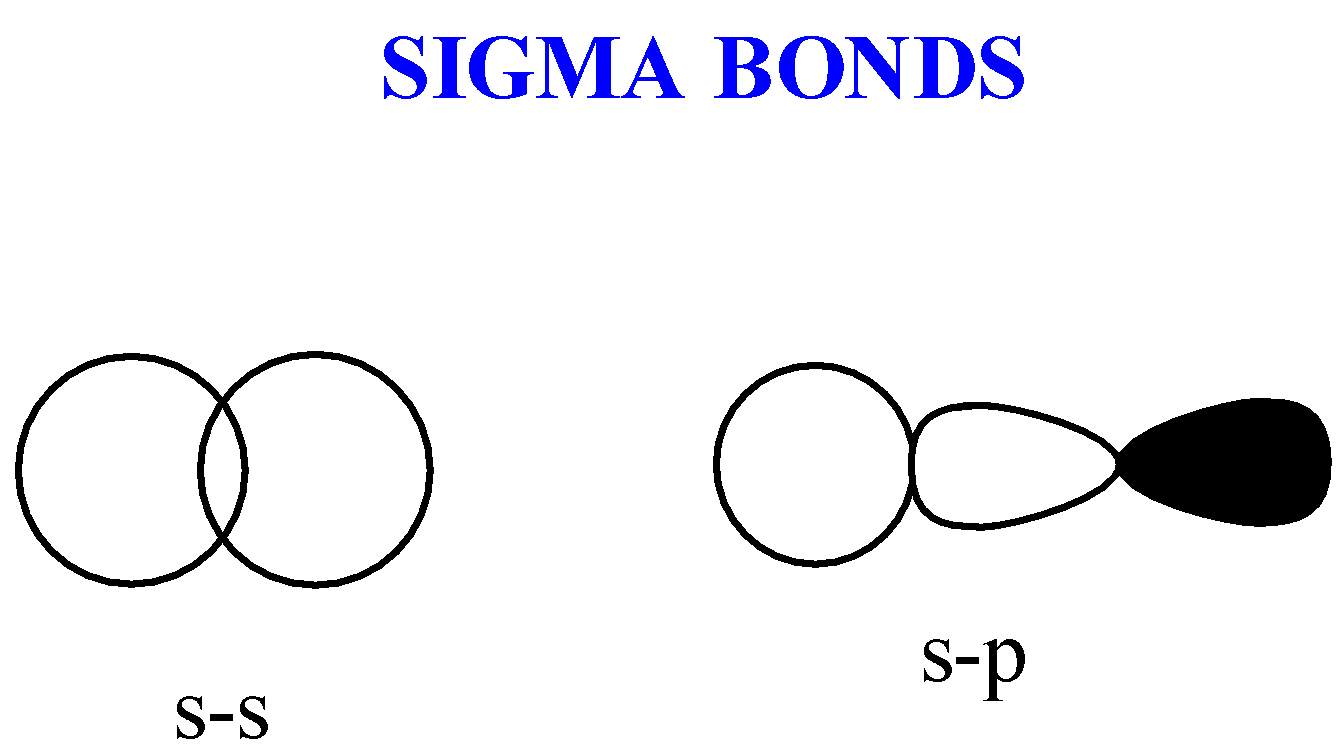
Sigma molecular orbital alludes to the orbitals shaped by the straight on cover of nuclear orbitals along the between atomic pivot. Most extreme cover is found around here and structures a solid bond.
Note:
We must have to remember that the molecular orbitals emerge from permitted communications between nuclear orbitals, which are permitted if the balances (decided from bunch hypothesis) of the nuclear orbitals are viable with one another. Proficiency of nuclear orbital connections is resolved from the cover (a proportion of how well two orbitals valuably collaborate with each other) between two nuclear orbitals, which is huge if the nuclear orbitals are close in energy. At last, the quantity of molecular orbitals framed should be equivalent to the quantity of nuclear orbitals in the particles being consolidated to shape the particle.
Complete answer:
We have to remember that sigma bond: sigma bond is framed because of the pivotal covering of two orbitals. Just a single sigma bond can exist between two particles. The Sigma bond is indicated as' \[\sigma \] 'bond. In the Sigma bond the electron thickness is most extreme and it is circularly even about the bond pivot. Free turn about the sigma bond is conceivable. This bond can be autonomously framed, i.e., without the arrangement of a pi bond. Sigma bond is generally solid as contrasted and Pi bond.
Sigma molecular orbital alludes to the orbitals shaped by the straight on cover of nuclear orbitals along the between atomic pivot. Most extreme cover is found around here and structures a solid bond.
Note:
We must have to remember that the molecular orbitals emerge from permitted communications between nuclear orbitals, which are permitted if the balances (decided from bunch hypothesis) of the nuclear orbitals are viable with one another. Proficiency of nuclear orbital connections is resolved from the cover (a proportion of how well two orbitals valuably collaborate with each other) between two nuclear orbitals, which is huge if the nuclear orbitals are close in energy. At last, the quantity of molecular orbitals framed should be equivalent to the quantity of nuclear orbitals in the particles being consolidated to shape the particle.
Recently Updated Pages
Master Class 11 Social Science: Engaging Questions & Answers for Success

Master Class 11 English: Engaging Questions & Answers for Success
Master Class 11 Accountancy: Engaging Questions & Answers for Success
Master Class 11 Physics: Engaging Questions & Answers for Success
Master Class 11 Computer Science: Engaging Questions & Answers for Success
Master Class 11 Business Studies: Engaging Questions & Answers for Success
Trending doubts
One Metric ton is equal to kg A 10000 B 1000 C 100 class 11 physics CBSE
Draw a diagram of nephron and explain its structur class 11 biology CBSE
10 examples of friction in our daily life
Proton was discovered by A Thomson B Rutherford C Chadwick class 11 chemistry CBSE
Bond order ofO2 O2+ O2 and O22 is in order A O2 langle class 11 chemistry CBSE
10 examples of diffusion in everyday life