




What is a normal respiration rate?
Answer
 Verified
513.9k+ views
Hint: Respiration is the breathing process where a person inhales oxygen and carbon-dioxide out. The cells also break down to obtain energy and sugar. Respiration is the ventilation where air releases from lungs and oxygen comes in. including animals’ plants also respire. The glucose released from other chemical processes is needed.
Complete answer-
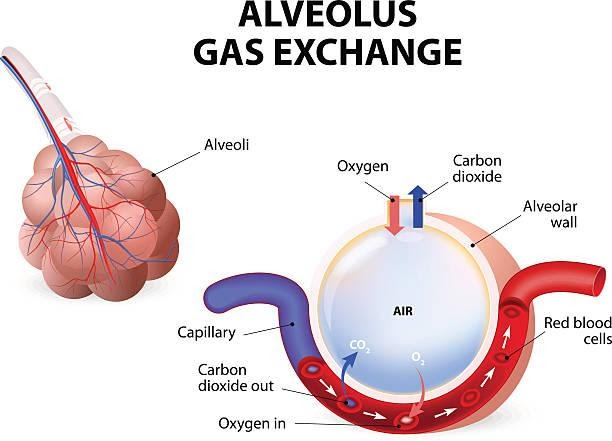
There are different types of respiration-pulmonary ventilation where the air moves in and out from the lungs. Transportation- transporting oxygen and carbon-dioxide from the lungs and tissues. internal respiration- the diffusion of gases from the systemic capillaries between the blood and cells.
Although physiological respiration is necessary to be sustainable in plants. Gas exchanges in the lung by ventilation and perfusion. In mammals’ respiration involves respiratory cycles of inhaled and exhaled breaths. Contraction of the diaphragm muscle causes a pressure variation caused by elastic, resistive and components of the respiratory system. The normal rate in human beings is- $12 - 18$ breaths in one minute. Breathing rate is ranging from $12$ to $25$ breaths per minute.
It is a metabolic process which measures the body’s basic functions. These measurements are taken to respiratory symptoms, the rate of adults and children to measure the rate is abnormal. The rate is defined as the number of breaths a person takes while at rest.
Note:
The number of breaths a person takes a minute is a sign of the brain telling our bodies to breathe. The oxygen levels in blood is low and carbon-dioxide is high as the body is breathing more often. The normal ranges are individuals at rest. Abnormal respiratory rates can be a sign of amiss in the body. Professionals use terms with abnormal respiratory rates.
Complete answer-
There are different types of respiration-pulmonary ventilation where the air moves in and out from the lungs. Transportation- transporting oxygen and carbon-dioxide from the lungs and tissues. internal respiration- the diffusion of gases from the systemic capillaries between the blood and cells.
Although physiological respiration is necessary to be sustainable in plants. Gas exchanges in the lung by ventilation and perfusion. In mammals’ respiration involves respiratory cycles of inhaled and exhaled breaths. Contraction of the diaphragm muscle causes a pressure variation caused by elastic, resistive and components of the respiratory system. The normal rate in human beings is- $12 - 18$ breaths in one minute. Breathing rate is ranging from $12$ to $25$ breaths per minute.
It is a metabolic process which measures the body’s basic functions. These measurements are taken to respiratory symptoms, the rate of adults and children to measure the rate is abnormal. The rate is defined as the number of breaths a person takes while at rest.
Note:
The number of breaths a person takes a minute is a sign of the brain telling our bodies to breathe. The oxygen levels in blood is low and carbon-dioxide is high as the body is breathing more often. The normal ranges are individuals at rest. Abnormal respiratory rates can be a sign of amiss in the body. Professionals use terms with abnormal respiratory rates.
Recently Updated Pages
Master Class 11 Social Science: Engaging Questions & Answers for Success

Master Class 11 English: Engaging Questions & Answers for Success
Master Class 11 Maths: Engaging Questions & Answers for Success
Master Class 11 Chemistry: Engaging Questions & Answers for Success
Master Class 11 Biology: Engaging Questions & Answers for Success
Master Class 11 Physics: Engaging Questions & Answers for Success
Trending doubts
Differentiate between an exothermic and an endothermic class 11 chemistry CBSE
One Metric ton is equal to kg A 10000 B 1000 C 100 class 11 physics CBSE
Difference Between Prokaryotic Cells and Eukaryotic Cells
There are 720 permutations of the digits 1 2 3 4 5 class 11 maths CBSE
Two of the body parts which do not appear in MRI are class 11 biology CBSE
Which gas is abundant in air class 11 chemistry CBSE