




What are Gram-Positive Bacteria?
Answer
 Verified
540k+ views
Hint: Bacteria are classifications of kingdom Monera. Bacteria are of different types- rod shaped, coccus shaped, spiral shaped etc. from the stain test, it is classified that there are two types of bacteria based on- staining one is- gram Positive bacteria and other is gram negative bacteria. They are also broadly classified under cell wall type.
Complete answer:
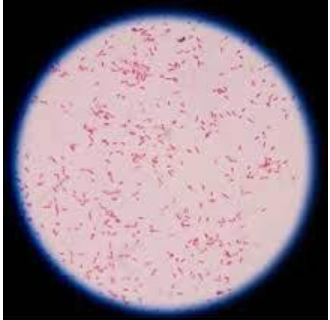
Gram-Positive bacteria are known to be positive because of their cell wall staining, according to the staining test, bacteria are differentiated to be positive and negative in how quickly they stain their cell wall. During any staining test, gram positive bacteria take up stains called crystal violet, and they appear purple-colored when seen through a microscope.
The purple color shows quickly in positive bacteria as compared to negative bacteria because of their thick peptidoglycan layer in the bacterial cell wall which retains the stain after the stain is washed from the sample.
Gram positive bacteria have a thick and large peptidoglycan layer and negative bacteria cell walls are not that porous in nature hence, they cannot take up crystal violet stains and after the decolorization step they shed off the violet color. As alcohol used in decolorization degrades the outer membrane of gram-negative cells, hence it retains the crystal violet stain.
Despite the major differential in both the bacteria, gram positive bacteria are more receptive to certain cell wall targeting antibiotics than gram-negative bacteria. As gram negative bacteria lack the outer membrane or membrane is thin. Examples of gram-positive bacteria are- staphylococci, streptococci, and pneumococci.
Note:
Hence, gram positive and negative bacteria are known from their staining test and gram-negative bacteria are harder to destroy, gram positive bacteria can still cause problems. Recently, gram negative bacteria are developing resistance against diseases and are becoming a threat to life. Example- E. coli which is used as a medium of gene transfer and is hard to destroy because of its resistance power if fatal.
Complete answer:
Gram-Positive bacteria are known to be positive because of their cell wall staining, according to the staining test, bacteria are differentiated to be positive and negative in how quickly they stain their cell wall. During any staining test, gram positive bacteria take up stains called crystal violet, and they appear purple-colored when seen through a microscope.
The purple color shows quickly in positive bacteria as compared to negative bacteria because of their thick peptidoglycan layer in the bacterial cell wall which retains the stain after the stain is washed from the sample.
Gram positive bacteria have a thick and large peptidoglycan layer and negative bacteria cell walls are not that porous in nature hence, they cannot take up crystal violet stains and after the decolorization step they shed off the violet color. As alcohol used in decolorization degrades the outer membrane of gram-negative cells, hence it retains the crystal violet stain.
Despite the major differential in both the bacteria, gram positive bacteria are more receptive to certain cell wall targeting antibiotics than gram-negative bacteria. As gram negative bacteria lack the outer membrane or membrane is thin. Examples of gram-positive bacteria are- staphylococci, streptococci, and pneumococci.
Note:
Hence, gram positive and negative bacteria are known from their staining test and gram-negative bacteria are harder to destroy, gram positive bacteria can still cause problems. Recently, gram negative bacteria are developing resistance against diseases and are becoming a threat to life. Example- E. coli which is used as a medium of gene transfer and is hard to destroy because of its resistance power if fatal.
Recently Updated Pages
Master Class 12 Business Studies: Engaging Questions & Answers for Success

Master Class 12 Chemistry: Engaging Questions & Answers for Success
Master Class 12 Biology: Engaging Questions & Answers for Success
Class 12 Question and Answer - Your Ultimate Solutions Guide
Master Class 11 English: Engaging Questions & Answers for Success
Master Class 11 Social Science: Engaging Questions & Answers for Success
Trending doubts
Which are the Top 10 Largest Countries of the World?
The total number of vertebrae in man is a30 b31 c32 class 12 biology CBSE
Draw a labelled sketch of the human eye class 12 physics CBSE
The number of cranial nerves in a frog is A 10 pairs class 12 biology CBSE
Differentiate between homogeneous and heterogeneous class 12 chemistry CBSE
Differentiate between Pyramid of energy and pyramid class 12 biology CBSE