




Virion is -
(a)Virus in the stage of multiplication
(b)Virus attached to the host cell nucleus
(c)Virus inside the cytoplasm of the host cell
(d)Virus in a cell-free environment
Answer
 Verified
604.5k+ views
Hint: The virion is a version of a virus that is present in a particular medium. There is a marked difference between virion and viruses depending on their location and their stage of infection.
Complete answer:
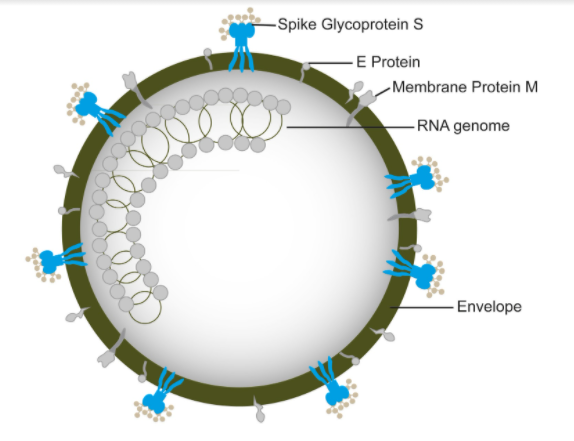
- The virion is the entire virus particle that consists of an outer protein shell known as capsid and an inner core of nucleic acid which is either DNA or RNA.
- The virion capsid protects the genetic material and other proteins. It also confers specificity to the virus. The genetic material and proteins form the core which confers infectivity.
- Virions are formed in the virus production factories or the cytoplasm of the host cells.
Additional Information: - A virus requires a living host cell to multiply.
- They follow two types of the life cycle - the lytic cycle or the lysogenic cycle.
- The viral structure may also contain a coat or envelope made of proteins or enzymes.
- Many of them are icosahedral in shape with regularly arranged units called capsomeres. Virions of plants are rod-shaped and the capsid is naked and cylindrical.
- Since viruses are extremely submicroscopic in size, they can be physically probed by an Atomic Force Microscope (AFM).
So, the correct answer is ‘Virus in a cell-free environment’.
Note: - Sometimes, the structure of the virion may include glycoprotein spicules.
- Virions are different from viroids, where the latter are infectious, non-protein-coding, highly structured small circular RNAs that replicate autonomously and induce diseases in plants.
- Virions can affect all organisms, while viroids can only affect plants.
Complete answer:
- The virion is the entire virus particle that consists of an outer protein shell known as capsid and an inner core of nucleic acid which is either DNA or RNA.
- The virion capsid protects the genetic material and other proteins. It also confers specificity to the virus. The genetic material and proteins form the core which confers infectivity.
- Virions are formed in the virus production factories or the cytoplasm of the host cells.
Additional Information: - A virus requires a living host cell to multiply.
- They follow two types of the life cycle - the lytic cycle or the lysogenic cycle.
- The viral structure may also contain a coat or envelope made of proteins or enzymes.
- Many of them are icosahedral in shape with regularly arranged units called capsomeres. Virions of plants are rod-shaped and the capsid is naked and cylindrical.
- Since viruses are extremely submicroscopic in size, they can be physically probed by an Atomic Force Microscope (AFM).
So, the correct answer is ‘Virus in a cell-free environment’.
Note: - Sometimes, the structure of the virion may include glycoprotein spicules.
- Virions are different from viroids, where the latter are infectious, non-protein-coding, highly structured small circular RNAs that replicate autonomously and induce diseases in plants.
- Virions can affect all organisms, while viroids can only affect plants.
Recently Updated Pages
Master Class 11 Social Science: Engaging Questions & Answers for Success

Master Class 11 English: Engaging Questions & Answers for Success
Master Class 11 Maths: Engaging Questions & Answers for Success
Master Class 11 Chemistry: Engaging Questions & Answers for Success
Master Class 11 Biology: Engaging Questions & Answers for Success
Master Class 11 Physics: Engaging Questions & Answers for Success
Trending doubts
Differentiate between an exothermic and an endothermic class 11 chemistry CBSE
One Metric ton is equal to kg A 10000 B 1000 C 100 class 11 physics CBSE
Difference Between Prokaryotic Cells and Eukaryotic Cells
There are 720 permutations of the digits 1 2 3 4 5 class 11 maths CBSE
Draw a diagram of a plant cell and label at least eight class 11 biology CBSE
Which chemical is known as king of chemicals A H 2 class 11 chemistry CBSE