




Uvula can close the opening of?
Answer
 Verified
516.3k+ views
Hint: Uvula is a soft palate of muscular tissue that is located at the back of the throat. You can clearly see the uvula when you open your mouth. As you breathe, you can see the upward and downward movement of the uvula. The uvula guards the opening of the food pipe (oesophagus) and the airway.
Complete answer:
A diagram of uvula is depicted below:
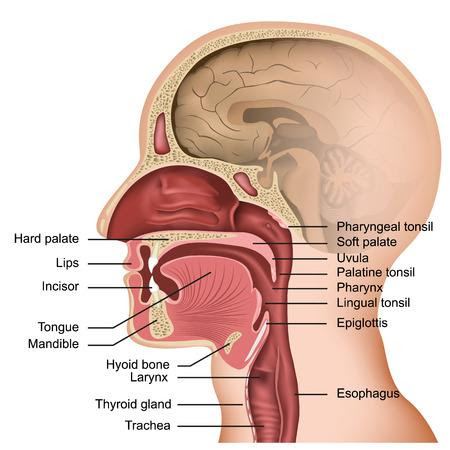
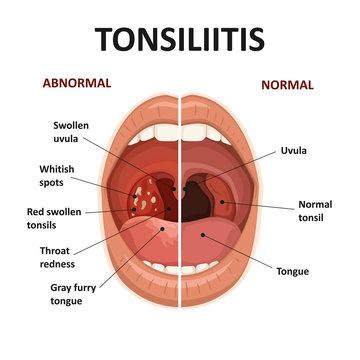
The uvula is also known as palatine uvula. The uvula has a very important function. Uvula blocks the larynx or the opening of the respiratory tract in the throat when we are swallowing food or water, thus preventing entry and blockage of airways by the food particles. It also prevents entry of food into the nasal tract.
The uvula also secretes large volumes of saliva and is believed to have a role in immunology, although this belief has not been confirmed yet.
Note:
One might have heard the term ‘snoring’. This is a peculiar sound that is produced involuntarily by many people when they are in deep sleep. During sleep, the vocal cords present in the larynx along with the muscular folds of the uvula are in a relaxed state. When we exhale, these vocal cords and the soft bulb-like structure of the uvula vibrate, thus producing such sounds. This is not a natural phenomenon but also not a serious ailment. Snoring becomes evident with age as the muscle becomes loose. Reduced tension in the muscles of the uvula may also result in choking.
Complete answer:
A diagram of uvula is depicted below:
The uvula is also known as palatine uvula. The uvula has a very important function. Uvula blocks the larynx or the opening of the respiratory tract in the throat when we are swallowing food or water, thus preventing entry and blockage of airways by the food particles. It also prevents entry of food into the nasal tract.
The uvula also secretes large volumes of saliva and is believed to have a role in immunology, although this belief has not been confirmed yet.
Note:
One might have heard the term ‘snoring’. This is a peculiar sound that is produced involuntarily by many people when they are in deep sleep. During sleep, the vocal cords present in the larynx along with the muscular folds of the uvula are in a relaxed state. When we exhale, these vocal cords and the soft bulb-like structure of the uvula vibrate, thus producing such sounds. This is not a natural phenomenon but also not a serious ailment. Snoring becomes evident with age as the muscle becomes loose. Reduced tension in the muscles of the uvula may also result in choking.
Recently Updated Pages
Master Class 11 English: Engaging Questions & Answers for Success

Master Class 11 Social Science: Engaging Questions & Answers for Success
Master Class 11 Maths: Engaging Questions & Answers for Success
Master Class 11 Chemistry: Engaging Questions & Answers for Success
Master Class 11 Biology: Engaging Questions & Answers for Success
Master Class 11 Physics: Engaging Questions & Answers for Success
Trending doubts
One Metric ton is equal to kg A 10000 B 1000 C 100 class 11 physics CBSE
Difference Between Prokaryotic Cells and Eukaryotic Cells
Find the value of the expression given below sin 30circ class 11 maths CBSE
1 ton equals to A 100 kg B 1000 kg C 10 kg D 10000 class 11 physics CBSE
Two of the body parts which do not appear in MRI are class 11 biology CBSE
Draw a diagram of nephron and explain its structur class 11 biology CBSE