




What type of organism eats both plants and animals?
(a) Herbivore
(b) Carnivore
(c) Omnivore
(d) Autotroph
(e) Detritivore
Answer
 Verified
636.3k+ views
Hint: The collective name for such a group of organisms that thrive both on plants and animals comes from the Latin word omnis, which means all.
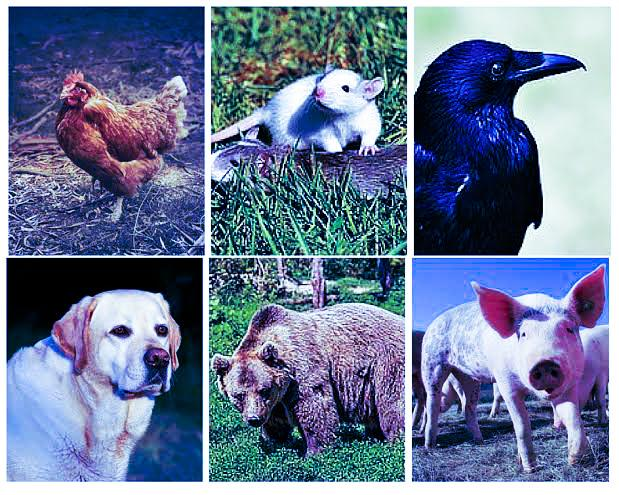
Complete answer: The animals having the ability to eat and survive on both plant and animal matter are known as omnivore animals. Thus they obtain energy and nutrients both from plants and animals. They digest carbohydrates, protein, fat, and fiber, and metabolize the nutrients and energy of the sources absorbed. Also, they often can incorporate food sources such as algae, fungi, and bacteria into their diet.
Additional Information:
1. An autotroph, also called producer, is an organism that can produce its food using light, water, carbon dioxide, or other chemicals. Examples- green plants and algae.
2. A detritivore is a heterotrophic organism. It obtains its nutrition by feeding on the organic matter made up of dead animal and plant remains, known as detritus. Examples- invertebrate insects such as mites and butterflies; mollusks such as slugs and snails; or soil-dwelling earthworms, millipedes and woodlice.
So, the correct answer is ‘omnivore eats both plants and animals’.
Notes:
1. Omnivores come from diverse backgrounds. They often have independently evolved and sophisticated consumption capabilities.
2. For example, dogs have primarily evolved from carnivorous organisms whereas pigs primarily evolved from herbivorous organisms (Artiodactyla).
3. Various animals that are categorized as omnivores can be placed into further sub-categories depending upon their feeding behaviors. For example, Frugivores include maned wolves and orangutans, insectivores include swallows and pink fairy armadillos while granivores include large ground finches and mice.
Complete answer: The animals having the ability to eat and survive on both plant and animal matter are known as omnivore animals. Thus they obtain energy and nutrients both from plants and animals. They digest carbohydrates, protein, fat, and fiber, and metabolize the nutrients and energy of the sources absorbed. Also, they often can incorporate food sources such as algae, fungi, and bacteria into their diet.
Additional Information:
1. An autotroph, also called producer, is an organism that can produce its food using light, water, carbon dioxide, or other chemicals. Examples- green plants and algae.
2. A detritivore is a heterotrophic organism. It obtains its nutrition by feeding on the organic matter made up of dead animal and plant remains, known as detritus. Examples- invertebrate insects such as mites and butterflies; mollusks such as slugs and snails; or soil-dwelling earthworms, millipedes and woodlice.
So, the correct answer is ‘omnivore eats both plants and animals’.
Notes:
1. Omnivores come from diverse backgrounds. They often have independently evolved and sophisticated consumption capabilities.
2. For example, dogs have primarily evolved from carnivorous organisms whereas pigs primarily evolved from herbivorous organisms (Artiodactyla).
3. Various animals that are categorized as omnivores can be placed into further sub-categories depending upon their feeding behaviors. For example, Frugivores include maned wolves and orangutans, insectivores include swallows and pink fairy armadillos while granivores include large ground finches and mice.
Recently Updated Pages
Master Class 11 English: Engaging Questions & Answers for Success

Master Class 11 Social Science: Engaging Questions & Answers for Success
Master Class 11 Maths: Engaging Questions & Answers for Success
Master Class 11 Biology: Engaging Questions & Answers for Success
Master Class 11 Physics: Engaging Questions & Answers for Success
Master Class 11 Chemistry: Engaging Questions & Answers for Success
Trending doubts
One Metric ton is equal to kg A 10000 B 1000 C 100 class 11 physics CBSE
Difference Between Prokaryotic Cells and Eukaryotic Cells
Difference between physical and chemical change class 11 chemistry CBSE
Find the value of the expression given below sin 30circ class 11 maths CBSE
Two of the body parts which do not appear in MRI are class 11 biology CBSE
Draw a diagram of a plant cell and label at least eight class 11 biology CBSE