




To measure the resistance of a device using Ohm’s law the mode of connection used is
A. ammeter in series, voltmeter in parallel
B. voltmeter in series, ammeter in parallel
C. both ammeter and voltmeter in series
D. both ammeter and voltmeter in parallel
Answer
 Verified
558.6k+ views
Hint: Ammeter and voltmeter are devices which are used to determine the values of current flowing through a circuit and potential drop across an element respectively. They work on the underlying principles of Ohm’s law. The current remains constant in a series connection whereas potential difference remains same in a parallel connection.
Complete answer:
An ammeter is a device which works on the core principles of Ohm’s law. It is used to determine the magnitude of current flowing through a circuit. An ammeter is devised such that it has very small or negligible resistance such that it does not hamper the magnitude of current. The negligible resistance offers negligible obstruction to the flow of electrons and accurately determine and report the value of current flowing through the circuit. Now, we know that the current remains the same in the series connection in a circuit. Thus, an ammeter must be connected in series connection in a circuit such that it reports the magnitude of current flowing through that arm of the circuit. If an ammeter is used in parallel, the most of the current would pass through it since it offers less resistance and the ammeter would get damaged.
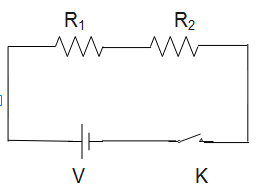
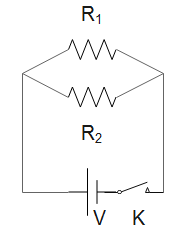
Following are the two circuit diagram of resistance connected in series (a) and resistance connected in parallel (b):
(a)
(b)
A voltmeter is another device used to determine the potential difference between two points in an electrical circuit. It uses Ohm's law to determine the potential at the two points and calculate the potential difference across the two points of an element. A voltmeter is devised in such a way that it has high resistance. Thus, it should be connected in parallel so that no current is passed through it and measures the potential difference across any element. If it is connected in parallel, it will not allow any current to pass through it and will virtually make it an open circuit.
Thus, to measure the resistance of a device using Ohm’s law, ammeter should be used in series and voltmeter in parallel.
Thus, the correct option is (A).
Note:
An ammeter has low resistance whereas a voltmeter has high resistance. Thus, an ammeter should be used in series and voltmeter should be used in parallel. If the ammeter and voltmeter are used in any other configuration, this would hamper the circuit. Wrong connections can even lead to short circuit or damage of instruments.
Complete answer:
An ammeter is a device which works on the core principles of Ohm’s law. It is used to determine the magnitude of current flowing through a circuit. An ammeter is devised such that it has very small or negligible resistance such that it does not hamper the magnitude of current. The negligible resistance offers negligible obstruction to the flow of electrons and accurately determine and report the value of current flowing through the circuit. Now, we know that the current remains the same in the series connection in a circuit. Thus, an ammeter must be connected in series connection in a circuit such that it reports the magnitude of current flowing through that arm of the circuit. If an ammeter is used in parallel, the most of the current would pass through it since it offers less resistance and the ammeter would get damaged.
Following are the two circuit diagram of resistance connected in series (a) and resistance connected in parallel (b):
(a)
(b)
A voltmeter is another device used to determine the potential difference between two points in an electrical circuit. It uses Ohm's law to determine the potential at the two points and calculate the potential difference across the two points of an element. A voltmeter is devised in such a way that it has high resistance. Thus, it should be connected in parallel so that no current is passed through it and measures the potential difference across any element. If it is connected in parallel, it will not allow any current to pass through it and will virtually make it an open circuit.
Thus, to measure the resistance of a device using Ohm’s law, ammeter should be used in series and voltmeter in parallel.
Thus, the correct option is (A).
Note:
An ammeter has low resistance whereas a voltmeter has high resistance. Thus, an ammeter should be used in series and voltmeter should be used in parallel. If the ammeter and voltmeter are used in any other configuration, this would hamper the circuit. Wrong connections can even lead to short circuit or damage of instruments.
Recently Updated Pages
Master Class 11 Computer Science: Engaging Questions & Answers for Success

Master Class 11 Business Studies: Engaging Questions & Answers for Success
Master Class 11 Economics: Engaging Questions & Answers for Success
Master Class 11 English: Engaging Questions & Answers for Success
Master Class 11 Maths: Engaging Questions & Answers for Success
Master Class 11 Biology: Engaging Questions & Answers for Success
Trending doubts
One Metric ton is equal to kg A 10000 B 1000 C 100 class 11 physics CBSE
There are 720 permutations of the digits 1 2 3 4 5 class 11 maths CBSE
Discuss the various forms of bacteria class 11 biology CBSE
Draw a diagram of a plant cell and label at least eight class 11 biology CBSE
State the laws of reflection of light
Explain zero factorial class 11 maths CBSE