




What theory proposes evolution occurs in tiny stages over long periods of time?
Answer
 Verified
524.4k+ views
Hint: Evolution is a natural process that involves modifications in phenotype of a species depending upon the demands of nature. Such a change is generally beneficial for the entire species as it increases their chances of survival.
Complete answer:
The term evolution was coined by Jean-Baptiste Lamarck who proposed the theory of Transmutation of species. The theory that proposes the fact that evolution occurs in tiny stages over long periods of time was given by Charles Darwin. He gave the famous theory of evolution that helped in studying the origin of humans. He discussed this theory of evolution, in his book On the Origin of species. The book described evolution as a slow and steady process that is capable of modifying the individual in terms of its physical structure and their functions.
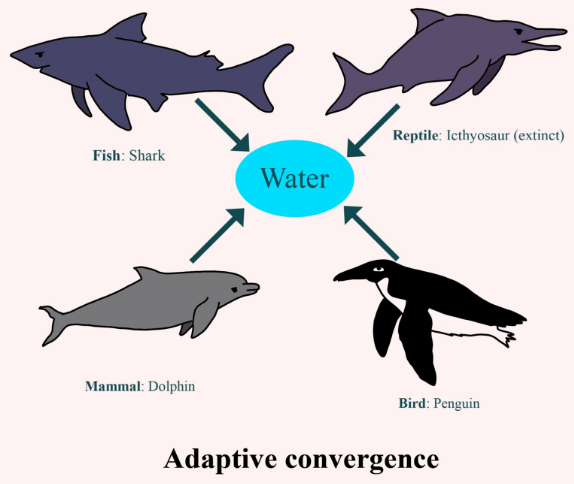
Charles Darwin was basically a naturalist who made a successful attempt to explain the concept of evolution. In his theory he considered that evolution helps the individuals of species to meet, fight and survive the natural hurdles. Nature keeps imposing certain challenges in front of every species at a regular interval of time. Those species who evolve as per the environmental demands are able to fight and survive against these hurdles while others become extinct. Darwin explained that evolution is a time consuming process as it takes ages to modify even minor physical structure.
Note:
Example of evolution in humans - Absence of wisdom teeth in upcoming generations. It is believed that wisdom tooth was a requirement for African ancestors who consumed hard food that was soon replaced with industrialisation as humans started consuming soft food which is thus, eventually leading to disappearance of the wisdom tooth.
Complete answer:
The term evolution was coined by Jean-Baptiste Lamarck who proposed the theory of Transmutation of species. The theory that proposes the fact that evolution occurs in tiny stages over long periods of time was given by Charles Darwin. He gave the famous theory of evolution that helped in studying the origin of humans. He discussed this theory of evolution, in his book On the Origin of species. The book described evolution as a slow and steady process that is capable of modifying the individual in terms of its physical structure and their functions.
Charles Darwin was basically a naturalist who made a successful attempt to explain the concept of evolution. In his theory he considered that evolution helps the individuals of species to meet, fight and survive the natural hurdles. Nature keeps imposing certain challenges in front of every species at a regular interval of time. Those species who evolve as per the environmental demands are able to fight and survive against these hurdles while others become extinct. Darwin explained that evolution is a time consuming process as it takes ages to modify even minor physical structure.
Note:
Example of evolution in humans - Absence of wisdom teeth in upcoming generations. It is believed that wisdom tooth was a requirement for African ancestors who consumed hard food that was soon replaced with industrialisation as humans started consuming soft food which is thus, eventually leading to disappearance of the wisdom tooth.
Recently Updated Pages
Master Class 12 Business Studies: Engaging Questions & Answers for Success

Master Class 12 Chemistry: Engaging Questions & Answers for Success
Master Class 12 Biology: Engaging Questions & Answers for Success
Class 12 Question and Answer - Your Ultimate Solutions Guide
Complete reduction of benzene diazonium chloride with class 12 chemistry CBSE
How can you identify optical isomers class 12 chemistry CBSE
Trending doubts
Which are the Top 10 Largest Countries of the World?
What are the major means of transport Explain each class 12 social science CBSE
Draw a labelled sketch of the human eye class 12 physics CBSE
Differentiate between insitu conservation and exsitu class 12 biology CBSE
Draw a neat and well labeled diagram of TS of ovary class 12 biology CBSE
Differentiate between homogeneous and heterogeneous class 12 chemistry CBSE