




The wall of the left ventricle is thicker than the right ventricle, explain.
Answer
 Verified
629.7k+ views
Hint: The bird and mammalian heart are made up of four chambers – two auricles and two ventricles. The ventricles help to pump blood that reaches to the different body organs.
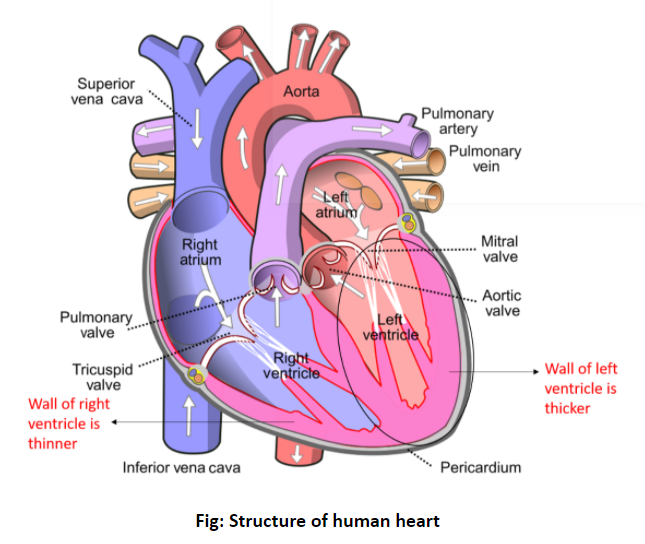
Complete answer: The left atrium is attached with a pulmonary vein that carries oxygenated blood from the lungs to the heat.
1. The left atrium and left ventricle are attached with a mitral valve that passes the oxygenated blood to the left ventricle.
2. The left ventricle then pumps the oxygenated blood to all the body organs by the aorta.
3. On the other hand, the right atrium is attached with superior and inferior vena cava that carries deoxygenated blood from the whole body to the heat.
4. The right atrium and right ventricle are attached with a tricuspid valve that passes the deoxygenated blood to the right ventricle.
5. The right ventricle then pumps the deoxygenated blood to the lung by the pulmonary artery.
6. The wall of the left ventricle is thicker than that of the right one because the left ventricle pumps blood against the gravity so that the oxygenated blood can reach the brain by the carotid artery. If the wall of the left ventricle is not thick then blood will not reach the brain and as a result, the brain will not get oxygen for their work.
Note: The arteries carry oxygenated blood in the body, but the pulmonary artery is the only artery that has an exceptional character of carrying deoxygenated blood. Similarly, the veins carry deoxygenated blood in the body, but the pulmonary vein is the only vein that has an exceptional character of carrying oxygenated blood in the body.
Complete answer: The left atrium is attached with a pulmonary vein that carries oxygenated blood from the lungs to the heat.
1. The left atrium and left ventricle are attached with a mitral valve that passes the oxygenated blood to the left ventricle.
2. The left ventricle then pumps the oxygenated blood to all the body organs by the aorta.
3. On the other hand, the right atrium is attached with superior and inferior vena cava that carries deoxygenated blood from the whole body to the heat.
4. The right atrium and right ventricle are attached with a tricuspid valve that passes the deoxygenated blood to the right ventricle.
5. The right ventricle then pumps the deoxygenated blood to the lung by the pulmonary artery.
6. The wall of the left ventricle is thicker than that of the right one because the left ventricle pumps blood against the gravity so that the oxygenated blood can reach the brain by the carotid artery. If the wall of the left ventricle is not thick then blood will not reach the brain and as a result, the brain will not get oxygen for their work.
Note: The arteries carry oxygenated blood in the body, but the pulmonary artery is the only artery that has an exceptional character of carrying deoxygenated blood. Similarly, the veins carry deoxygenated blood in the body, but the pulmonary vein is the only vein that has an exceptional character of carrying oxygenated blood in the body.
Recently Updated Pages
Master Class 11 English: Engaging Questions & Answers for Success

Master Class 11 Social Science: Engaging Questions & Answers for Success
Master Class 11 Maths: Engaging Questions & Answers for Success
Master Class 11 Biology: Engaging Questions & Answers for Success
Master Class 11 Physics: Engaging Questions & Answers for Success
Master Class 11 Chemistry: Engaging Questions & Answers for Success
Trending doubts
Explain the Treaty of Vienna of 1815 class 10 social science CBSE
What is the Total Duration of Football Match?
The shortest day of the year in India
In which year voting age was reduced from 21 to 18?
10 examples of evaporation in daily life with explanations
What planets have no moons Which one has only one moon class 10 physics CBSE