




The upper limit temperature of the superconductor is
A. 115 K
B. 120 K
C. 125 K
D. 130 K
Answer
 Verified
586.2k+ views
Hint: The conductivity of a material medium depends on various factors like temperature, resistance, surface area, and length of a conductor. A conductor becomes a superconductor under one specific temperature called the critical temperature. The value of this temperature is an observational fact.
Complete answer: Superconductors are substances or materials which allow the current to pass through them without any restrictions which mean no resistance exists to interfere with the current flow. Since there is no obstruction to the flow of the charges in the medium the loss in energy is minimum. $T_C$ is the critical temperature, below this temperature, the electric resistance reduces to zero due to the absence of resistance, the current can flow without loss of energy but achieving zero resistance is very difficult because the vibrations of the molecules still exist even if we go under the critical temperature. Superconductors do not exist at room temperatures. Niobium, magnesium diboride, mercury, lanthanum super hydride are some examples that behave as superconductors below their corresponding critical temperatures.
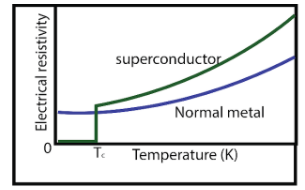
Hence, the upper limit temperature of superconductors is 125 K and the correct option is C.
Note: The value of the critical temperature is a fact. One needs to memorize this.
Superconductivity is very hard to obtain. This characteristic of the substance has many applications:
1. It improves the efficiency as it reduces the loss of energy during transmission.
2. It reduces the size and weight of the applications using superconductors as their basis.
3. They can be used for speed transmissions.
4. They improve the models of satellites and other stations that are sent into space.
Complete answer: Superconductors are substances or materials which allow the current to pass through them without any restrictions which mean no resistance exists to interfere with the current flow. Since there is no obstruction to the flow of the charges in the medium the loss in energy is minimum. $T_C$ is the critical temperature, below this temperature, the electric resistance reduces to zero due to the absence of resistance, the current can flow without loss of energy but achieving zero resistance is very difficult because the vibrations of the molecules still exist even if we go under the critical temperature. Superconductors do not exist at room temperatures. Niobium, magnesium diboride, mercury, lanthanum super hydride are some examples that behave as superconductors below their corresponding critical temperatures.
Hence, the upper limit temperature of superconductors is 125 K and the correct option is C.
Note: The value of the critical temperature is a fact. One needs to memorize this.
Superconductivity is very hard to obtain. This characteristic of the substance has many applications:
1. It improves the efficiency as it reduces the loss of energy during transmission.
2. It reduces the size and weight of the applications using superconductors as their basis.
3. They can be used for speed transmissions.
4. They improve the models of satellites and other stations that are sent into space.
Recently Updated Pages
Master Class 11 Economics: Engaging Questions & Answers for Success

Master Class 11 English: Engaging Questions & Answers for Success
Master Class 11 Maths: Engaging Questions & Answers for Success
Class 11 Question and Answer - Your Ultimate Solutions Guide
Master Class 11 Social Science: Engaging Questions & Answers for Success
Master Class 11 Business Studies: Engaging Questions & Answers for Success
Trending doubts
One Metric ton is equal to kg A 10000 B 1000 C 100 class 11 physics CBSE
There are 720 permutations of the digits 1 2 3 4 5 class 11 maths CBSE
Differentiate between an exothermic and an endothermic class 11 chemistry CBSE
In what year Guru Nanak Dev ji was born A15 April 1469 class 11 social science CBSE
Difference Between Prokaryotic Cells and Eukaryotic Cells
State and prove Bernoullis theorem class 11 physics CBSE