




The thickness of the plasma membrane is
(a)$10-30A°$
(b)$30-50A°$
(c)$50-70A°$
(d)$70-100A°$
Answer
 Verified
639.9k+ views
Hint: The plasma membrane is a selectively permeable membrane that will allow the movement of proteins and other solute molecules. The plasma membrane is a trilaminar structure (i.e., made of 3 layers) and consists of various membrane proteins.
Complete answer:
The plasma membrane consists of a lipid bilayer and its thickness will nearly be $100A°$.
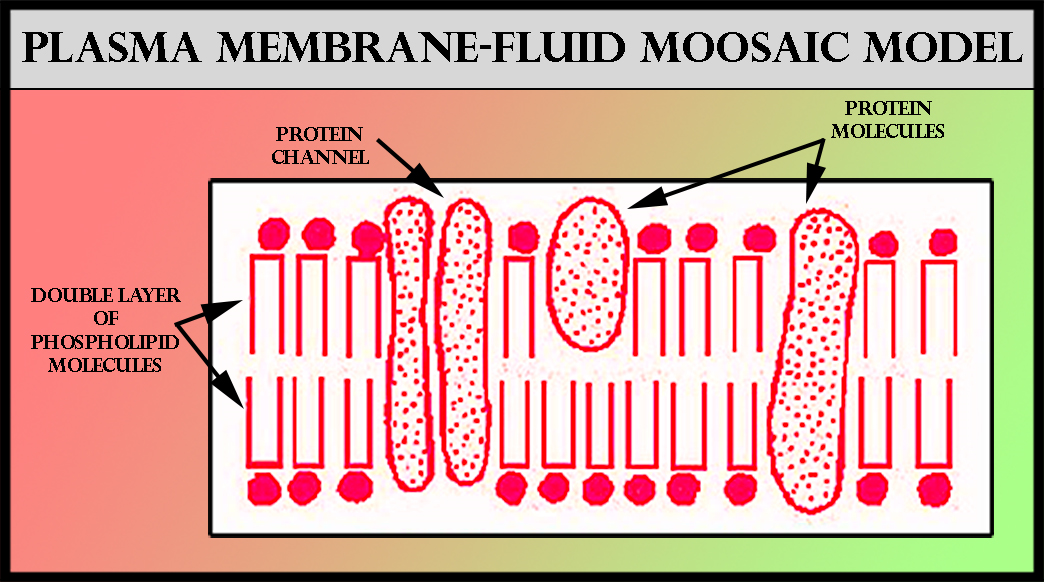
The cell membrane/plasma membrane is a phospholipid bilayer where the polar head (hydrophilic )will face the exterior side and the hydrophobic tail will face the inner side, as shown in the diagram below.
The cell membrane constitutes lipids (specifically phosphoglycerides), carbohydrates, proteins. The proteins present on the membrane can either be integral (present inside the plasma membrane) or peripheral proteins (present on the surface of the plasma membrane).
The widely accepted model of the plasma membrane is ‘the fluid mosaic model’. It states that the lipids are in the quasi fluid state (quasi means ‘resembling’) and thus allows the lateral movement of the proteins between the lipid bilayers. This quasi lipid nature is also crucial for various other cell activities such as cell division, cell proliferation, intercellular junction formation, and endocytosis.
Additional Information:
The function of the plasma membrane
The plasma membrane enables the selective transport of several molecules across it and plays an important role in cell signaling.
Some molecules can move across the plasma membrane without the requirement of the energy. This type of transport is called passive transport. Whereas some molecules will have to travel against the concentration gradient (movement of molecules from the region of lower concentration to the higher concentration region). This kind of transport requires energy and hence is called active transport.
So, the correct answer is, ‘$70-100A°$’.
Note:
The lipid bilayer is non-polar and thus will not permit the polar molecules to pass the plasma membrane. These polar molecules will require carrier protein to facilitate its movement within the membrane. Neutral molecules like water move across the plasma membrane by osmosis.
Complete answer:
The plasma membrane consists of a lipid bilayer and its thickness will nearly be $100A°$.
The cell membrane/plasma membrane is a phospholipid bilayer where the polar head (hydrophilic )will face the exterior side and the hydrophobic tail will face the inner side, as shown in the diagram below.
The cell membrane constitutes lipids (specifically phosphoglycerides), carbohydrates, proteins. The proteins present on the membrane can either be integral (present inside the plasma membrane) or peripheral proteins (present on the surface of the plasma membrane).
The widely accepted model of the plasma membrane is ‘the fluid mosaic model’. It states that the lipids are in the quasi fluid state (quasi means ‘resembling’) and thus allows the lateral movement of the proteins between the lipid bilayers. This quasi lipid nature is also crucial for various other cell activities such as cell division, cell proliferation, intercellular junction formation, and endocytosis.
Additional Information:
The function of the plasma membrane
The plasma membrane enables the selective transport of several molecules across it and plays an important role in cell signaling.
Some molecules can move across the plasma membrane without the requirement of the energy. This type of transport is called passive transport. Whereas some molecules will have to travel against the concentration gradient (movement of molecules from the region of lower concentration to the higher concentration region). This kind of transport requires energy and hence is called active transport.
So, the correct answer is, ‘$70-100A°$’.
Note:
The lipid bilayer is non-polar and thus will not permit the polar molecules to pass the plasma membrane. These polar molecules will require carrier protein to facilitate its movement within the membrane. Neutral molecules like water move across the plasma membrane by osmosis.
Recently Updated Pages
Basicity of sulphurous acid and sulphuric acid are

Master Class 11 English: Engaging Questions & Answers for Success
Master Class 11 Physics: Engaging Questions & Answers for Success
Master Class 11 Computer Science: Engaging Questions & Answers for Success
Master Class 11 Chemistry: Engaging Questions & Answers for Success
Master Class 11 Social Science: Engaging Questions & Answers for Success
Trending doubts
One Metric ton is equal to kg A 10000 B 1000 C 100 class 11 physics CBSE
Draw a diagram of nephron and explain its structur class 11 biology CBSE
What will happen if the mucus is not secreted by the class 11 biology CBSE
Draw a diagram of a plant cell and label at least eight class 11 biology CBSE
What is the purity of pure gold in carat class 11 chemistry CBSE
Lysosomes are known as suicidal bags of cell why class 11 biology CBSE