




The test performed on compound X and their Inference
A- 2,4 -DNP test Coloured precipitate
B- iodoform test Yellow precipitate
C- Azo-dye test No dye formation
Compound X is:
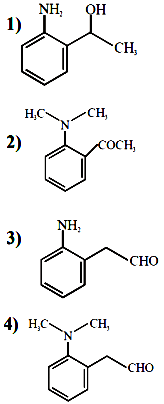
Answer
 Verified
546k+ views
Hint :Azo-Dye Test is performed in order to confirm the presence of aromatic amines. Aromatic amines form diazonium salts when treated with $ HN{O_2}. $
Complete Step By Step Answer:
Azo dyes are widely used to treat textiles, leather articles, and some foods. Chemically related to azo dyes are azo pigments, which are insoluble in water and other solvents.
They are synthetic compounds characterized by one (monoazo) or several intramolecular NQN bonds. Azo dyes, if they are systemically absorbed, can be metabolized via azoreductases of intestinal microflora by liver cells and skin surface bacteria. This metabolism leads to aromatic amines that can be hazardous. There are reportedly around $ \;2000\; $ azo dyes on the market today, representing around $ 60{\text{ }}-{\text{ }}80{\text{ }}\% $ of all organic colorants. They are synthetic compounds characterized by one (monoazo) or several intramolecular NQN bonds. Azo dyes, if they are systemically absorbed, can be metabolized via azoreductases of intestinal microflora by liver cells and skin surface bacteria. This metabolism leads to aromatic amines that can be hazardous
Azo-Dye Test: This test is given by aromatic primary amines.
$ 2,4 $ DNP test is given by aldehydes and ketones Iodoform test by
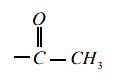
Azo dye test not given by
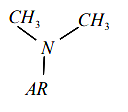
Hence the compound is (B).
Note :
Many Azo dyes are highly toxic to ecosystems and mutagens, meaning they can have acute and chronic effects upon organisms. For example, dye effluent has been connected to growth reduction, neurosensory damage, metabolic stress.
Complete Step By Step Answer:
Azo dyes are widely used to treat textiles, leather articles, and some foods. Chemically related to azo dyes are azo pigments, which are insoluble in water and other solvents.
They are synthetic compounds characterized by one (monoazo) or several intramolecular NQN bonds. Azo dyes, if they are systemically absorbed, can be metabolized via azoreductases of intestinal microflora by liver cells and skin surface bacteria. This metabolism leads to aromatic amines that can be hazardous. There are reportedly around $ \;2000\; $ azo dyes on the market today, representing around $ 60{\text{ }}-{\text{ }}80{\text{ }}\% $ of all organic colorants. They are synthetic compounds characterized by one (monoazo) or several intramolecular NQN bonds. Azo dyes, if they are systemically absorbed, can be metabolized via azoreductases of intestinal microflora by liver cells and skin surface bacteria. This metabolism leads to aromatic amines that can be hazardous
Azo-Dye Test: This test is given by aromatic primary amines.
$ 2,4 $ DNP test is given by aldehydes and ketones Iodoform test by
Azo dye test not given by
Hence the compound is (B).
Note :
Many Azo dyes are highly toxic to ecosystems and mutagens, meaning they can have acute and chronic effects upon organisms. For example, dye effluent has been connected to growth reduction, neurosensory damage, metabolic stress.
Recently Updated Pages
Master Class 11 Social Science: Engaging Questions & Answers for Success

Master Class 11 English: Engaging Questions & Answers for Success
Master Class 11 Maths: Engaging Questions & Answers for Success
Master Class 11 Chemistry: Engaging Questions & Answers for Success
Master Class 11 Biology: Engaging Questions & Answers for Success
Master Class 11 Physics: Engaging Questions & Answers for Success
Trending doubts
Differentiate between an exothermic and an endothermic class 11 chemistry CBSE
One Metric ton is equal to kg A 10000 B 1000 C 100 class 11 physics CBSE
Difference Between Prokaryotic Cells and Eukaryotic Cells
There are 720 permutations of the digits 1 2 3 4 5 class 11 maths CBSE
Draw a diagram of a plant cell and label at least eight class 11 biology CBSE
1 Quintal is equal to a 110 kg b 10 kg c 100kg d 1000 class 11 physics CBSE