




The site of photosynthesis in blue-green algae is
(a) Chromatophores
(b) Mitochondria
(c) Chloroplast
(d) root hair
Answer
 Verified
617.7k+ views
Hint: Blue-green alga is considered one of the first primitive colonizers of any barren land due to its ability to perform photosynthesis. The site of photosynthesis in blue-green algae is an organelle that houses all the pigments required similar to plant cells.
Complete answer:
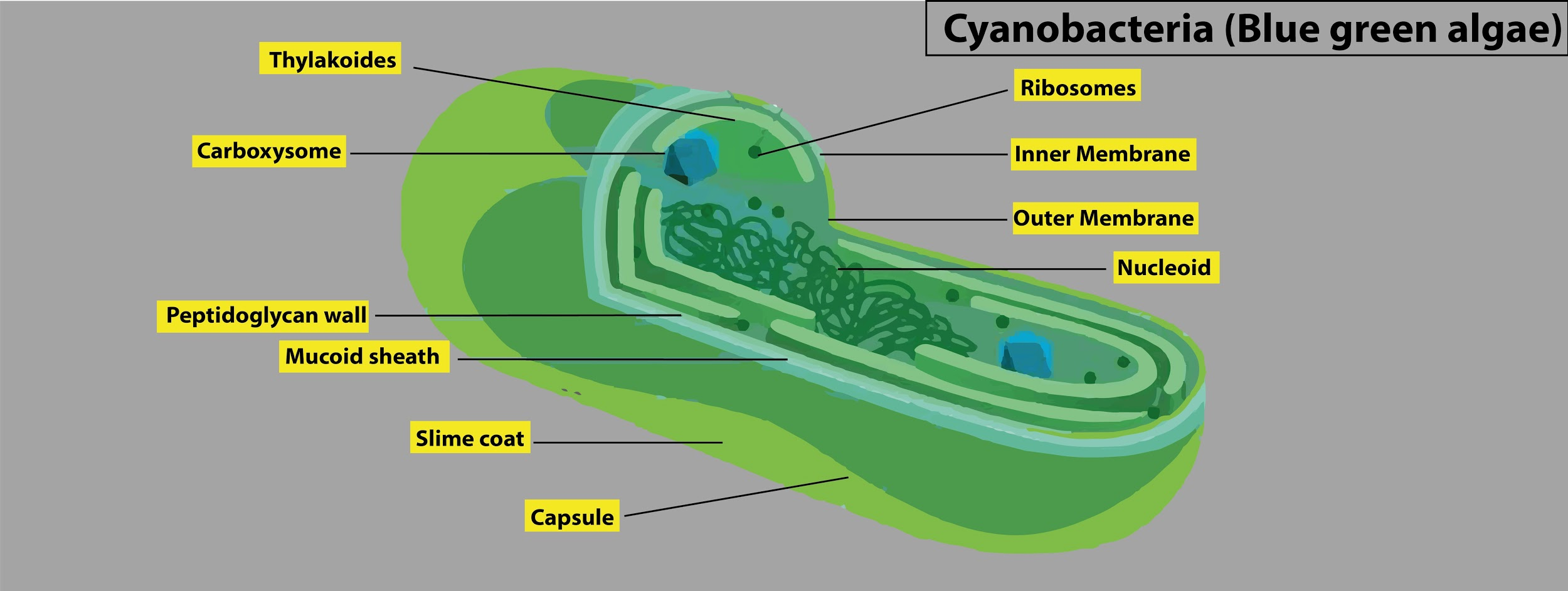
Blue-green algae or cyanobacteria are gram-positive prokaryotes that are capable of performing oxygenic photosynthesis. They are free-living and are found in almost all the habitats and have various shapes and sizes. The cytoplasm of cyanobacteria bears a specialized compartment known as chromatophores. It contains various photosynthetic pigments necessary for performing photosynthesis. These pigments are chlorophyll a, carotenes, and xanthophylls.
So, the correct answer is ‘Chromatophores.’
Additional Information:
- Cyanobacteria may occur as colonies or remain solitary. Some may also exist as filamentous forms where each filament is encapsulated in a mucilage sheath and some cellular strands known as trichomes.
- Spirulina exists as filamentous forms while Nostoc forms colonies.
- The internal organization is like any bacteria with a lack of membrane- bound cell organelles, 70S ribosomes, and naked DNA. But unlike bacteria, their cell wall is thicker as it consists of four- layers of peptidoglycan.
- Mitochondria produces cellular energy in the form of ATP by aerobic respiration, hence, commonly known as ‘powerhouses of the cell’. It is a double membrane- bound organelle with a highly convoluted inner membrane forming characteristic folds known as cristae.
- Chloroplast is a double- membrane organelle found exclusively in plants. Pigments such as chlorophyll and carotenoid pigments are located in the chloroplast. They play a vital role in photosynthesis. The matrix of chloroplasts bears closed flat bags of membranes known as thylakoids bearing pigments.
Note:
- Special cells called heterocysts are present in some filamentous cyanobacteria. These cells are known to perform nitrogen fixation due to the presence of nitrogenase enzymes. This is the reason that species like Anabaena act as fertilizers in the soil by fixing nitrogen and enriching its nitrogen pool.
Complete answer:
Blue-green algae or cyanobacteria are gram-positive prokaryotes that are capable of performing oxygenic photosynthesis. They are free-living and are found in almost all the habitats and have various shapes and sizes. The cytoplasm of cyanobacteria bears a specialized compartment known as chromatophores. It contains various photosynthetic pigments necessary for performing photosynthesis. These pigments are chlorophyll a, carotenes, and xanthophylls.
So, the correct answer is ‘Chromatophores.’
Additional Information:
- Cyanobacteria may occur as colonies or remain solitary. Some may also exist as filamentous forms where each filament is encapsulated in a mucilage sheath and some cellular strands known as trichomes.
- Spirulina exists as filamentous forms while Nostoc forms colonies.
- The internal organization is like any bacteria with a lack of membrane- bound cell organelles, 70S ribosomes, and naked DNA. But unlike bacteria, their cell wall is thicker as it consists of four- layers of peptidoglycan.
- Mitochondria produces cellular energy in the form of ATP by aerobic respiration, hence, commonly known as ‘powerhouses of the cell’. It is a double membrane- bound organelle with a highly convoluted inner membrane forming characteristic folds known as cristae.
- Chloroplast is a double- membrane organelle found exclusively in plants. Pigments such as chlorophyll and carotenoid pigments are located in the chloroplast. They play a vital role in photosynthesis. The matrix of chloroplasts bears closed flat bags of membranes known as thylakoids bearing pigments.
Note:
- Special cells called heterocysts are present in some filamentous cyanobacteria. These cells are known to perform nitrogen fixation due to the presence of nitrogenase enzymes. This is the reason that species like Anabaena act as fertilizers in the soil by fixing nitrogen and enriching its nitrogen pool.
Recently Updated Pages
Master Class 11 English: Engaging Questions & Answers for Success

Master Class 11 Social Science: Engaging Questions & Answers for Success
Master Class 11 Maths: Engaging Questions & Answers for Success
Master Class 11 Biology: Engaging Questions & Answers for Success
Master Class 11 Physics: Engaging Questions & Answers for Success
Master Class 11 Chemistry: Engaging Questions & Answers for Success
Trending doubts
One Metric ton is equal to kg A 10000 B 1000 C 100 class 11 physics CBSE
Difference Between Prokaryotic Cells and Eukaryotic Cells
Find the value of the expression given below sin 30circ class 11 maths CBSE
Two of the body parts which do not appear in MRI are class 11 biology CBSE
Draw a diagram of a plant cell and label at least eight class 11 biology CBSE
10 examples of friction in our daily life