




The scientist who discovered the role of light in photosynthesis was
(A)Sachs
(B)Jan Ingenhousz
(C)Senebier
(D)Priestley
Answer
 Verified
619.2k+ views
Hint: The Scientist who discovered the role of light in photosynthesis was a Dutch physiologist, biologist, and chemist. He was born on 8 December 1730 and took his last breath on 7 September 1799.
Complete answer:
The scientist who discovered the role of light in photosynthesis was Jan Ingenhousz. He is best known for locating photosynthesis by showing that light is important to the process by which green plants absorb $CO_{ 2 }$ and release oxygen. Jan Ingenhousz also discovered that some organisms like plants, like animals, have cellular respiration.
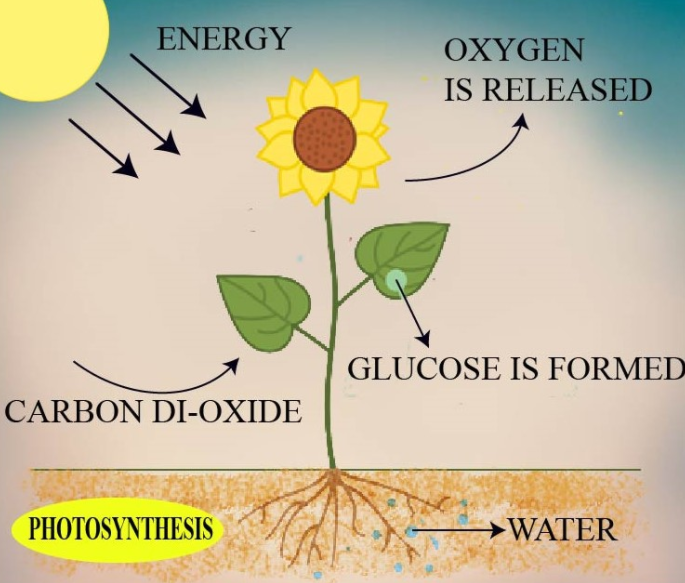
Additional Information: During photosynthesis in green plants, light energy is captured and used to convert water, carbon dioxide, and minerals into oxygen and energy-rich organic compounds. In most cases, oxygen is additionally released as waste. -The process of photosynthesis always starts when the energy from light is absorbed by proteins called reaction centers that contain green-colored pigment chlorophyll. The three main stages of photosynthesis are:
-Harvesting energy - the plant absorbs light with the assistance of chloroplast.
-Converting energy – the plant converts light energy into a usable sort of energy
to fuel the plant’s cells.
-Storing energy – plant uses $CO_{ 2 }$ and water from the soil to convert ATP and
NADPH, leading to the assembly of sugar, fatty acids, and glycerol.
So, the correct answer is ‘Jan Ingenhousz’.
Note: The term photosynthesis originated from the Greek word phos meaning light and synthesis meaning putting together. The first photosynthetic organisms probably evolved early within the evolutionary history of life and possibly used reducing agents like hydrogen or sulfide, instead of water, as sources of electrons.
Complete answer:
The scientist who discovered the role of light in photosynthesis was Jan Ingenhousz. He is best known for locating photosynthesis by showing that light is important to the process by which green plants absorb $CO_{ 2 }$ and release oxygen. Jan Ingenhousz also discovered that some organisms like plants, like animals, have cellular respiration.
Additional Information: During photosynthesis in green plants, light energy is captured and used to convert water, carbon dioxide, and minerals into oxygen and energy-rich organic compounds. In most cases, oxygen is additionally released as waste. -The process of photosynthesis always starts when the energy from light is absorbed by proteins called reaction centers that contain green-colored pigment chlorophyll. The three main stages of photosynthesis are:
-Harvesting energy - the plant absorbs light with the assistance of chloroplast.
-Converting energy – the plant converts light energy into a usable sort of energy
to fuel the plant’s cells.
-Storing energy – plant uses $CO_{ 2 }$ and water from the soil to convert ATP and
NADPH, leading to the assembly of sugar, fatty acids, and glycerol.
So, the correct answer is ‘Jan Ingenhousz’.
Note: The term photosynthesis originated from the Greek word phos meaning light and synthesis meaning putting together. The first photosynthetic organisms probably evolved early within the evolutionary history of life and possibly used reducing agents like hydrogen or sulfide, instead of water, as sources of electrons.
Recently Updated Pages
Master Class 11 English: Engaging Questions & Answers for Success

Master Class 11 Social Science: Engaging Questions & Answers for Success
Master Class 11 Maths: Engaging Questions & Answers for Success
Master Class 11 Biology: Engaging Questions & Answers for Success
Master Class 11 Physics: Engaging Questions & Answers for Success
Master Class 11 Chemistry: Engaging Questions & Answers for Success
Trending doubts
One Metric ton is equal to kg A 10000 B 1000 C 100 class 11 physics CBSE
Difference Between Prokaryotic Cells and Eukaryotic Cells
Find the value of the expression given below sin 30circ class 11 maths CBSE
Difference between physical and chemical change class 11 chemistry CBSE
Two of the body parts which do not appear in MRI are class 11 biology CBSE
Draw a diagram of a plant cell and label at least eight class 11 biology CBSE