




The repolarization phase of cardiac cycle is represented by which portion of an ECG?
A. P
B. QRS
C. S
D. T
Answer
 Verified
524.4k+ views
Hint: ECG or electrocardiogram is a medical test that records electrical signals from our heart to check different abnormalities in shape and size of the heart. Different waves represent depolarization and repolarization of atrial and ventricular muscles.
Complete answer:
Here is the diagrammatic representation of ECG. The information is recorded on a graph and it shows each phase of electric signal.
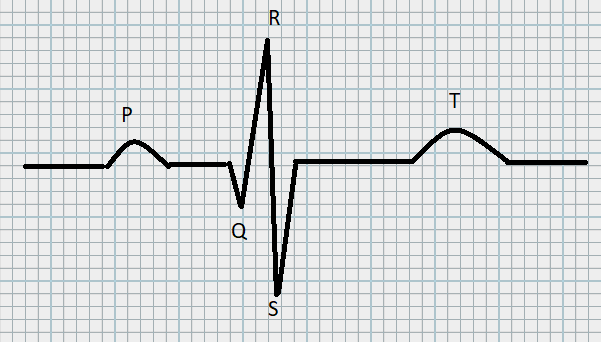
ECG generates a graph that includes intervals and graphs which are elaborated below here.
P wave: ECG starts with a P wave which represents atrial depolarization. Atrial depolarization is the initiation of contraction of atrial muscles which leads to increase the pressure in the atrial chamber which allows blood to move through AV (atrioventricular node) into the ventricle.
QRS Complex: This phase represents the ventricular depolarization. It is the phase in which the atrial relaxes, and the ventricles depolarize followed by contraction in the ventricle.
T wave: It represents the repolarization of ventricles. This is also referred to as an absolutely refractory period or vulnerable period. The morphology and shape of T-wave helps in diagnosing any risk to the ventricular arrhythmias.
So, the repolarization phase of the cardiac cycle is represented by T-Wave. So here the correct answer would be option D: T wave.
Note:
ECG is measured by placing electrodes on the body's surface. The wave generated is called an electrocardiogram. It is recorded at a speed of 25mm/sec. As the speed is standardized one can also measure heartbeat through it.
Complete answer:
Here is the diagrammatic representation of ECG. The information is recorded on a graph and it shows each phase of electric signal.
ECG generates a graph that includes intervals and graphs which are elaborated below here.
P wave: ECG starts with a P wave which represents atrial depolarization. Atrial depolarization is the initiation of contraction of atrial muscles which leads to increase the pressure in the atrial chamber which allows blood to move through AV (atrioventricular node) into the ventricle.
QRS Complex: This phase represents the ventricular depolarization. It is the phase in which the atrial relaxes, and the ventricles depolarize followed by contraction in the ventricle.
T wave: It represents the repolarization of ventricles. This is also referred to as an absolutely refractory period or vulnerable period. The morphology and shape of T-wave helps in diagnosing any risk to the ventricular arrhythmias.
So, the repolarization phase of the cardiac cycle is represented by T-Wave. So here the correct answer would be option D: T wave.
Note:
ECG is measured by placing electrodes on the body's surface. The wave generated is called an electrocardiogram. It is recorded at a speed of 25mm/sec. As the speed is standardized one can also measure heartbeat through it.
Recently Updated Pages
Master Class 11 Computer Science: Engaging Questions & Answers for Success

Master Class 11 Business Studies: Engaging Questions & Answers for Success
Master Class 11 Economics: Engaging Questions & Answers for Success
Master Class 11 English: Engaging Questions & Answers for Success
Master Class 11 Maths: Engaging Questions & Answers for Success
Master Class 11 Biology: Engaging Questions & Answers for Success
Trending doubts
One Metric ton is equal to kg A 10000 B 1000 C 100 class 11 physics CBSE
There are 720 permutations of the digits 1 2 3 4 5 class 11 maths CBSE
Discuss the various forms of bacteria class 11 biology CBSE
Draw a diagram of a plant cell and label at least eight class 11 biology CBSE
State the laws of reflection of light
Explain zero factorial class 11 maths CBSE