



The plant cells do not possess
(a) Ribosomes
(b) Mitochondria
(c) Endoplasmic reticulum
(d) Centrioles
Answer
 Verified
563.1k+ views
Hint: The cell organelle which is made up of a specialized protein called tubulin. Their main function arises during the process of cell division where the production of cilia occurs during the interphase while the aster and the spindle fibers occur during the cell division.
Complete answer:
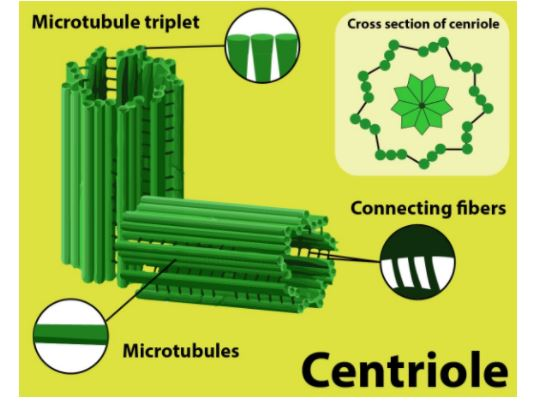
The centriole is the cell organelle that is absent in the plant cells and only found in the animal cells. It is an organelle that is cylindrical and composed of proteins known as tubulin and lacks DNA. They are the characteristics of a eukaryotic cell where a pair of centrioles are found that are surrounded by the pericentriolar material (PCM) which is a highly ordered mass of dense material resulting in the formation of a centrosome. Centrioles are commonly found in certain eukaryotic cells that include the male gametes of charophytes, vascular plants, bryophytes, and ginkgo. Their structure is made up of short microtubule arms triplets that are 9 in number with the additional proteins namely centrin, calnexin, and testing that results in the formation of cilia during interphase and spindle during cell division.
The centrioles mainly function with the organization of the mitotic spindle and results in the completion of cytokinesis. Earlier the Centrioles were thought to be required in the animal cells for the formation of a mitotic spindle. During the process of cellular division, the centrioles can self-replicate. It was found that In non-dividing cells, centrioles also are involved in the formation of flagella and cilia. However, centrosomes were only responsible for the formation of the spindle apparatus as a cellular division.
Note:
In the 1880s Boveri and Van Beneden were the first ones to discover the centriole. It is a non-membranous organelle. The non-membranous organelles are the types of organelles that are not surrounded by a membrane.
Complete answer:
The centriole is the cell organelle that is absent in the plant cells and only found in the animal cells. It is an organelle that is cylindrical and composed of proteins known as tubulin and lacks DNA. They are the characteristics of a eukaryotic cell where a pair of centrioles are found that are surrounded by the pericentriolar material (PCM) which is a highly ordered mass of dense material resulting in the formation of a centrosome. Centrioles are commonly found in certain eukaryotic cells that include the male gametes of charophytes, vascular plants, bryophytes, and ginkgo. Their structure is made up of short microtubule arms triplets that are 9 in number with the additional proteins namely centrin, calnexin, and testing that results in the formation of cilia during interphase and spindle during cell division.
The centrioles mainly function with the organization of the mitotic spindle and results in the completion of cytokinesis. Earlier the Centrioles were thought to be required in the animal cells for the formation of a mitotic spindle. During the process of cellular division, the centrioles can self-replicate. It was found that In non-dividing cells, centrioles also are involved in the formation of flagella and cilia. However, centrosomes were only responsible for the formation of the spindle apparatus as a cellular division.
Note:
In the 1880s Boveri and Van Beneden were the first ones to discover the centriole. It is a non-membranous organelle. The non-membranous organelles are the types of organelles that are not surrounded by a membrane.
Recently Updated Pages
Master Class 12 Economics: Engaging Questions & Answers for Success

Master Class 12 English: Engaging Questions & Answers for Success
Master Class 12 Social Science: Engaging Questions & Answers for Success
Master Class 12 Maths: Engaging Questions & Answers for Success
Master Class 12 Physics: Engaging Questions & Answers for Success
Master Class 9 General Knowledge: Engaging Questions & Answers for Success
Trending doubts
Difference Between Plant Cell and Animal Cell
Fill the blanks with the suitable prepositions 1 The class 9 english CBSE
Find the sum of series 1 + 2 + 3 + 4 + 5 + + 100 class 9 maths CBSE
What is pollution? How many types of pollution? Define it
What is the Full Form of ICSE / ISC ?
Name 10 Living and Non living things class 9 biology CBSE