




The mode of pollination in gymnosperms is
(a) Anemophily
(b) Entomophily
(c) Hydrophily
(d) All of the above
Answer
 Verified
654.3k+ views
Hint: The mode of pollination in gymnosperms is Anemophily (Pollination by wind). The pollen grains are produced from male cones and come in contact with the female cone by air currents (by means of wind). The pollen tube carrying the male gametes grows and discharges their contents near the mouth of the archegonia, which later develops into seed after fertilization.
Following fertilisation, zygote develops into an embryo and the ovules into seeds. These seeds are not covered.
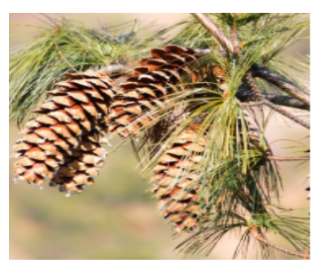
Complete answer: Gymnosperms are spore bearing and naked-seed bearing vascular plants belonging to phanerogamae. All gymnosperms are heterosporous; they produce haploid microspores and megaspores. The male or female cones may be borne on the same tree as in Pinus or on different trees as in cycas.
Unlike bryophytes and pteridophytes, in gymnosperms the male and the female gametophytes do not have an independent free-living existence. The male and female gamete remains within the sporangia retained on the sporophytes. The pollen grain is released from the microsporangium.
They are carried via air currents (anemophily) and come in contact with the opening of the ovules borne on megasporophylls. A pollen tube is formed by male gametophytes for fertilization. Following fertilisation, zygote develops into an embryo and the ovules into seeds. These seeds are not covered.
The correct answer is , ‘The mode of pollination in gymnosperms is Anemophily’ (Pollination by wind).
Note:Although gymnosperms undergo wind pollination, cycads, unlike wind-pollinated conifers and Ginkgo, as they are ancient groups of gymnosperms pollinated by insects. In Ephedra (Gnetales), both wind and insect pollination occurs.
Following fertilisation, zygote develops into an embryo and the ovules into seeds. These seeds are not covered.
Complete answer: Gymnosperms are spore bearing and naked-seed bearing vascular plants belonging to phanerogamae. All gymnosperms are heterosporous; they produce haploid microspores and megaspores. The male or female cones may be borne on the same tree as in Pinus or on different trees as in cycas.
Unlike bryophytes and pteridophytes, in gymnosperms the male and the female gametophytes do not have an independent free-living existence. The male and female gamete remains within the sporangia retained on the sporophytes. The pollen grain is released from the microsporangium.
They are carried via air currents (anemophily) and come in contact with the opening of the ovules borne on megasporophylls. A pollen tube is formed by male gametophytes for fertilization. Following fertilisation, zygote develops into an embryo and the ovules into seeds. These seeds are not covered.
The correct answer is , ‘The mode of pollination in gymnosperms is Anemophily’ (Pollination by wind).
Note:Although gymnosperms undergo wind pollination, cycads, unlike wind-pollinated conifers and Ginkgo, as they are ancient groups of gymnosperms pollinated by insects. In Ephedra (Gnetales), both wind and insect pollination occurs.
Recently Updated Pages
Master Class 11 Social Science: Engaging Questions & Answers for Success

Master Class 11 English: Engaging Questions & Answers for Success
Master Class 11 Accountancy: Engaging Questions & Answers for Success
Master Class 11 Physics: Engaging Questions & Answers for Success
Master Class 11 Computer Science: Engaging Questions & Answers for Success
Master Class 11 Business Studies: Engaging Questions & Answers for Success
Trending doubts
One Metric ton is equal to kg A 10000 B 1000 C 100 class 11 physics CBSE
Find the value of the expression given below sin 30circ class 11 maths CBSE
Draw a diagram of nephron and explain its structur class 11 biology CBSE
10 examples of friction in our daily life
Proton was discovered by A Thomson B Rutherford C Chadwick class 11 chemistry CBSE
The teeth used for biting and cutting food are called class 11 biology CBSE