




The mechanism of ATP formation both in chloroplast and mitochondria is explained by-
A) Relay pump theory of Godlewski
B) Cholodny- Went model
C) Chemiosmotic theory
D) Munch’s pressure/ mass flow model
Answer
 Verified
513k+ views
Hint: ATP- adenosine tri phosphate is synthesized from ATP synthase by the involvement of ADP and Pi. It is formed from the process of cellular respiration in the mitochondria of cells. It can be formed from distinct cellular processes such as glycolysis. Aerobic respiration produces ATP. Anaerobic does not produce ATP. It is the molecular unit of currency in cells.
Complete explanation:
Option A. Relay pump theory of Godlewski- according to Godlewski, relay pump theory also known as clambering theory denotes that if the lower part of a plant is being chopped off, the upper part of the plant gets affected. The rheumatic change in the osmotic pressure of xylem parenchyma and medullary ray living cells causes the ascent of sapphire. This theory also faces criticism like- the xylem structure does not support the theory. As it has two lateral sides.
Option A is incorrect.
Option B. Cholodny Went model – this model was proposed by the Russian scientist named Nikolai Cholodny. This theory describes the plant hormone auxin. Auxin has only a single purpose of growth controlling in gravitropism and phototropism. The rate of growth depends upon the concentration of auxin. Gravitropism- growth towards gravity or downward growth. Phototropism- growth towards the direction of light or upward growth.
So, option B is also incorrect.
Option C. Chemiosmotic theory- this theory was coined by Peter Mitchell. This theory proposed the thesis that a proton motive force is responsible for the synthesis of ATP. ATP in respiring cells comes across the electrochemical gradient of mitochondria and chloroplast by using energies like \[NADH\] and \[FAD{H_2}\]. Molecules like acetyl coenzyme A act as energy rich intermediate.
So, option C is correct.
Option D. Munch’s pressure/mass flow model- The pressure flow or mass flow model is proposed by Ernst Munch. He described the movement of sap through phloem in this theory. This demonstrates the turgor pressure in the phloem which is also known as hydrostatic pressure. The movement of sap occurs by bulk flow of sugar sources to sugar sink.
So, option D is incorrect.
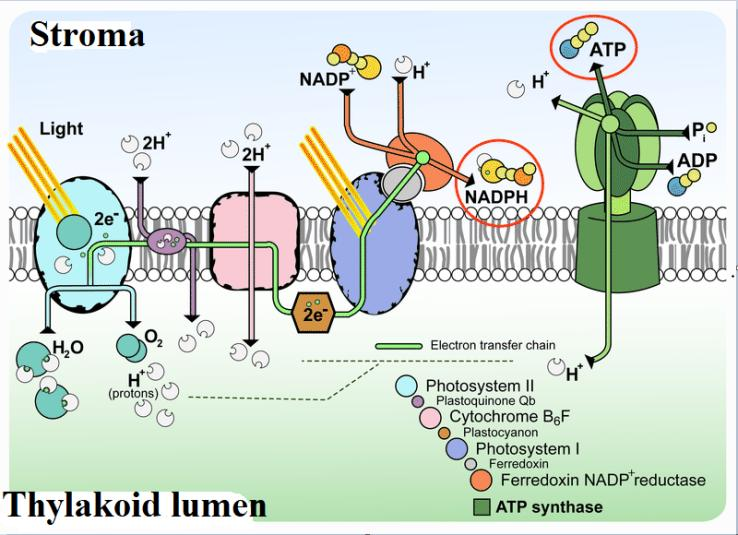
Hence, Option C. is the correct answer.
Note:
ATP is required for all the vital functions in plants to take place. It is mainly synthesized as we know in both chloroplast and mitochondria. It helps the plant to carry all the energy-driving works like food transportation, uptake of minerals from soil, extra water retention.
Complete explanation:
Option A. Relay pump theory of Godlewski- according to Godlewski, relay pump theory also known as clambering theory denotes that if the lower part of a plant is being chopped off, the upper part of the plant gets affected. The rheumatic change in the osmotic pressure of xylem parenchyma and medullary ray living cells causes the ascent of sapphire. This theory also faces criticism like- the xylem structure does not support the theory. As it has two lateral sides.
Option A is incorrect.
Option B. Cholodny Went model – this model was proposed by the Russian scientist named Nikolai Cholodny. This theory describes the plant hormone auxin. Auxin has only a single purpose of growth controlling in gravitropism and phototropism. The rate of growth depends upon the concentration of auxin. Gravitropism- growth towards gravity or downward growth. Phototropism- growth towards the direction of light or upward growth.
So, option B is also incorrect.
Option C. Chemiosmotic theory- this theory was coined by Peter Mitchell. This theory proposed the thesis that a proton motive force is responsible for the synthesis of ATP. ATP in respiring cells comes across the electrochemical gradient of mitochondria and chloroplast by using energies like \[NADH\] and \[FAD{H_2}\]. Molecules like acetyl coenzyme A act as energy rich intermediate.
So, option C is correct.
Option D. Munch’s pressure/mass flow model- The pressure flow or mass flow model is proposed by Ernst Munch. He described the movement of sap through phloem in this theory. This demonstrates the turgor pressure in the phloem which is also known as hydrostatic pressure. The movement of sap occurs by bulk flow of sugar sources to sugar sink.
So, option D is incorrect.
Hence, Option C. is the correct answer.
Note:
ATP is required for all the vital functions in plants to take place. It is mainly synthesized as we know in both chloroplast and mitochondria. It helps the plant to carry all the energy-driving works like food transportation, uptake of minerals from soil, extra water retention.
Recently Updated Pages
Master Class 11 Computer Science: Engaging Questions & Answers for Success

Master Class 11 Business Studies: Engaging Questions & Answers for Success
Master Class 11 Economics: Engaging Questions & Answers for Success
Master Class 11 English: Engaging Questions & Answers for Success
Master Class 11 Maths: Engaging Questions & Answers for Success
Master Class 11 Biology: Engaging Questions & Answers for Success
Trending doubts
One Metric ton is equal to kg A 10000 B 1000 C 100 class 11 physics CBSE
There are 720 permutations of the digits 1 2 3 4 5 class 11 maths CBSE
Discuss the various forms of bacteria class 11 biology CBSE
Draw a diagram of a plant cell and label at least eight class 11 biology CBSE
State the laws of reflection of light
10 examples of friction in our daily life