




The mass of electron, proton and neutron in grams are:
- • $1.108 \times {10^{ - 28}}$, $1.6726 \times {10^{ - 24}}$, $1.675 \times {10^{ - 24}}$
• $9.108 \times {10^{28}}$, $1.6726 \times {10^{24}}$, $1.675 \times {10^{24}}$
• $9.108 \times {10^{ - 24}}$, $1.6726 \times {10^{ - 24}}$, $1.675 \times {10^{24}}$
• $9.108 \times {10^{ - 28}}$, $1.6726 \times {10^{ - 24}}$, $1.675 \times {10^{ - 24}}$
- • $1.108 \times {10^{ - 28}}$, $1.6726 \times {10^{ - 24}}$, $1.675 \times {10^{ - 24}}$
Answer
 Verified
647.7k+ views
Hint: - We must understand the position of electrons, neutrons and protons. For this we must know the structure of an atom,for answers can start here.
Complete answer:
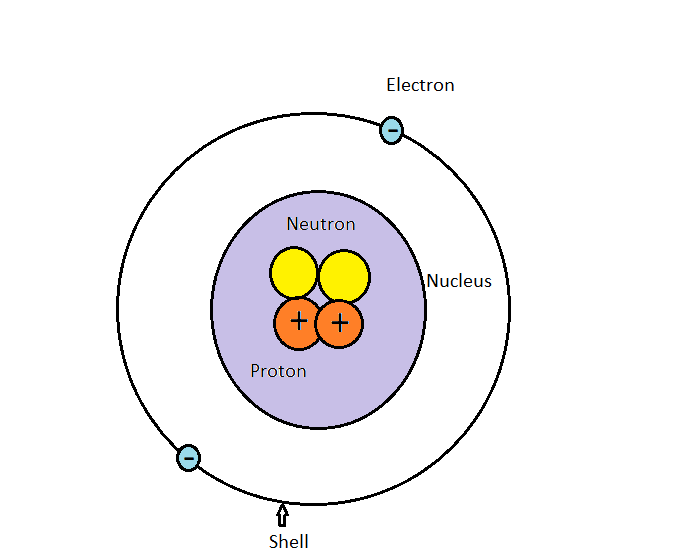
An atom consists of a nucleus in which there is proton and neutron. Protons are positively charged and neutrons are having no charge. Around nucleus electrons rotate in an orbit and it is known as a shell. Electrons are negatively charged. Atoms have different properties based on the arrangement and number of their basic particles.
An electron is a tiny particle with a mass of $9.108 \times {10^{ - 28}}$ g and a negative charge. All neutral atoms contain electrons. The mass of a proton is $1.6726 \times {10^{ - 24}}$ g, or about 1836 times the mass of an electron. The proton carries a positive electrical charge, that is equal in magnitude to the charge of the electron but opposite in sign. Mass of a neutron is $1.675 \times {10^{ - 24}}$ g. It is very close to that of the proton. A neutron carries no charge.
So, our option D is the correct answer. As per this the mass of electron, proton and neutron in grams are:$9.108 \times {10^{ - 28}}$, $1.6726 \times {10^{ - 24}}$, $1.675 \times {10^{ - 24}}$
Note: - In these types of questions we must understand the structure of the atom and the position of a particular element in the periodic table. Structure of an atom is similar to the structure of the solar system in which the sun is stationary and earth revolves around the sun in a fixed orbit.
Complete answer:
An atom consists of a nucleus in which there is proton and neutron. Protons are positively charged and neutrons are having no charge. Around nucleus electrons rotate in an orbit and it is known as a shell. Electrons are negatively charged. Atoms have different properties based on the arrangement and number of their basic particles.
An electron is a tiny particle with a mass of $9.108 \times {10^{ - 28}}$ g and a negative charge. All neutral atoms contain electrons. The mass of a proton is $1.6726 \times {10^{ - 24}}$ g, or about 1836 times the mass of an electron. The proton carries a positive electrical charge, that is equal in magnitude to the charge of the electron but opposite in sign. Mass of a neutron is $1.675 \times {10^{ - 24}}$ g. It is very close to that of the proton. A neutron carries no charge.
So, our option D is the correct answer. As per this the mass of electron, proton and neutron in grams are:$9.108 \times {10^{ - 28}}$, $1.6726 \times {10^{ - 24}}$, $1.675 \times {10^{ - 24}}$
Note: - In these types of questions we must understand the structure of the atom and the position of a particular element in the periodic table. Structure of an atom is similar to the structure of the solar system in which the sun is stationary and earth revolves around the sun in a fixed orbit.
Recently Updated Pages
Master Class 11 English: Engaging Questions & Answers for Success

Master Class 11 Social Science: Engaging Questions & Answers for Success
Master Class 11 Maths: Engaging Questions & Answers for Success
Master Class 11 Biology: Engaging Questions & Answers for Success
Master Class 11 Physics: Engaging Questions & Answers for Success
Master Class 11 Chemistry: Engaging Questions & Answers for Success
Trending doubts
One Metric ton is equal to kg A 10000 B 1000 C 100 class 11 physics CBSE
Difference Between Prokaryotic Cells and Eukaryotic Cells
Find the value of the expression given below sin 30circ class 11 maths CBSE
1 ton equals to A 100 kg B 1000 kg C 10 kg D 10000 class 11 physics CBSE
Two of the body parts which do not appear in MRI are class 11 biology CBSE
What are hard magnetic materials class 11 physics CBSE