




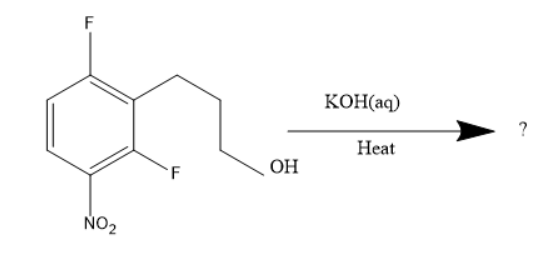
What will be the major product in the following reaction?
(A)
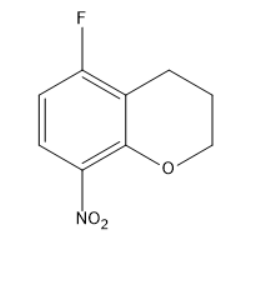
(B)
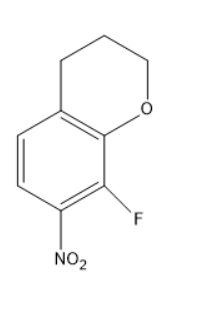
(C)
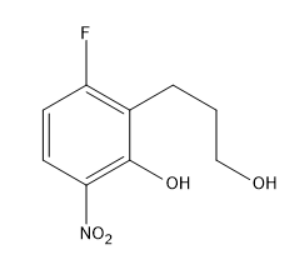
(D)
Answer
 Verified
478.8k+ views
Hint: Aromatic compounds undergo substitution reactions easily. They are two types of substitution reactions namely electrophilic substitution and nucleophilic substitution reactions. When compared to ortho and para positions, the substitution takes place at para position only due to less energy.
Complete answer:
Given compound has one nitro group, two fluorine atoms, one hydroxyl group. When the given compound is treated with a base like potassium hydroxide, undergoes dehydrohalogenation i.e. elimination of molecules like $ HF $ .
In the given compound, the elimination of hydrogen atom from alcohol and fluorine atom from the para position will be removed but not ortho position. This is due to the fact that ortho substitution requires more energy when compared to the para substitution product.
Thus, the fluorine atom which is para to the nitro group was substituted by the alkoxide group. The chemical reaction will be as follows:
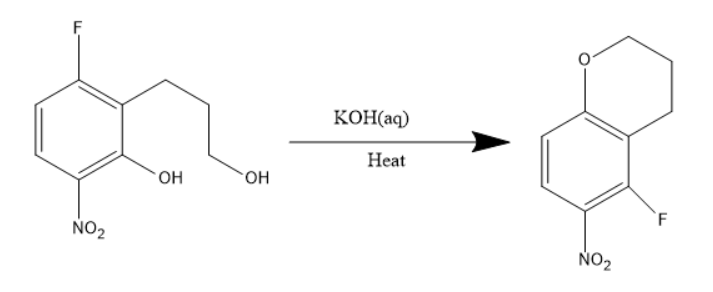
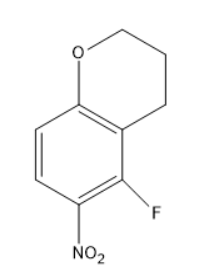
The above product is given in option D.
Option A consists of an ortho-substituted alkoxide product, which requires more energy and is not the major product.
Option B does not consist of an oxygen atom in the proper arrangement.
Option C has the substitution of nucleophile in place of fluorine only, but does not undergo cyclization.
Thus, option D is the correct one.
Note:
Aromatic compounds are stable compounds as they consist of conjugation of pi-electrons, cyclic, planar, and obeying Huckel’s rule. Aromatic compounds undergo only substitution reactions but not addition reactions. As these compounds cannot lose their aromatic character.
Complete answer:
Given compound has one nitro group, two fluorine atoms, one hydroxyl group. When the given compound is treated with a base like potassium hydroxide, undergoes dehydrohalogenation i.e. elimination of molecules like $ HF $ .
In the given compound, the elimination of hydrogen atom from alcohol and fluorine atom from the para position will be removed but not ortho position. This is due to the fact that ortho substitution requires more energy when compared to the para substitution product.
Thus, the fluorine atom which is para to the nitro group was substituted by the alkoxide group. The chemical reaction will be as follows:
The above product is given in option D.
Option A consists of an ortho-substituted alkoxide product, which requires more energy and is not the major product.
Option B does not consist of an oxygen atom in the proper arrangement.
Option C has the substitution of nucleophile in place of fluorine only, but does not undergo cyclization.
Thus, option D is the correct one.
Note:
Aromatic compounds are stable compounds as they consist of conjugation of pi-electrons, cyclic, planar, and obeying Huckel’s rule. Aromatic compounds undergo only substitution reactions but not addition reactions. As these compounds cannot lose their aromatic character.
Recently Updated Pages
Master Class 11 Computer Science: Engaging Questions & Answers for Success

Master Class 11 Business Studies: Engaging Questions & Answers for Success
Master Class 11 Economics: Engaging Questions & Answers for Success
Master Class 11 English: Engaging Questions & Answers for Success
Master Class 11 Maths: Engaging Questions & Answers for Success
Master Class 11 Biology: Engaging Questions & Answers for Success
Trending doubts
One Metric ton is equal to kg A 10000 B 1000 C 100 class 11 physics CBSE
There are 720 permutations of the digits 1 2 3 4 5 class 11 maths CBSE
Discuss the various forms of bacteria class 11 biology CBSE
Draw a diagram of a plant cell and label at least eight class 11 biology CBSE
State the laws of reflection of light
Explain zero factorial class 11 maths CBSE