




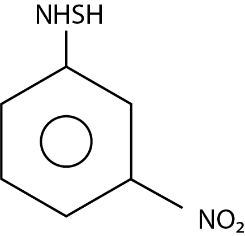
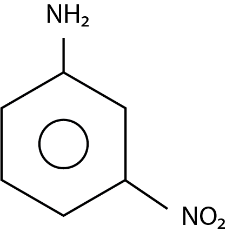
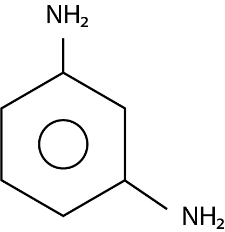
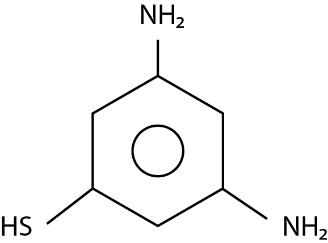
The major product ( $ 70\% $ to $ 80\% $ ) of the reaction between m-dinitrobenzene with $ N{H_4}HS $ is:
(A)
(B)
(C)
(D)
Answer
 Verified
609k+ views
Hint: $ N{H_4}HS $ (ammonium bisulfide), helps in the selective reduction of nitro group to amine group. Selective reduction refers to the reduction of any one of the groups where two similar groups are present. In m-dinitrobenzene, two nitro groups are present. Out of two nitro groups, one will be reduced to $ - N{H_2} $ group. No further effect of reagent will be there on the other nitro group.
Complete step by step solution:
The given reactant is m-dinitrobenzene.
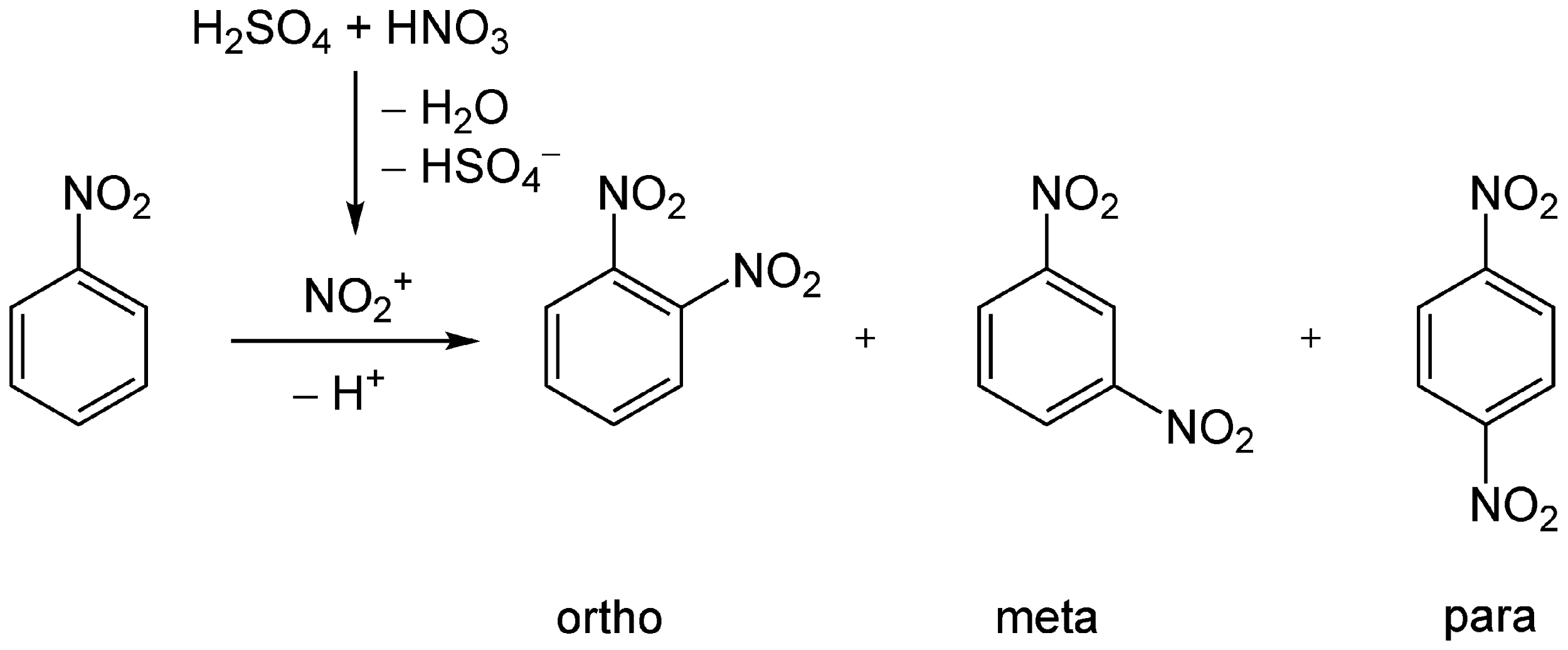
Reduction of dinitrobenzene with ammonium sulphide reduces only one nitro group. This reduction is called zenin reduction.
The desired reaction is given below:
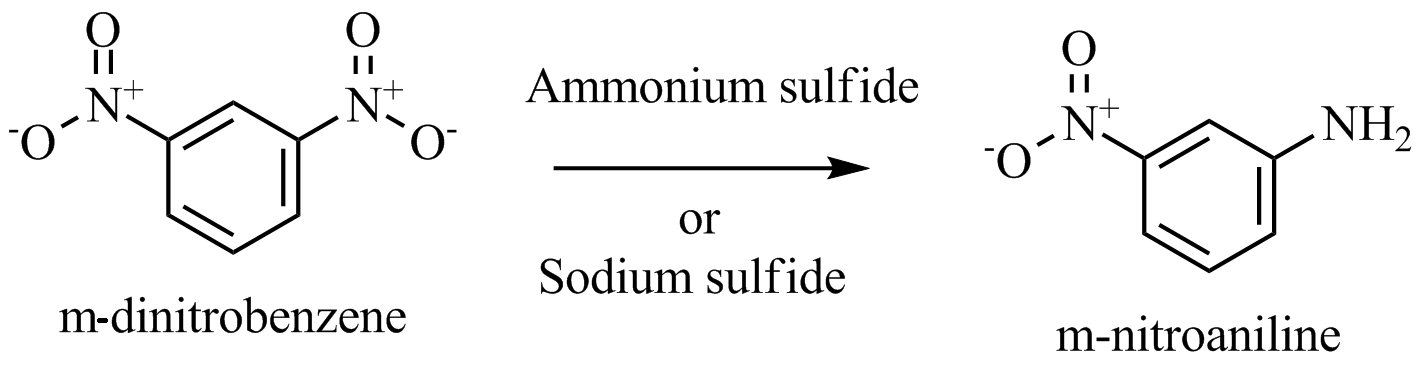
Here, we can see that one nitro group is reduced to an amino group while the other one left undisturbed. As the compound is symmetric, we can reduce any nitro group according to our choice. Because both are the same with respect to one another.
Moreover, if we want to reduce the leftover nitro group, it can also be done with the help of $ Sn/HCl $ . Further reduction with $ Sn/HCl $ given m-phenylenediamine.
So, the major product ( $ 70\% $ to $ 80\% $ ) of the reaction between m-dinitrobenzene with $ N{H_4}HS $ is
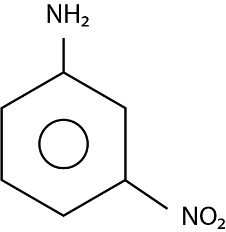
Hence, the correct option is (C).
Note:
Same reduction can also be carried out with the help of sodium sulfide in aqueous solution. Further reduction with iron and hydrochloric acid gives m-phenylenediamine. m-dinitrobenzene is an organic compound which has three isomers. It is a yellow solid that is soluble in organic solvents.
Complete step by step solution:
The given reactant is m-dinitrobenzene.
Reduction of dinitrobenzene with ammonium sulphide reduces only one nitro group. This reduction is called zenin reduction.
The desired reaction is given below:
Here, we can see that one nitro group is reduced to an amino group while the other one left undisturbed. As the compound is symmetric, we can reduce any nitro group according to our choice. Because both are the same with respect to one another.
Moreover, if we want to reduce the leftover nitro group, it can also be done with the help of $ Sn/HCl $ . Further reduction with $ Sn/HCl $ given m-phenylenediamine.
So, the major product ( $ 70\% $ to $ 80\% $ ) of the reaction between m-dinitrobenzene with $ N{H_4}HS $ is
Hence, the correct option is (C).
Note:
Same reduction can also be carried out with the help of sodium sulfide in aqueous solution. Further reduction with iron and hydrochloric acid gives m-phenylenediamine. m-dinitrobenzene is an organic compound which has three isomers. It is a yellow solid that is soluble in organic solvents.
Recently Updated Pages
Which will be the least stable resonating structure class 11 chemistry CBSE

How many 5 digit telephone numbers can be construc-class-11-maths-CBSE
How do you find the angle of the resultant vector class 11 physics CBSE
Draw labelled diagram of the following i Gram seed class 11 biology CBSE
What is the need and importance of classification class 11 biology CBSE
The way in which the sparrows expressed their sorrow class 11 english CBSE
Trending doubts
One Metric ton is equal to kg A 10000 B 1000 C 100 class 11 physics CBSE
Find the value of the expression given below sin 30circ class 11 maths CBSE
1 Quintal is equal to a 110 kg b 10 kg c 100kg d 1000 class 11 physics CBSE
Draw a diagram of nephron and explain its structur class 11 biology CBSE
10 examples of friction in our daily life
Proton was discovered by A Thomson B Rutherford C Chadwick class 11 chemistry CBSE