




The largest amount of freshwater on our planet is available for us is form
A. Lakes and streams
B. Polar icecaps and glaciers
C. Rivers
D. Underground
Answer
 Verified
633.6k+ views
Hint: Fresh water includes the waters of ice caps, rives, ponds, streams, glaciers, bogs, icebergs and even underground water. Fresh water does not include the sea water. The main characteristic of fresh water is it has a very low concentration of sodium chloride or salt. The main source of freshwater is the rain, mist and the snow fall.
Complete answer: The 2/3rd of the world is made up with water.
Almost 68 % of fresh water of the world is present in the poles as polar ice caps and glaciers.
30 % of the total water of the world is found in the underground.
0.3 % water is found in the lakes, streams, river and ponds.
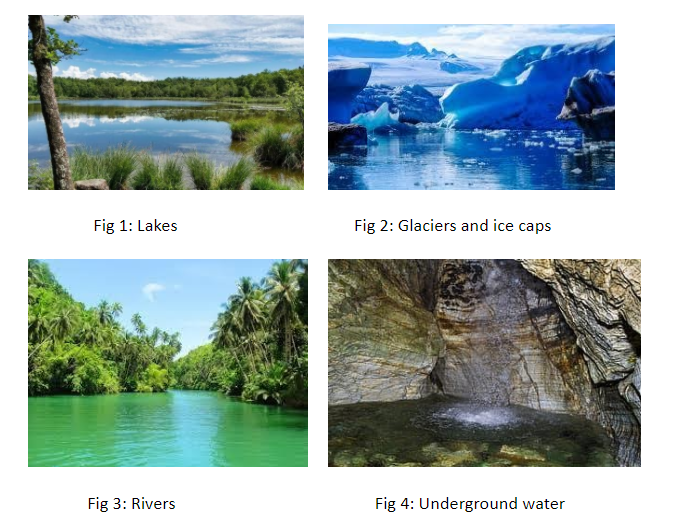
So, the correct answer for this question is option B. Polar icecaps and glaciers
Note: The basic difference between the sea water and fresh water is done on the basis of the presence of salt.
Sea water has the highest salt concentration where fresh water has a very low salt concentration in it. For example, hilsa, whale, crab etc., are some of the animals found in seawater, whereas rohu, ducks etc. are found in freshwater.
Complete answer: The 2/3rd of the world is made up with water.
Almost 68 % of fresh water of the world is present in the poles as polar ice caps and glaciers.
30 % of the total water of the world is found in the underground.
0.3 % water is found in the lakes, streams, river and ponds.
So, the correct answer for this question is option B. Polar icecaps and glaciers
Note: The basic difference between the sea water and fresh water is done on the basis of the presence of salt.
Sea water has the highest salt concentration where fresh water has a very low salt concentration in it. For example, hilsa, whale, crab etc., are some of the animals found in seawater, whereas rohu, ducks etc. are found in freshwater.
Recently Updated Pages
Master Class 11 English: Engaging Questions & Answers for Success

Master Class 11 Social Science: Engaging Questions & Answers for Success
Master Class 11 Maths: Engaging Questions & Answers for Success
Master Class 11 Biology: Engaging Questions & Answers for Success
Master Class 11 Physics: Engaging Questions & Answers for Success
Master Class 11 Chemistry: Engaging Questions & Answers for Success
Trending doubts
Explain the Treaty of Vienna of 1815 class 10 social science CBSE
First Cotton Mill of India
In which year voting age was reduced from 21 to 18?
10 examples of evaporation in daily life with explanations
What planets have no moons Which one has only one moon class 10 physics CBSE
What is the full form of POSCO class 10 social science CBSE