




The intermediate host of Schistosoma is
(a)Snail
(b)Mosquito
(c)Housefly
(c)Sheep
Answer
 Verified
581.4k+ views
Hint: Schistosoma also called blood flukes is caused by parasitic flatworms which are the reason for a major group of infections in humans called schistosomiasis having a characteristic feature that includes shell.
Complete answer:
The intermediate host of Schistosoma is the snail. The eggs of cercaria placed in the intestine will go out through urine and stool. A liberated kind of egg called the miracidium will penetrate the tissues of the intermediate host - snail. A snail is a Gastropod with a shell. Land snails and terrestrial pulmonate gastropod molluscs are what commonly included in the term ' snail' every thought there are a variety of marine snails.
Additional Information:
-Humans are affected by snails in different ways, like including edible products, pests in the crop, and as carriers of the disease.
-Their shells are also used as embroidery objects and are included in various jewellery. There are some snails without shells known as slugs.
-Snails are active and feed at night, majorly feeding on decaying organic matter, fungi, lichens, foliage, small worms Or centipedes, tiny insects, animal stool, carrion, and other slugs. Snails are known for feeding on other snails when food is scarce.
So, the correct answer is ‘snail’.
Note: -Snails are related to different parasitic diseases like schistosomiasis, angiostrongyliasis, paragonimiasis, fasciolopsiasis, opisthorchiasis, and fascioliasis which are known to infect humans.
-Schistosoma causes pain in the abdomen, joints, and muscles. Pain can occur while having sexual intercourse and urination.
-Gastrointestinal effects include bloating, blood in faeces, diarrhoea, and fluid in the stomach area. Other symptoms include body chills, fatigue, and fever.
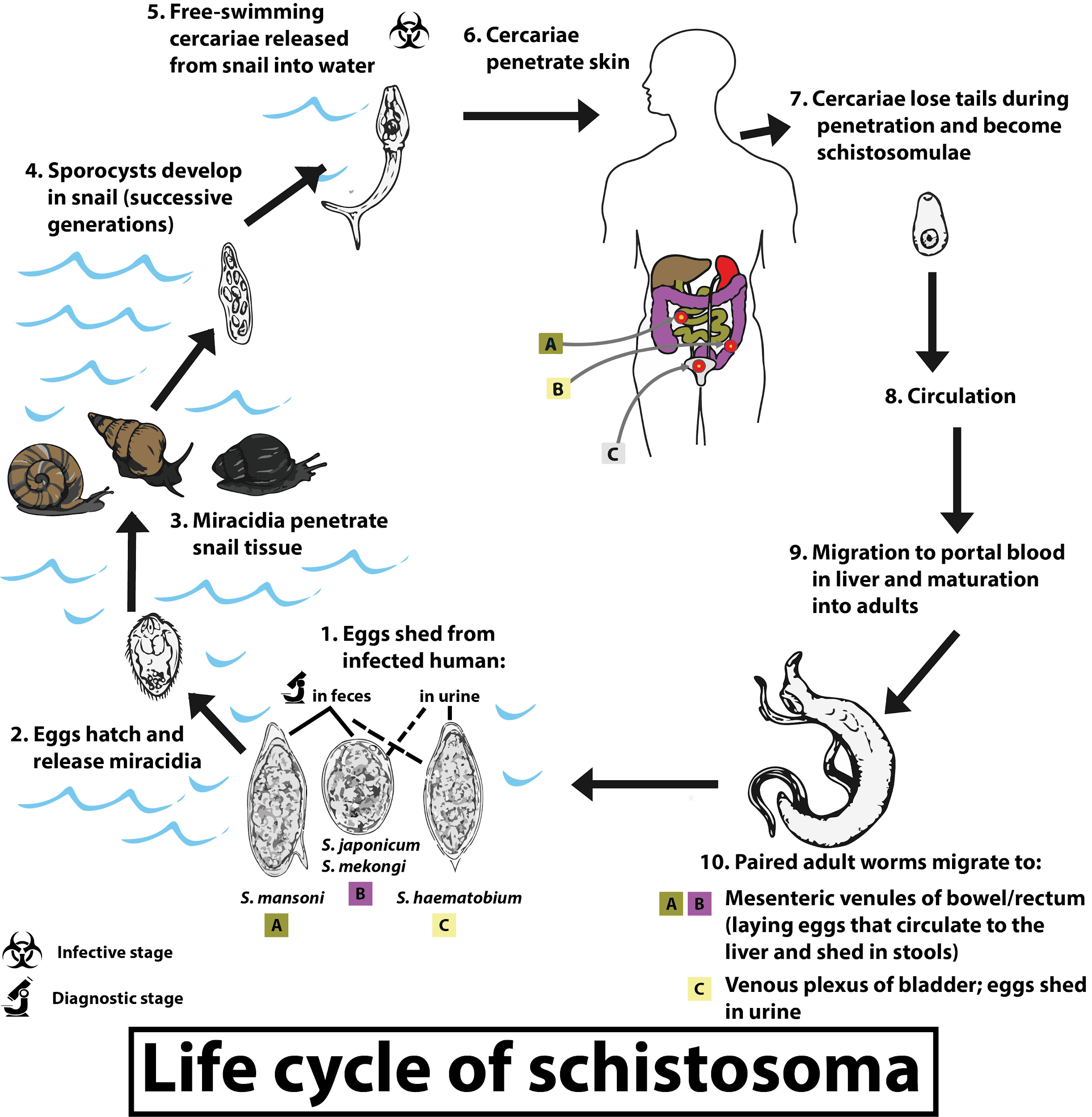
Complete answer:
The intermediate host of Schistosoma is the snail. The eggs of cercaria placed in the intestine will go out through urine and stool. A liberated kind of egg called the miracidium will penetrate the tissues of the intermediate host - snail. A snail is a Gastropod with a shell. Land snails and terrestrial pulmonate gastropod molluscs are what commonly included in the term ' snail' every thought there are a variety of marine snails.
Additional Information:
-Humans are affected by snails in different ways, like including edible products, pests in the crop, and as carriers of the disease.
-Their shells are also used as embroidery objects and are included in various jewellery. There are some snails without shells known as slugs.
-Snails are active and feed at night, majorly feeding on decaying organic matter, fungi, lichens, foliage, small worms Or centipedes, tiny insects, animal stool, carrion, and other slugs. Snails are known for feeding on other snails when food is scarce.
So, the correct answer is ‘snail’.
Note: -Snails are related to different parasitic diseases like schistosomiasis, angiostrongyliasis, paragonimiasis, fasciolopsiasis, opisthorchiasis, and fascioliasis which are known to infect humans.
-Schistosoma causes pain in the abdomen, joints, and muscles. Pain can occur while having sexual intercourse and urination.
-Gastrointestinal effects include bloating, blood in faeces, diarrhoea, and fluid in the stomach area. Other symptoms include body chills, fatigue, and fever.
Recently Updated Pages
Master Class 11 Computer Science: Engaging Questions & Answers for Success

Master Class 11 Business Studies: Engaging Questions & Answers for Success
Master Class 11 Economics: Engaging Questions & Answers for Success
Master Class 11 English: Engaging Questions & Answers for Success
Master Class 11 Maths: Engaging Questions & Answers for Success
Master Class 11 Biology: Engaging Questions & Answers for Success
Trending doubts
One Metric ton is equal to kg A 10000 B 1000 C 100 class 11 physics CBSE
There are 720 permutations of the digits 1 2 3 4 5 class 11 maths CBSE
Discuss the various forms of bacteria class 11 biology CBSE
Draw a diagram of a plant cell and label at least eight class 11 biology CBSE
State the laws of reflection of light
Explain zero factorial class 11 maths CBSE