



The indicated atom is not a nucleophilic site in:
A.
B.
C.
D.
Answer
 Verified
600.9k+ views
Hint: As we know that nucleophiles are chemical species that donates an electron pair to form a chemical bond. As these can donate electrons these are also called as lewis bases. These undergo nucleophilic addition and nucleophilic substitution reactions.
Complete step by step answer:
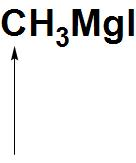
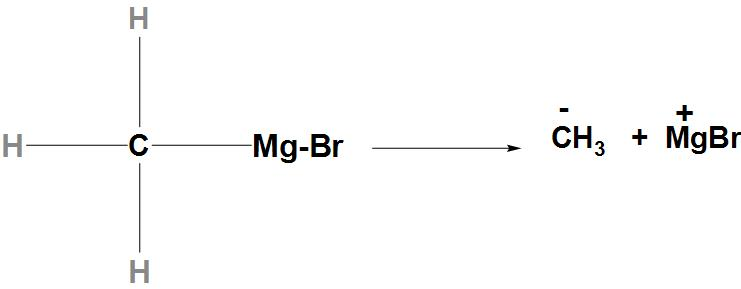
- Let’s first discuss $C{{H}_{3}}MgI$: $C{{H}_{3}}MgI$ is also called a Grignard reagent. When the bond between C-Mg breaks there is formation of carbanion that takes place, that has negative charge and can donate an electron pair. Hence, we can say that the indicated atom that is carbon atom is a nucleophilic site in $C{{H}_{3}}MgI$.
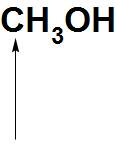
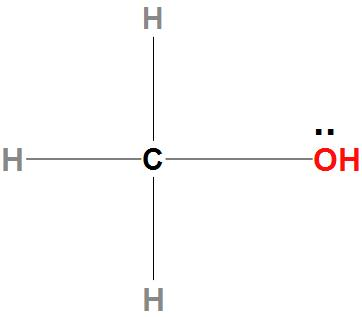
- Now, let see about $C{{H}_{3}}OH$: We can see here that there is a lone pair of electrons present on oxygen atoms. Hence, it can donate an electron pair. Hence, we can say that the indicated oxygen atom is a nucleophilic site in $C{{H}_{3}}OH$.
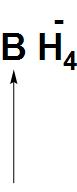
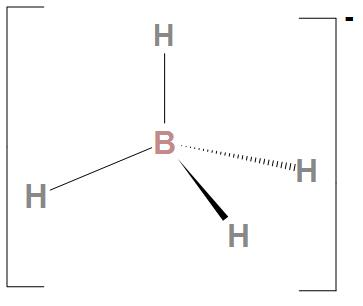
- Now, let see about $BH_{4}^{-}$: We can see here that there is no lone pair of electrons present on boron atoms. Hence, it can’t donate an electron pair. Hence, we can say that the indicated atom that is boron atom is not a nucleophilic site in $BH_{4}^{-}$.
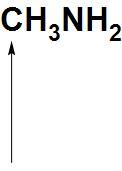
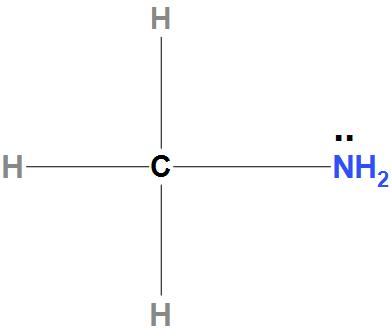
- Now, let see about $C{{H}_{3}}N{{H}_{2}}$: We can see here that there is a lone pair of electrons present on nitrogen atoms. Hence, it can donate an electron pair. Hence, we can say that the indicated atom that is a nitrogen atom is a nucleophilic site in $C{{H}_{3}}N{{H}_{2}}$.
Note: - We should not get confused in the terms electrophile and nucleophile. The main difference in between both these is nucleophile is negatively charged/neutral and also called as lewis base. These are electron rich species that donate a pair of electrons to form a covalent bond.
- Whereas, electrophile is positively and also called as lewis acids. These are electron deficient species that accept a pair of electrons to form a covalent bond.
Complete step by step answer:
- Let’s first discuss $C{{H}_{3}}MgI$: $C{{H}_{3}}MgI$ is also called a Grignard reagent. When the bond between C-Mg breaks there is formation of carbanion that takes place, that has negative charge and can donate an electron pair. Hence, we can say that the indicated atom that is carbon atom is a nucleophilic site in $C{{H}_{3}}MgI$.
- Now, let see about $C{{H}_{3}}OH$: We can see here that there is a lone pair of electrons present on oxygen atoms. Hence, it can donate an electron pair. Hence, we can say that the indicated oxygen atom is a nucleophilic site in $C{{H}_{3}}OH$.
- Now, let see about $BH_{4}^{-}$: We can see here that there is no lone pair of electrons present on boron atoms. Hence, it can’t donate an electron pair. Hence, we can say that the indicated atom that is boron atom is not a nucleophilic site in $BH_{4}^{-}$.
- Now, let see about $C{{H}_{3}}N{{H}_{2}}$: We can see here that there is a lone pair of electrons present on nitrogen atoms. Hence, it can donate an electron pair. Hence, we can say that the indicated atom that is a nitrogen atom is a nucleophilic site in $C{{H}_{3}}N{{H}_{2}}$.
Note: - We should not get confused in the terms electrophile and nucleophile. The main difference in between both these is nucleophile is negatively charged/neutral and also called as lewis base. These are electron rich species that donate a pair of electrons to form a covalent bond.
- Whereas, electrophile is positively and also called as lewis acids. These are electron deficient species that accept a pair of electrons to form a covalent bond.
Recently Updated Pages
Master Class 12 Business Studies: Engaging Questions & Answers for Success

Master Class 12 Chemistry: Engaging Questions & Answers for Success
Master Class 12 Biology: Engaging Questions & Answers for Success
Class 12 Question and Answer - Your Ultimate Solutions Guide
Master Class 11 English: Engaging Questions & Answers for Success
Master Class 11 Social Science: Engaging Questions & Answers for Success
Trending doubts
Which are the Top 10 Largest Countries of the World?
The total number of vertebrae in man is a30 b31 c32 class 12 biology CBSE
Draw a labelled sketch of the human eye class 12 physics CBSE
The number of cranial nerves in a frog is A 10 pairs class 12 biology CBSE
Differentiate between homogeneous and heterogeneous class 12 chemistry CBSE
Differentiate between Pyramid of energy and pyramid class 12 biology CBSE