




The floral formula of Malvaceae is
Answer
 Verified
585.9k+ views
Hint: Floral formula helps to represent the structure of a flower by the usage of letters, symbols, and numbers which represent the substantial information about the flower in a concise form.
Complete answer:
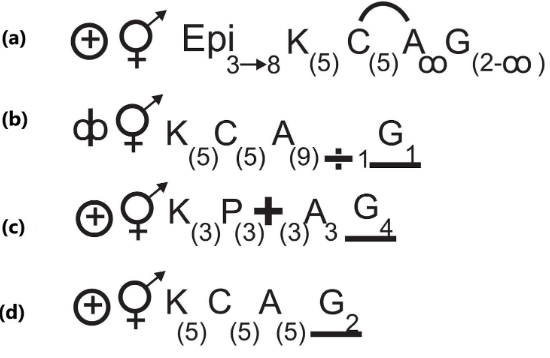
The floral formula of the family Malvaceae consists of 3-8 epicalyx, and calyx which consists of five gamosepalous sepals. The corolla constitutes five polypetalous petals with numerous stamens and a carpellary and multicarpellary syncarpous superior ovary. Malvaceae family constitutes flowering plants with 4225 species and known members of economic importance which includes cotton and durian. Some genera of the family consist of ornamental plants such as Malva, tilia, Alcea, and lavatera.
-The family constitutes the largest number of species of the hibiscus and the smallest number which includes sida with 300 and 200 species respectively.
-It constitutes homogeneous and monophyletic groups which are defined based on molecular techniques.
-The family includes the species of herbs or shrubs with some of the trees and lianas.
-The leaves of the Malvaceae family are alternate and palmately lobed. The compound and palmately veined leaves are also present in some species.
-The flowers of the Malvaceae family constitute the definite or indefinite axillary inflorescences which are defined as the reduced single flower that can be cauliflorous or terminal.
-These plants bear supernumerary bracts which are present in the bicolor unit and can be unisexual or bisexual.
-The flowers are generally actinomorphic and get associated with the conspicuous bracts which are further from the epicalyx.
-The ovary is superior and placed with axial placentation.
-The loculicidal capsules are in the form of fruits and the protandry helps to avoid self-pollination.
So, the correct answer is

Note:
-Cotton which is in the family of Malvaceae is the most important commodity.
-The plant can be identified with the star-shaped hairs present on the herbs or shrubs.
-These plants grow mainly in the forest edges and savanna.
Complete answer:
The floral formula of the family Malvaceae consists of 3-8 epicalyx, and calyx which consists of five gamosepalous sepals. The corolla constitutes five polypetalous petals with numerous stamens and a carpellary and multicarpellary syncarpous superior ovary. Malvaceae family constitutes flowering plants with 4225 species and known members of economic importance which includes cotton and durian. Some genera of the family consist of ornamental plants such as Malva, tilia, Alcea, and lavatera.
-The family constitutes the largest number of species of the hibiscus and the smallest number which includes sida with 300 and 200 species respectively.
-It constitutes homogeneous and monophyletic groups which are defined based on molecular techniques.
-The family includes the species of herbs or shrubs with some of the trees and lianas.
-The leaves of the Malvaceae family are alternate and palmately lobed. The compound and palmately veined leaves are also present in some species.
-The flowers of the Malvaceae family constitute the definite or indefinite axillary inflorescences which are defined as the reduced single flower that can be cauliflorous or terminal.
-These plants bear supernumerary bracts which are present in the bicolor unit and can be unisexual or bisexual.
-The flowers are generally actinomorphic and get associated with the conspicuous bracts which are further from the epicalyx.
-The ovary is superior and placed with axial placentation.
-The loculicidal capsules are in the form of fruits and the protandry helps to avoid self-pollination.
So, the correct answer is
Note:
-Cotton which is in the family of Malvaceae is the most important commodity.
-The plant can be identified with the star-shaped hairs present on the herbs or shrubs.
-These plants grow mainly in the forest edges and savanna.
Recently Updated Pages
Basicity of sulphurous acid and sulphuric acid are

Master Class 11 English: Engaging Questions & Answers for Success
Master Class 11 Physics: Engaging Questions & Answers for Success
Master Class 11 Computer Science: Engaging Questions & Answers for Success
Master Class 11 Chemistry: Engaging Questions & Answers for Success
Master Class 11 Social Science: Engaging Questions & Answers for Success
Trending doubts
Difference Between Prokaryotic Cells and Eukaryotic Cells
One Metric ton is equal to kg A 10000 B 1000 C 100 class 11 physics CBSE
Two of the body parts which do not appear in MRI are class 11 biology CBSE
Draw a diagram of nephron and explain its structur class 11 biology CBSE
10 examples of friction in our daily life
What will happen if the mucus is not secreted by the class 11 biology CBSE