




The figure shows diagrammatic view of the respiratory system with labels A,B, C and D. select the option which gives correct identification and main function and/or characteristics
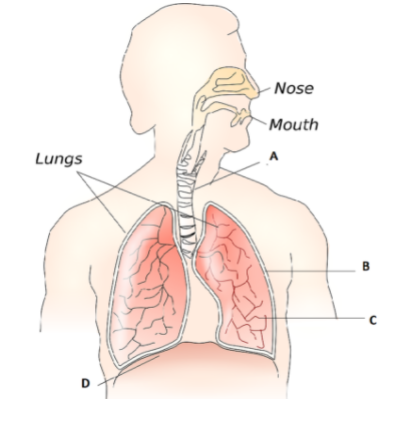
A) A-Trachea- long tube supported by complete cartilaginous rings for conducting inspired air
B) B-Pleural membrane-surround ribs on both sides to provide cushion against rubbing
C) C-Alveoli- thin walled vascular bag like structure for exchange of gases
D) D-Lower end of lungs- diaphragm pulls it down during respiration
E) All of the above
Answer
 Verified
580.8k+ views
Hint: The respiratory system is a biological system that consists of various organs and structures which ultimately helps in the exchange of gases in animals as well as in plants. In animals, the oxygen is inhaled and the carbon dioxide is exhaled. The respiratory system starts from the nose and ends in the lungs.
Complete answer:
In humans as well as in mammals the respiratory system comprises of a respiratory tract which is further subdivided into an upper respiratory tract and a lower respiratory tract. The upper tract is known to comprise of nose, sinuses, pharynx and the upper larynx. The lower tract comprises of the lower larynx, the trachea, bronchi, bronchioles and alveoli. The air enters the respiratory system through the nose and passes through the pharynx which carries the air to the larynx. The larynx also known as the voice box further passes it to the trachea. The trachea which is also known as the windpipe passes the air from the larynx to the bronchi. The bronchi are further subdivided into the bronchioles that finally leads to alveoli where the exchange of gases takes place.
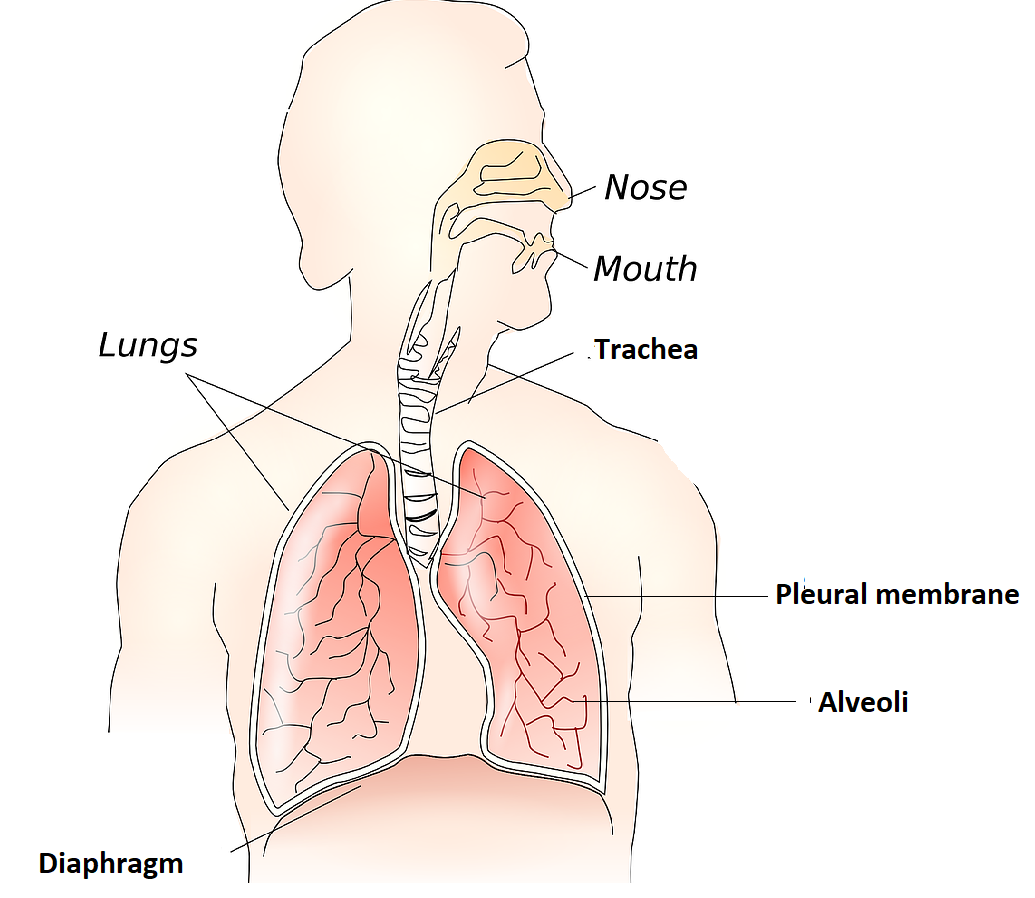
According to the given question all the marked parts match to the options given and also their characteristics.
Thus the correct answer is option ‘E’.
Note: The respiratory system of mammals is different from most other organisms such as fish which do not have lungs and instead use gills for the exchange of gases or certain insects and amphibia where the skin plays a major role in the exchange of gases. The in the closed circulatory system, the blood is oxygenated in the lungs.
Complete answer:
In humans as well as in mammals the respiratory system comprises of a respiratory tract which is further subdivided into an upper respiratory tract and a lower respiratory tract. The upper tract is known to comprise of nose, sinuses, pharynx and the upper larynx. The lower tract comprises of the lower larynx, the trachea, bronchi, bronchioles and alveoli. The air enters the respiratory system through the nose and passes through the pharynx which carries the air to the larynx. The larynx also known as the voice box further passes it to the trachea. The trachea which is also known as the windpipe passes the air from the larynx to the bronchi. The bronchi are further subdivided into the bronchioles that finally leads to alveoli where the exchange of gases takes place.
According to the given question all the marked parts match to the options given and also their characteristics.
Thus the correct answer is option ‘E’.
Note: The respiratory system of mammals is different from most other organisms such as fish which do not have lungs and instead use gills for the exchange of gases or certain insects and amphibia where the skin plays a major role in the exchange of gases. The in the closed circulatory system, the blood is oxygenated in the lungs.
Recently Updated Pages
Which will be the least stable resonating structure class 11 chemistry CBSE

How many 5 digit telephone numbers can be construc-class-11-maths-CBSE
How do you find the angle of the resultant vector class 11 physics CBSE
Draw labelled diagram of the following i Gram seed class 11 biology CBSE
1 Quintal is equal to a 110 kg b 10 kg c 100kg d 1000 class 11 physics CBSE
What is the need and importance of classification class 11 biology CBSE
Trending doubts
One Metric ton is equal to kg A 10000 B 1000 C 100 class 11 physics CBSE
Find the value of the expression given below sin 30circ class 11 maths CBSE
Draw a diagram of nephron and explain its structur class 11 biology CBSE
10 examples of friction in our daily life
Proton was discovered by A Thomson B Rutherford C Chadwick class 11 chemistry CBSE
The teeth used for biting and cutting food are called class 11 biology CBSE