




The energy-releasing metabolic process in which substrate is oxidized without an external electron acceptor is called as-
(a)Photorespiration
(b)Glycolysis
(c)Fermentation
(d)Aerobic respiration
Answer
 Verified
574.8k+ views
Hint: It is a metabolic process that, through the action of enzymes, induces chemical changes in organic substrates. It is broadly described in biochemistry as the extraction of carbohydrate energy in the absence of oxygen.
Complete answer:
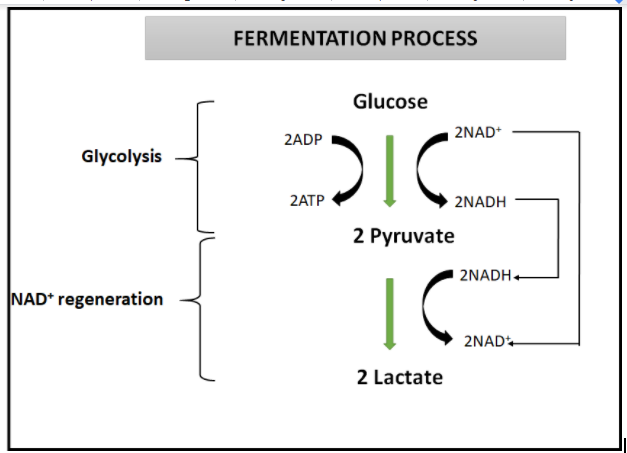
In the absence of oxygen (external electron acceptor), fermentation is incomplete oxidation of food substances into alcohol or lactic acid, with a small amount of energy being released. As an electron acceptor for the oxidation of substrates, aerobic respiration requires oxygen. The first common stage of both fermentation and aerobic respiration is glycolysis.
Photorespiration is the oxidation of RuBP by the RUBISCO enzyme and does not generate energy. In microorganisms, the primary means of producing adenosine triphosphate (ATP) by anaerobic degradation of organic nutrients is fermentation. Since the Neolithic era, people have used fermentation to produce foodstuffs and beverages. For example, in a process that produces lactic acid contained in sour foods such as pickled cucumbers, kombucha, kimchi, and yogurt, fermentation is used for preservation, as well as to produce alcoholic drinks such as wine and beer. Within the gastrointestinal tracts of all species, including humans, fermentation often takes place.
Additional Information: Cellular respiration is a series of metabolic reactions and processes that take place in the cells of organisms to convert chemical energy into adenosine triphosphate from oxygen molecules or nutrients and then to release waste products.
The mechanism by which one glucose molecule is converted into two pyruvate molecules, two hydrogen ions, and two water molecules is glycolysis. The 'high-energy' molecules of ATP and NADH are synthesized via this process. The molecules of pyruvate then proceed to the link reaction, where acetyl-CoA is produced.
Photorespiration refers to a phase in plant metabolism where the enzyme RuBisCO oxygenates RuBP, wasting some of the energy provided by photosynthesis (also known as the oxidative photosynthetic carbon cycle, or ${ C }_{ 2 }$ photosynthesis).
So, the correct answer is ‘fermentation’.
Note: The action of yeast on fermentable sugars to produce carbon dioxide (${ CO }_{ 2 }$), ethanol, and some aromatic compounds is the main method of fermentation. Organoleptic characteristics of bread depending on the conditions of fermentation of the dough, namely the texture, taste, and aroma.
Complete answer:
In the absence of oxygen (external electron acceptor), fermentation is incomplete oxidation of food substances into alcohol or lactic acid, with a small amount of energy being released. As an electron acceptor for the oxidation of substrates, aerobic respiration requires oxygen. The first common stage of both fermentation and aerobic respiration is glycolysis.
Photorespiration is the oxidation of RuBP by the RUBISCO enzyme and does not generate energy. In microorganisms, the primary means of producing adenosine triphosphate (ATP) by anaerobic degradation of organic nutrients is fermentation. Since the Neolithic era, people have used fermentation to produce foodstuffs and beverages. For example, in a process that produces lactic acid contained in sour foods such as pickled cucumbers, kombucha, kimchi, and yogurt, fermentation is used for preservation, as well as to produce alcoholic drinks such as wine and beer. Within the gastrointestinal tracts of all species, including humans, fermentation often takes place.
Additional Information: Cellular respiration is a series of metabolic reactions and processes that take place in the cells of organisms to convert chemical energy into adenosine triphosphate from oxygen molecules or nutrients and then to release waste products.
The mechanism by which one glucose molecule is converted into two pyruvate molecules, two hydrogen ions, and two water molecules is glycolysis. The 'high-energy' molecules of ATP and NADH are synthesized via this process. The molecules of pyruvate then proceed to the link reaction, where acetyl-CoA is produced.
Photorespiration refers to a phase in plant metabolism where the enzyme RuBisCO oxygenates RuBP, wasting some of the energy provided by photosynthesis (also known as the oxidative photosynthetic carbon cycle, or ${ C }_{ 2 }$ photosynthesis).
So, the correct answer is ‘fermentation’.
Note: The action of yeast on fermentable sugars to produce carbon dioxide (${ CO }_{ 2 }$), ethanol, and some aromatic compounds is the main method of fermentation. Organoleptic characteristics of bread depending on the conditions of fermentation of the dough, namely the texture, taste, and aroma.
Recently Updated Pages
Master Class 11 Computer Science: Engaging Questions & Answers for Success

Master Class 11 Business Studies: Engaging Questions & Answers for Success
Master Class 11 Economics: Engaging Questions & Answers for Success
Master Class 11 English: Engaging Questions & Answers for Success
Master Class 11 Maths: Engaging Questions & Answers for Success
Master Class 11 Biology: Engaging Questions & Answers for Success
Trending doubts
There are 720 permutations of the digits 1 2 3 4 5 class 11 maths CBSE
Discuss the various forms of bacteria class 11 biology CBSE
Explain zero factorial class 11 maths CBSE
What organs are located on the left side of your body class 11 biology CBSE
Draw a diagram of nephron and explain its structur class 11 biology CBSE
How do I convert ms to kmh Give an example class 11 physics CBSE