




The direction of impulse in a typical neuron is
A. Axon to Dendron
B. Dendron to axon
C. Both A and B
D. None of these
Answer
 Verified
626.1k+ views
Hint: The neuron transmits electrical signal in a unidirectional way.
The axon terminal helps to transmit the impulse in the next neuron.
Complete answer: The transport of signal from one neuron to another neuron is known as neurotransmission.
1. The signal is received by dendrons of one neuron and transmit it by the axon and finally passes it to the dendron of the next neuron by the axon terminal.
2. The transport of this signal is unidirectional.
3. The word Neurotransmission comes from the Latin word transmissio that means passage or crossing and the word neurotransmitter comes from transmittere that means to send or let through.
4. Neurotransmission is a process in which signaling molecules (known as neurotransmitters) are released by the axon terminal of a neuron, which is the presynaptic neuron, and binds to the receptors on the dendrites of another neuron, which is the postsynaptic neuron and reacts with it.
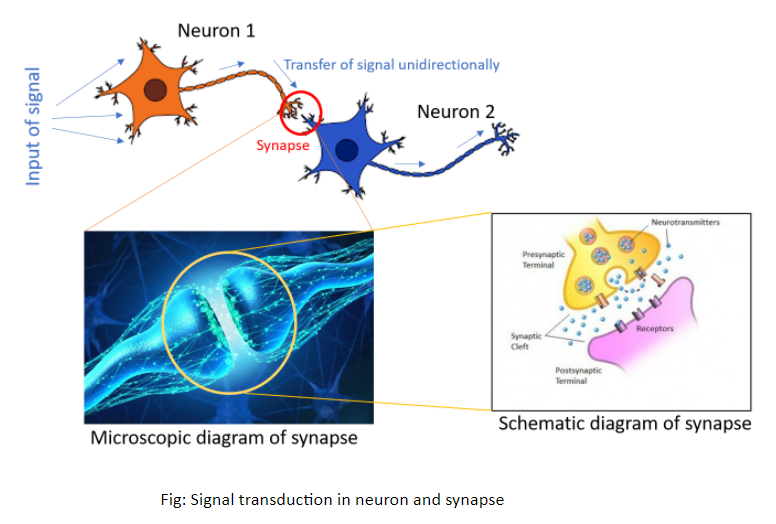
So, the correct answer is “Option A”.
Additional Information: The process of neurotransmission includes the following steps:
1. Synthesis of the neurotransmitter in the presynaptic terminal neuron.
This can be taken place in the cell body or in the axon or in the axon terminal.
2. Storing of the neurotransmitter is done by the storage granules or vesicles that are present in the axon terminal. Calcium ions are essential for this signal transmission. It enters the axon terminal during the onset of the action potential, which causes the release of the neurotransmitter into the synaptic cleft.
3. After the release of the neurotransmitter, it binds to a receptor and activates it in the postsynaptic membrane.
4. Deactivation of the neurotransmitter is the last stage of signal transfer.
5. The neurotransmitter is destroyed enzymatically, or it is taken back into the terminal from which it came, there it is reused, or degraded and finally removed.
Note: Acetylcholine, norepinephrine are the common neurotransmitters.
The process of neurotransmission is controlled by various factors that incorporate the supply and rate-of-synthesis of the neurotransmitter, the activity of the postsynaptic cell, the number of obtainable receptors within the postsynaptic neuron, and removal or deactivation of the neurotransmitter by enzymes.
The axon terminal helps to transmit the impulse in the next neuron.
Complete answer: The transport of signal from one neuron to another neuron is known as neurotransmission.
1. The signal is received by dendrons of one neuron and transmit it by the axon and finally passes it to the dendron of the next neuron by the axon terminal.
2. The transport of this signal is unidirectional.
3. The word Neurotransmission comes from the Latin word transmissio that means passage or crossing and the word neurotransmitter comes from transmittere that means to send or let through.
4. Neurotransmission is a process in which signaling molecules (known as neurotransmitters) are released by the axon terminal of a neuron, which is the presynaptic neuron, and binds to the receptors on the dendrites of another neuron, which is the postsynaptic neuron and reacts with it.
So, the correct answer is “Option A”.
Additional Information: The process of neurotransmission includes the following steps:
1. Synthesis of the neurotransmitter in the presynaptic terminal neuron.
This can be taken place in the cell body or in the axon or in the axon terminal.
2. Storing of the neurotransmitter is done by the storage granules or vesicles that are present in the axon terminal. Calcium ions are essential for this signal transmission. It enters the axon terminal during the onset of the action potential, which causes the release of the neurotransmitter into the synaptic cleft.
3. After the release of the neurotransmitter, it binds to a receptor and activates it in the postsynaptic membrane.
4. Deactivation of the neurotransmitter is the last stage of signal transfer.
5. The neurotransmitter is destroyed enzymatically, or it is taken back into the terminal from which it came, there it is reused, or degraded and finally removed.
Note: Acetylcholine, norepinephrine are the common neurotransmitters.
The process of neurotransmission is controlled by various factors that incorporate the supply and rate-of-synthesis of the neurotransmitter, the activity of the postsynaptic cell, the number of obtainable receptors within the postsynaptic neuron, and removal or deactivation of the neurotransmitter by enzymes.
Recently Updated Pages
Master Class 11 English: Engaging Questions & Answers for Success

Master Class 11 Social Science: Engaging Questions & Answers for Success
Master Class 11 Maths: Engaging Questions & Answers for Success
Master Class 11 Biology: Engaging Questions & Answers for Success
Master Class 11 Physics: Engaging Questions & Answers for Success
Master Class 11 Chemistry: Engaging Questions & Answers for Success
Trending doubts
Explain the Treaty of Vienna of 1815 class 10 social science CBSE
What is the Total Duration of Football Match?
First Cotton Mill of India
In which year voting age was reduced from 21 to 18?
10 examples of evaporation in daily life with explanations
What planets have no moons Which one has only one moon class 10 physics CBSE