




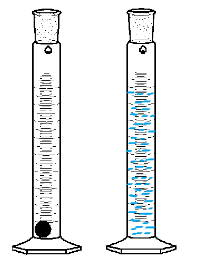
The diagrams at the right show 15 mL of water in one graduated cylinder and a rock sample in another. How can you use one or both graduated cylinders to determine the volume of the rock sample?
Answer
 Verified
573.9k+ views
Hint: We will solve this question by using the water displacement method to measure the volume of the stone. It is the easiest way to find the volume of the irregular solid objects without the help of any extra machinery. For this we just require a certain amount of water and graduated cylinders with markings.
Complete step-by-step answer: We can measure the volume of the rock sample in following 2 ways of water displacement method:-
(A)By using both the graduated cylinders: As we have been provided 15 mL of water in one graduated cylinder and other with the rock sample, so in the first cylinder we will be able to see the water level at the marking of 15 mL. Pour it down into another graduated cylinder containing the rock sample. We will observe that the marking has been increased after pouring the 15mL water to another cylinder. We will note down this final marking and calculate the volume of rock sample as follows:-
Volume of rock sample = Final marking (reading) – Initial marking (reading)
This is because the level of water rose from initial to final due to the extra volume of rock sample.
(B)By using only 1 graduated cylinder: If the rock sample is small we may tie it with the thread otherwise leave as it was before. Now take this rock sample and slowly submerge it in the cylinder containing 15mL of water. We will observe that the marking has been increased due to the displacement of water by the rock sample. We will note the final marking of the graduated cylinder and calculate the volume of rock sample as follows:-
Volume of rock sample = Final marking (reading) – Initial marking (reading)
This is because the level of water rose from initial to final due to the extra volume of rock sample which displaced the water when submerged into it.
Hence by using the Water Displacement Method, we can measure the volume of rock samples and other irregular objects.
Note: -We must perform this procedure carefully to avoid any errors. We must gently pour water in another cylinder so that we may not drop any of it outside and get wrong results.
-Also we must submerge things slowly so that water does not splash out of the cylinder or container containing it otherwise we may face inaccurate results.
Complete step-by-step answer: We can measure the volume of the rock sample in following 2 ways of water displacement method:-
(A)By using both the graduated cylinders: As we have been provided 15 mL of water in one graduated cylinder and other with the rock sample, so in the first cylinder we will be able to see the water level at the marking of 15 mL. Pour it down into another graduated cylinder containing the rock sample. We will observe that the marking has been increased after pouring the 15mL water to another cylinder. We will note down this final marking and calculate the volume of rock sample as follows:-
Volume of rock sample = Final marking (reading) – Initial marking (reading)
This is because the level of water rose from initial to final due to the extra volume of rock sample.
(B)By using only 1 graduated cylinder: If the rock sample is small we may tie it with the thread otherwise leave as it was before. Now take this rock sample and slowly submerge it in the cylinder containing 15mL of water. We will observe that the marking has been increased due to the displacement of water by the rock sample. We will note the final marking of the graduated cylinder and calculate the volume of rock sample as follows:-
Volume of rock sample = Final marking (reading) – Initial marking (reading)
This is because the level of water rose from initial to final due to the extra volume of rock sample which displaced the water when submerged into it.
Hence by using the Water Displacement Method, we can measure the volume of rock samples and other irregular objects.
Note: -We must perform this procedure carefully to avoid any errors. We must gently pour water in another cylinder so that we may not drop any of it outside and get wrong results.
-Also we must submerge things slowly so that water does not splash out of the cylinder or container containing it otherwise we may face inaccurate results.
Recently Updated Pages
Master Class 11 English: Engaging Questions & Answers for Success

Master Class 11 Social Science: Engaging Questions & Answers for Success
Master Class 11 Maths: Engaging Questions & Answers for Success
Master Class 11 Biology: Engaging Questions & Answers for Success
Master Class 11 Physics: Engaging Questions & Answers for Success
Master Class 11 Chemistry: Engaging Questions & Answers for Success