




What Will be the complementary strand sequence of DNA produced during DNA replication of the following given sequence of DNA?
(a) 5’-ATGCTGAACT-3’
(b) 5’-GTCTGGACCT-3’
(c) 5’-GACCTGATGC-3’
(d) 5’- GCATCAGGTC-3’
(e) 5’- TACGACTTGA-3’
Answer
 Verified
645k+ views
Hint: DNA replication is a process by which DNA makes copies of itself. The two strands of Deoxyribonucleic or DNA are antiparallel to each other and have opposite polarity. The base pair A must pair with T with 2 hydrogen bonds and the base G should pair with C (base pair rule) with three hydrogen bonds.
Complete answer:DNA, or deoxyribonucleic acid, is present in organisms and it acts as the hereditary material. The DNA stores information in the form of a code made up of four chemical bases: Adenine (A), Guanine (G), Cytosine (C) and Thymine (T).
The arrangement, sequence, of these bases determines the information available for building and maintaining an organism. When these DNA bases pair up with each other i.e A with T and G with C it is called base pairing. These bases in turn are attached to a sugar molecule and a phosphate molecule, together which are called a nucleotide. These nucleotides are arranged in two long strands that form the typical spiral structure of the DNA called a double helix. These two strands are antiparallel to each other and have opposite polarity,meaning that the 5’ phosphate of one strand faces the 3’ hydroxyl group of the other strand and vice versa.
The hydrogen bonding between amino and carbonyl groups of complementary base pairs (A pairs with T and G with C) is made possible only by the antiparallel nature of the two strands of DNA. Hence the complementary strands for the above given sequences were as above.
Thus, the complementary strand sequence of DNA produced during DNA replication of the following given sequence of DNA would be as follows:
(a) 5’-ATGCTGAACT-3’
3’-TACGACTTGA-5’
(b) 5’-GTCTGGACCT-3’
3’-CAGACCTGGA-5’
(c) 5’-GACCTGATGC-3’,
3’-CTGGACTACG-5’
(d) 5’-GCATCAGGTC-3’
3’-CGTAGTCCAG-5’
(e) 5’-TACGACTTGA-3’
3’-ATGCTGAACT-5’
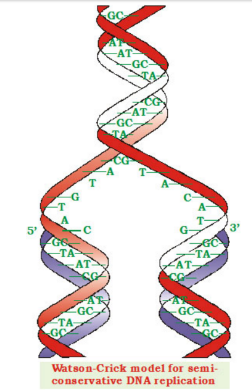
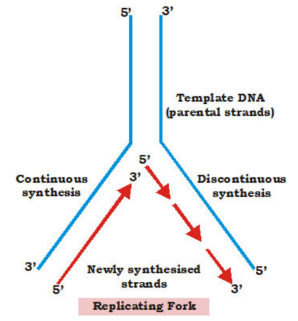
Note:DNA replication is semi-conservative and experimental proof of DNA replication was given by Matthew Meselson and Franklin Stahl in 1958.
In case of RNA, thymine is replaced with a different base called uracil (U). (A pairs with U)
Complete answer:DNA, or deoxyribonucleic acid, is present in organisms and it acts as the hereditary material. The DNA stores information in the form of a code made up of four chemical bases: Adenine (A), Guanine (G), Cytosine (C) and Thymine (T).
The arrangement, sequence, of these bases determines the information available for building and maintaining an organism. When these DNA bases pair up with each other i.e A with T and G with C it is called base pairing. These bases in turn are attached to a sugar molecule and a phosphate molecule, together which are called a nucleotide. These nucleotides are arranged in two long strands that form the typical spiral structure of the DNA called a double helix. These two strands are antiparallel to each other and have opposite polarity,meaning that the 5’ phosphate of one strand faces the 3’ hydroxyl group of the other strand and vice versa.
The hydrogen bonding between amino and carbonyl groups of complementary base pairs (A pairs with T and G with C) is made possible only by the antiparallel nature of the two strands of DNA. Hence the complementary strands for the above given sequences were as above.
Thus, the complementary strand sequence of DNA produced during DNA replication of the following given sequence of DNA would be as follows:
(a) 5’-ATGCTGAACT-3’
3’-TACGACTTGA-5’
(b) 5’-GTCTGGACCT-3’
3’-CAGACCTGGA-5’
(c) 5’-GACCTGATGC-3’,
3’-CTGGACTACG-5’
(d) 5’-GCATCAGGTC-3’
3’-CGTAGTCCAG-5’
(e) 5’-TACGACTTGA-3’
3’-ATGCTGAACT-5’
Note:DNA replication is semi-conservative and experimental proof of DNA replication was given by Matthew Meselson and Franklin Stahl in 1958.
In case of RNA, thymine is replaced with a different base called uracil (U). (A pairs with U)
Recently Updated Pages
Basicity of sulphurous acid and sulphuric acid are

Master Class 12 Economics: Engaging Questions & Answers for Success
Master Class 12 Biology: Engaging Questions & Answers for Success
Master Class 11 English: Engaging Questions & Answers for Success
Master Class 11 Physics: Engaging Questions & Answers for Success
Master Class 11 Computer Science: Engaging Questions & Answers for Success
Trending doubts
Draw a labelled sketch of the human eye class 12 physics CBSE
The chemical formula of tear gas is A CO Cl 2 B C 10 class 12 chemistry CBSE
Draw ray diagrams each showing i myopic eye and ii class 12 physics CBSE
Which are the Top 10 Largest Countries of the World?
Differentiate between homogeneous and heterogeneous class 12 chemistry CBSE
Which is the correct genotypic ratio of mendel dihybrid class 12 biology CBSE