




The characteristics given below are associated with
(i) Body is covered by dry and cornified skin, epidermal scales, or scutes
(ii) They have no external ear
(iii) Crawling, creeping habit
(iv) 3 chambered heart
(A) Reptile
(B) Bird
(C) Amphibian
(D) Osteichthyes
Answer
 Verified
576k+ views
Hint: They lay their eggs on land. They typically reproduce sexually with interior fertilization. A few species types are ovoviviparous, with the eggs staying in the mother's body until they are prepared to hatch. Different species are viviparous, with the posterity brought into the world alive.
Complete answer:
- Reptiles duplicate explicitly through inside fertilization; a few animal types are ovoviviparous (lay eggs) and others are viviparous (live birth).
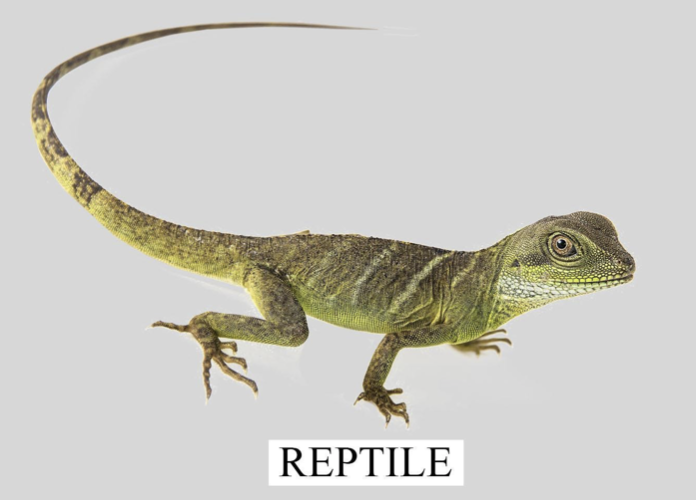
- Reptiles are ectotherms: they rely upon their general climate to control their internal heat level; this prompts preferences, for example, not being reliant on metabolic energy from nourishment for body heat.
- Reptiles are additionally poikilotherms: an organism whose internal heat levels shift instead of stay stable.
- Some reptiles go into brumation: an extensive period during a cold climate that comprises no eating and diminished digestion.
Additional information:
Reptiles are ectotherms: An organism whose primary wellspring of body heat originates from the climate. This is as opposed to endotherms, which utilize the warmth delivered by digestion to control the internal heat level. Notwithstanding being ectothermic, reptiles are arranged as poikilotherms: creatures whose internal heat levels fluctuate as opposed to staying stable. Reptiles have conducted transformations to help control internal heat levels, for example, basking in sunny places to warm up and finding shady spots or going underground to cool down. The benefit of ectothermy is that metabolic energy from food isn't needed to warm the body; accordingly, reptiles can make due on around $10\%$ of the calories required by a similarly- sized endotherm.
So, the correct answer is ‘Reptile’.
Note: There is one key adaptation that has allowed reptiles to live on land was the improvement of their scaly skin which contains the protein keratin and waxy lipids, diminishing water moisture from the skin. Because of this occlusive skin, reptiles can't utilize their skin for breath, as do amphibians; all breathe with lungs.
Complete answer:
- Reptiles duplicate explicitly through inside fertilization; a few animal types are ovoviviparous (lay eggs) and others are viviparous (live birth).
- Reptiles are ectotherms: they rely upon their general climate to control their internal heat level; this prompts preferences, for example, not being reliant on metabolic energy from nourishment for body heat.
- Reptiles are additionally poikilotherms: an organism whose internal heat levels shift instead of stay stable.
- Some reptiles go into brumation: an extensive period during a cold climate that comprises no eating and diminished digestion.
Additional information:
Reptiles are ectotherms: An organism whose primary wellspring of body heat originates from the climate. This is as opposed to endotherms, which utilize the warmth delivered by digestion to control the internal heat level. Notwithstanding being ectothermic, reptiles are arranged as poikilotherms: creatures whose internal heat levels fluctuate as opposed to staying stable. Reptiles have conducted transformations to help control internal heat levels, for example, basking in sunny places to warm up and finding shady spots or going underground to cool down. The benefit of ectothermy is that metabolic energy from food isn't needed to warm the body; accordingly, reptiles can make due on around $10\%$ of the calories required by a similarly- sized endotherm.
So, the correct answer is ‘Reptile’.
Note: There is one key adaptation that has allowed reptiles to live on land was the improvement of their scaly skin which contains the protein keratin and waxy lipids, diminishing water moisture from the skin. Because of this occlusive skin, reptiles can't utilize their skin for breath, as do amphibians; all breathe with lungs.
Recently Updated Pages
Master Class 11 Computer Science: Engaging Questions & Answers for Success

Master Class 11 Business Studies: Engaging Questions & Answers for Success
Master Class 11 Economics: Engaging Questions & Answers for Success
Master Class 11 English: Engaging Questions & Answers for Success
Master Class 11 Maths: Engaging Questions & Answers for Success
Master Class 11 Biology: Engaging Questions & Answers for Success
Trending doubts
One Metric ton is equal to kg A 10000 B 1000 C 100 class 11 physics CBSE
There are 720 permutations of the digits 1 2 3 4 5 class 11 maths CBSE
Discuss the various forms of bacteria class 11 biology CBSE
Draw a diagram of a plant cell and label at least eight class 11 biology CBSE
State the laws of reflection of light
Explain zero factorial class 11 maths CBSE