




The auditory nerves get its input from which of the following?
(a)The sense cells of the cochlea
(b) Vibration of last ossicles
(c) Eustachian tube
(d) Vibration of the tympanic membrane
Answer
 Verified
610.2k+ views
Hint: The ears perform two sensory functions, hearing and maintenance of body balance. The middle ear transmits the sound waves to a specific part of the labyrinth. It is the coiled portion of the labyrinth. The membranous labyrinth is filled with a fluid called endolymph. The auditory nerve receives the signal from the sense cells and interprets it.
Complete answer:
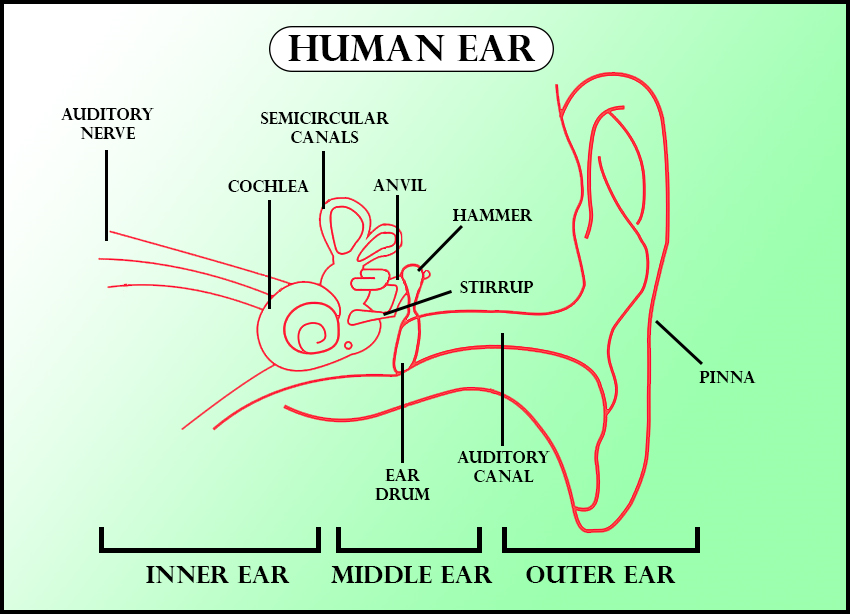
The auditory system processes how we hear and understand sounds within the environment. The middle ear transmits the sound waves to the cochlear fluid present in the inner ear or cochlea. The cochlea amplifies these sound vibrations in the cochlear fluid with the help of the organ of Corti present along with it. The auditory nerve receives the signal from the sense cells and interprets it. It is made up of both peripheral structures like the outer, middle, and inner ear and brain regions like cochlear nuclei, superior olivary nuclei, lateral lemniscus, inferior colliculus, medial geniculate nuclei, and auditory cortex. Sound waves reach the outer ear and travel down the external acoustic meatus to reach the eardrum. Contact between the eardrum and environmental pressure waves causes movement of the membrane. Movement of the tympanic membrane initiates the vibration of 3 small bones within the middle ear: the malleus, incus, and stapes which transfer the vibration to the inner ear.
Additional Information: -Sounds are produced by energy waves. Energy waves travel through a medium by moving molecules. This causes increases and decreases in the pressure of air within the environment.
-The number of periods of compression and rarefaction within a specified amount of time is the frequency of a specific sound.
-The auditory nerves connect the nerve impulses of the ears to the upper temporal lobe of the cerebral cortex.
So, the answer is 'The sense cells of cochlea'
Note:
- Anatomically, the ear can be divided into three major sections called the outer ear, the middle ear, and the inner ear.
-Outer ear consists of the pinna and external auditory meatus. Pinna collects the vibrations in the air which produce sound.
-The middle ear consists of three ossicles called the malleus, incus, and stapes which are attached to one another in a chain-like fashion.
Complete answer:
The auditory system processes how we hear and understand sounds within the environment. The middle ear transmits the sound waves to the cochlear fluid present in the inner ear or cochlea. The cochlea amplifies these sound vibrations in the cochlear fluid with the help of the organ of Corti present along with it. The auditory nerve receives the signal from the sense cells and interprets it. It is made up of both peripheral structures like the outer, middle, and inner ear and brain regions like cochlear nuclei, superior olivary nuclei, lateral lemniscus, inferior colliculus, medial geniculate nuclei, and auditory cortex. Sound waves reach the outer ear and travel down the external acoustic meatus to reach the eardrum. Contact between the eardrum and environmental pressure waves causes movement of the membrane. Movement of the tympanic membrane initiates the vibration of 3 small bones within the middle ear: the malleus, incus, and stapes which transfer the vibration to the inner ear.
Additional Information: -Sounds are produced by energy waves. Energy waves travel through a medium by moving molecules. This causes increases and decreases in the pressure of air within the environment.
-The number of periods of compression and rarefaction within a specified amount of time is the frequency of a specific sound.
-The auditory nerves connect the nerve impulses of the ears to the upper temporal lobe of the cerebral cortex.
So, the answer is 'The sense cells of cochlea'
Note:
- Anatomically, the ear can be divided into three major sections called the outer ear, the middle ear, and the inner ear.
-Outer ear consists of the pinna and external auditory meatus. Pinna collects the vibrations in the air which produce sound.
-The middle ear consists of three ossicles called the malleus, incus, and stapes which are attached to one another in a chain-like fashion.
Recently Updated Pages
Master Class 11 Social Science: Engaging Questions & Answers for Success

Master Class 11 Chemistry: Engaging Questions & Answers for Success
Master Class 12 Business Studies: Engaging Questions & Answers for Success
Master Class 12 Chemistry: Engaging Questions & Answers for Success
Master Class 12 Biology: Engaging Questions & Answers for Success
Class 12 Question and Answer - Your Ultimate Solutions Guide
Trending doubts
One Metric ton is equal to kg A 10000 B 1000 C 100 class 11 physics CBSE
Difference Between Prokaryotic Cells and Eukaryotic Cells
Two of the body parts which do not appear in MRI are class 11 biology CBSE
Explain zero factorial class 11 maths CBSE
10 examples of friction in our daily life
Name the Largest and the Smallest Cell in the Human Body ?