




The arteries which supply blood to the heart is
(a)Pulmonary arteries
(b)Hepatic arteries
(c)Coronary arteries
(d)Carotid arteries
Answer
 Verified
636.3k+ views
Hint: The arteries are for coronary circulation, which means they transport blood that is rich in oxygen to the heart muscle. Like all the other organs, the heart requires a non-stop supply of oxygen to work properly, and these arteries surround the heart to supply oxygen.
Complete answer:
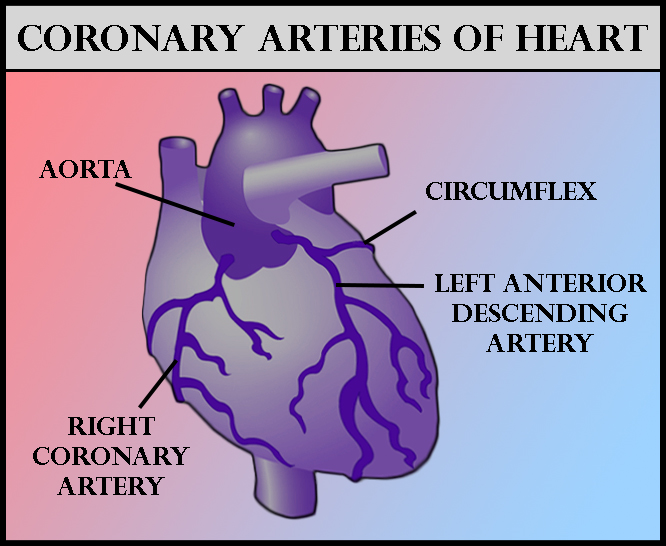
The arteries which supply blood to the heart are called the coronary arteries. The right side of the heart gets oxygenated blood from the right coronary artery and the left side of the heart receives blood from the left coronary artery supplying blood to the left side of the heart.
The blood supply to parts like the stomach and intestine are provided by the Hepatic artery and blood supply to parts like the face and neck are provided by carotid arteries.
Additional Information: -In the diastolic phase and the systolic phase, the diastolic phase shows the period where the ventricles are relaxed. In this time flow of blood is from the left and right atrium to the left and right ventricle.
-The blood travels via atrioventricular valves which separates the atria from the ventricles. The right atrium gets carbon dioxide-rich blood from the body by superior and inferior vena cava.
-The left atrium gets oxygen-rich blood from the lungs by the pulmonary veins. The diastolic phase ends by both the atria contracting and adds extra blood into the ventricles.
So, the correct answer is coronary arteries.
Note: -Atherosclerosis disease related to arteries where plaque accumulates on the wall of the arteries along with cholesterol which narrows down the blood flow causing disorder to the heart and can be lethal if not treated.
-Systolic phase is the time of contraction of the ventricles that takes place and push the blood into the aorta and pulmonary artery.
-Sound of heartbeat is represented by Lubb and Dub sound. Lubb sound is formed by the closing of atrioventricular valves and the closing of semilunar valves at the root of the pulmonary artery and aorta produces Dub sound.
Complete answer:
The arteries which supply blood to the heart are called the coronary arteries. The right side of the heart gets oxygenated blood from the right coronary artery and the left side of the heart receives blood from the left coronary artery supplying blood to the left side of the heart.
The blood supply to parts like the stomach and intestine are provided by the Hepatic artery and blood supply to parts like the face and neck are provided by carotid arteries.
Additional Information: -In the diastolic phase and the systolic phase, the diastolic phase shows the period where the ventricles are relaxed. In this time flow of blood is from the left and right atrium to the left and right ventricle.
-The blood travels via atrioventricular valves which separates the atria from the ventricles. The right atrium gets carbon dioxide-rich blood from the body by superior and inferior vena cava.
-The left atrium gets oxygen-rich blood from the lungs by the pulmonary veins. The diastolic phase ends by both the atria contracting and adds extra blood into the ventricles.
So, the correct answer is coronary arteries.
Note: -Atherosclerosis disease related to arteries where plaque accumulates on the wall of the arteries along with cholesterol which narrows down the blood flow causing disorder to the heart and can be lethal if not treated.
-Systolic phase is the time of contraction of the ventricles that takes place and push the blood into the aorta and pulmonary artery.
-Sound of heartbeat is represented by Lubb and Dub sound. Lubb sound is formed by the closing of atrioventricular valves and the closing of semilunar valves at the root of the pulmonary artery and aorta produces Dub sound.
Recently Updated Pages
Which will be the least stable resonating structure class 11 chemistry CBSE

How many 5 digit telephone numbers can be construc-class-11-maths-CBSE
How do you find the angle of the resultant vector class 11 physics CBSE
Draw labelled diagram of the following i Gram seed class 11 biology CBSE
1 Quintal is equal to a 110 kg b 10 kg c 100kg d 1000 class 11 physics CBSE
What is the need and importance of classification class 11 biology CBSE
Trending doubts
One Metric ton is equal to kg A 10000 B 1000 C 100 class 11 physics CBSE
Find the value of the expression given below sin 30circ class 11 maths CBSE
Draw a diagram of nephron and explain its structur class 11 biology CBSE
10 examples of friction in our daily life
Proton was discovered by A Thomson B Rutherford C Chadwick class 11 chemistry CBSE
The teeth used for biting and cutting food are called class 11 biology CBSE