




The amount of carbon dioxide fixed by 1 gm of chlorophyll within 1 hour is known as:
(a) Photosynthetic number
(b) Respiratory quotient
(c) Photolysis
(d) None of the above
Answer
 Verified
585.9k+ views
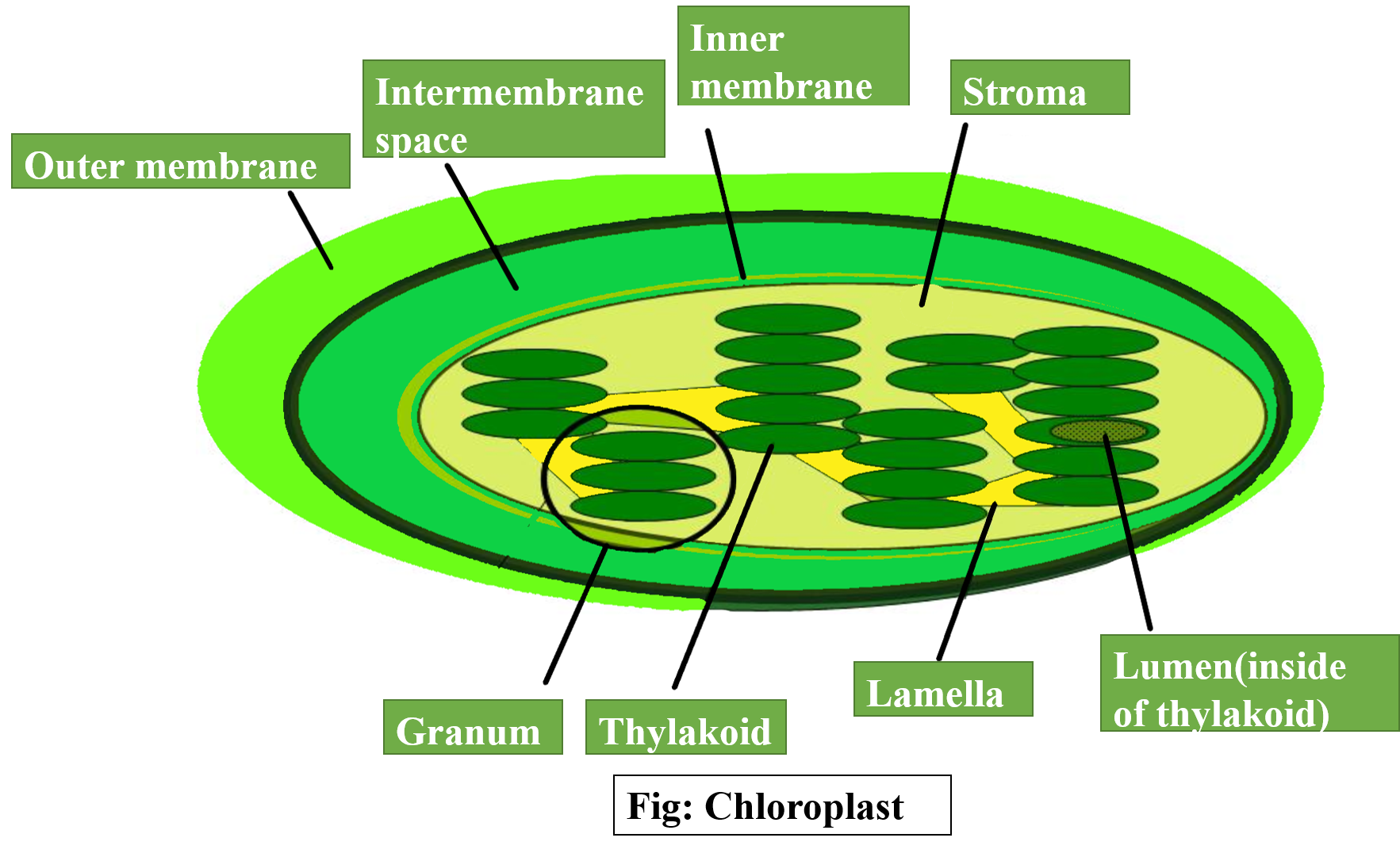
Hint: Chlorophyll is a key component in the process that sustains plant life and produces oxygen for the entire planet. It is present in the chloroplast, an organelle exclusively found in plants.
Complete answer:
The amount of carbon dioxide that can be fixed in an hour by chlorophyll is known as its photosynthetic number. The process of photosynthesis begins when light is absorbed by the green-colored pigment chlorophyll located in the cell organelle ‘chloroplast.’ The plants use this energy to reduce carbon dioxide into carbohydrates.
Additional Information: -A pigment is a molecule that can absorb light at different wavelengths and thus has a particular color.
-Chlorophyll absorbs light radiations in blue and red parts of the light spectrum. Chlorophyll is mostly present in two forms- chlorophyll-a and chlorophyll-b.
-Chlorophyll a absorbs more red wavelengths than violet-blue wavelengths of light while Chlorophyll-b absorbs violet-blue wavelengths more than the red wavelength of light.
-Respiratory quotient or respiratory coefficient is defined as the ratio of moles of carbon dioxide produced to the moles of oxygen consumed during complete oxidation of a respiratory substrate to carbon dioxide and water.
-The respiratory substrate or metabolic fuel can be carbohydrates, proteins, or fats.
-Photolysis is the dissociation of a molecule into smaller units upon the absorption of photons of light.
<>So, the correct answer is ‘Photosynthetic number.’
Note: Accessory pigments include carotenoids, carotenes, and xanthophylls and protect the chloroplast from nascent oxygen released during the photolysis of water. They dissipate excess energy by conversion of that energy into heat. Also, they make the flowers and fruits conspicuous to animals for pollination and dispersal.
Complete answer:
The amount of carbon dioxide that can be fixed in an hour by chlorophyll is known as its photosynthetic number. The process of photosynthesis begins when light is absorbed by the green-colored pigment chlorophyll located in the cell organelle ‘chloroplast.’ The plants use this energy to reduce carbon dioxide into carbohydrates.
Additional Information: -A pigment is a molecule that can absorb light at different wavelengths and thus has a particular color.
-Chlorophyll absorbs light radiations in blue and red parts of the light spectrum. Chlorophyll is mostly present in two forms- chlorophyll-a and chlorophyll-b.
-Chlorophyll a absorbs more red wavelengths than violet-blue wavelengths of light while Chlorophyll-b absorbs violet-blue wavelengths more than the red wavelength of light.
-Respiratory quotient or respiratory coefficient is defined as the ratio of moles of carbon dioxide produced to the moles of oxygen consumed during complete oxidation of a respiratory substrate to carbon dioxide and water.
-The respiratory substrate or metabolic fuel can be carbohydrates, proteins, or fats.
-Photolysis is the dissociation of a molecule into smaller units upon the absorption of photons of light.
<>So, the correct answer is ‘Photosynthetic number.’
Note: Accessory pigments include carotenoids, carotenes, and xanthophylls and protect the chloroplast from nascent oxygen released during the photolysis of water. They dissipate excess energy by conversion of that energy into heat. Also, they make the flowers and fruits conspicuous to animals for pollination and dispersal.
Recently Updated Pages
Master Class 11 Computer Science: Engaging Questions & Answers for Success

Master Class 11 Business Studies: Engaging Questions & Answers for Success
Master Class 11 Economics: Engaging Questions & Answers for Success
Master Class 11 English: Engaging Questions & Answers for Success
Master Class 11 Maths: Engaging Questions & Answers for Success
Master Class 11 Biology: Engaging Questions & Answers for Success
Trending doubts
One Metric ton is equal to kg A 10000 B 1000 C 100 class 11 physics CBSE
There are 720 permutations of the digits 1 2 3 4 5 class 11 maths CBSE
Discuss the various forms of bacteria class 11 biology CBSE
Draw a diagram of a plant cell and label at least eight class 11 biology CBSE
State the laws of reflection of light
Explain zero factorial class 11 maths CBSE