




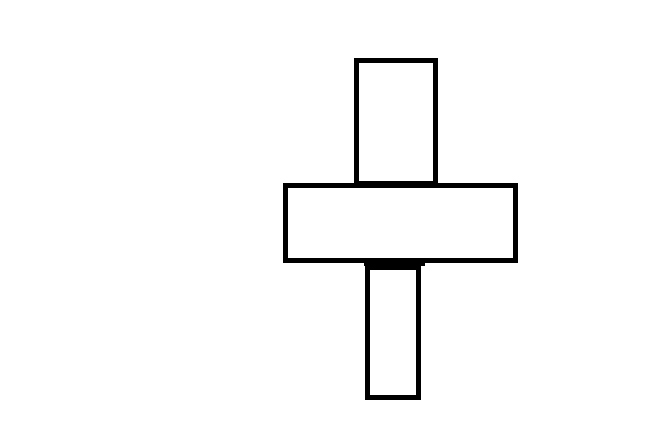
The accompanying figure represents an ecological pyramid. It is
A. Pyramid of numbers in grassland
B. Pyramid of biomass in fallow land
C. Pyramid of biomass in lake
D. Energy pyramid in a spring
Answer
 Verified
612.6k+ views
Hint: Ecological pyramids help us to understand relationships between different trophic levels of an ecosystem. Ecological pyramids can be of three types – pyramid of energy, biomass and number. Ecological pyramids can be upright or inverted.
Complete answer:
Option (a) is incorrect. Pyramid of numbers in a grassland will always be upright. This is because, in a grassland the producers are grasses which are huge in number compared to the herbivores or carnivores present. Thus, the number of animals in each trophic level goes on decreasing as we move towards the apex predators. Thus, a grassland ecosystem will always have an upright pyramid of biomass.
Option (b) is incorrect. The pyramid of biomass in a fallow land is also erect, since the producers outnumber the consumer levels of the ecosystem.
Option (c) is correct. In a lake, the phytoplankton form the producer levels. The number of phytoplankton is always less than the number of consumers in a lake. Since, the phytoplankton are short lived they do not contribute hugely to the biomass. Hence, the pyramid of biomass in a lake is always inverted.
Option (d) is incorrect. According to Lindeman’s 10 percent rule, only 10 percent of the energy received by a trophic level can be passed on to the next level. The producer level being the energy trapping level receives the maximum amount of energy. The amount of energy passed on to the herbivore level is 10 percent of the energy trapped by producers. The herbivores, in turn, pass on 10 percent of the amount of energy received to the carnivore level. Hence, the amount of energy passed on to higher trophic levels goes on decreasing and thus the pyramid of energy is always upright.
Hence, the correct answer is option (C).
Note: Ecological pyramids delineate relationships between different trophic levels in an ecosystem. Biomass is the amount of organic matter produced at each of the trophic levels in an ecosystem. The pyramid of biomass indicates the relationship between biomass and trophic levels. It is always inverted in lakes because the producer level cannot outnumber the consumer levels.
Complete answer:
Option (a) is incorrect. Pyramid of numbers in a grassland will always be upright. This is because, in a grassland the producers are grasses which are huge in number compared to the herbivores or carnivores present. Thus, the number of animals in each trophic level goes on decreasing as we move towards the apex predators. Thus, a grassland ecosystem will always have an upright pyramid of biomass.
Option (b) is incorrect. The pyramid of biomass in a fallow land is also erect, since the producers outnumber the consumer levels of the ecosystem.
Option (c) is correct. In a lake, the phytoplankton form the producer levels. The number of phytoplankton is always less than the number of consumers in a lake. Since, the phytoplankton are short lived they do not contribute hugely to the biomass. Hence, the pyramid of biomass in a lake is always inverted.
Option (d) is incorrect. According to Lindeman’s 10 percent rule, only 10 percent of the energy received by a trophic level can be passed on to the next level. The producer level being the energy trapping level receives the maximum amount of energy. The amount of energy passed on to the herbivore level is 10 percent of the energy trapped by producers. The herbivores, in turn, pass on 10 percent of the amount of energy received to the carnivore level. Hence, the amount of energy passed on to higher trophic levels goes on decreasing and thus the pyramid of energy is always upright.
Hence, the correct answer is option (C).
Note: Ecological pyramids delineate relationships between different trophic levels in an ecosystem. Biomass is the amount of organic matter produced at each of the trophic levels in an ecosystem. The pyramid of biomass indicates the relationship between biomass and trophic levels. It is always inverted in lakes because the producer level cannot outnumber the consumer levels.
Recently Updated Pages
Master Class 11 English: Engaging Questions & Answers for Success

Master Class 11 Social Science: Engaging Questions & Answers for Success
Master Class 11 Maths: Engaging Questions & Answers for Success
Master Class 11 Biology: Engaging Questions & Answers for Success
Master Class 11 Physics: Engaging Questions & Answers for Success
Master Class 11 Chemistry: Engaging Questions & Answers for Success
Trending doubts
One Metric ton is equal to kg A 10000 B 1000 C 100 class 11 physics CBSE
Difference Between Prokaryotic Cells and Eukaryotic Cells
1 ton equals to A 100 kg B 1000 kg C 10 kg D 10000 class 11 physics CBSE
Find the value of the expression given below sin 30circ class 11 maths CBSE
Two of the body parts which do not appear in MRI are class 11 biology CBSE
What are hard magnetic materials class 11 physics CBSE