




TCA cycle is named after
A. Embden
B. Calvin
C. Krebs
D. Emerson
Answer
 Verified
585.3k+ views
Hint: TCA cycle refers to Tricarboxylic cycle. We will first explain the TCA cycle- what is it, who named it.
Complete Answer:
TCA cycle: TCA cycle is also called the Citric acid cycle or Krebs cycle.
- This cycle was named after the name of its discoverer who was Hans Adolf Krebs.
- TCA cycle is a part of aerobic respiration (a process which occurs in the presence of Oxygen to convert food into carbon dioxide, water and energy).
- TCA cycle is a series of chemical reactions in all aerobic organisms to release energy.
- In the TCA cycle Acetyl coenzyme A gets oxidized.
- Acetyl coenzyme A is derived from the fats, proteins and carbohydrates.
- This cycle takes place in the matrix of Mitochondria of a cell.
Oxidative decarboxylation of pyruvate to Acetyl coenzyme A.
- This is the linkage step between the glycolysis and Kreb’s cycle.
- In this step, the end product of glycolysis i.e the pyruvate is oxidatively decarboxylated to acetyl coenzyme A and carbon dioxide with the help of enzyme pyruvate dehydrogenase.
There are a total 8 steps occurred in the TCA cycle. These all eight steps are enzyme catalysed.
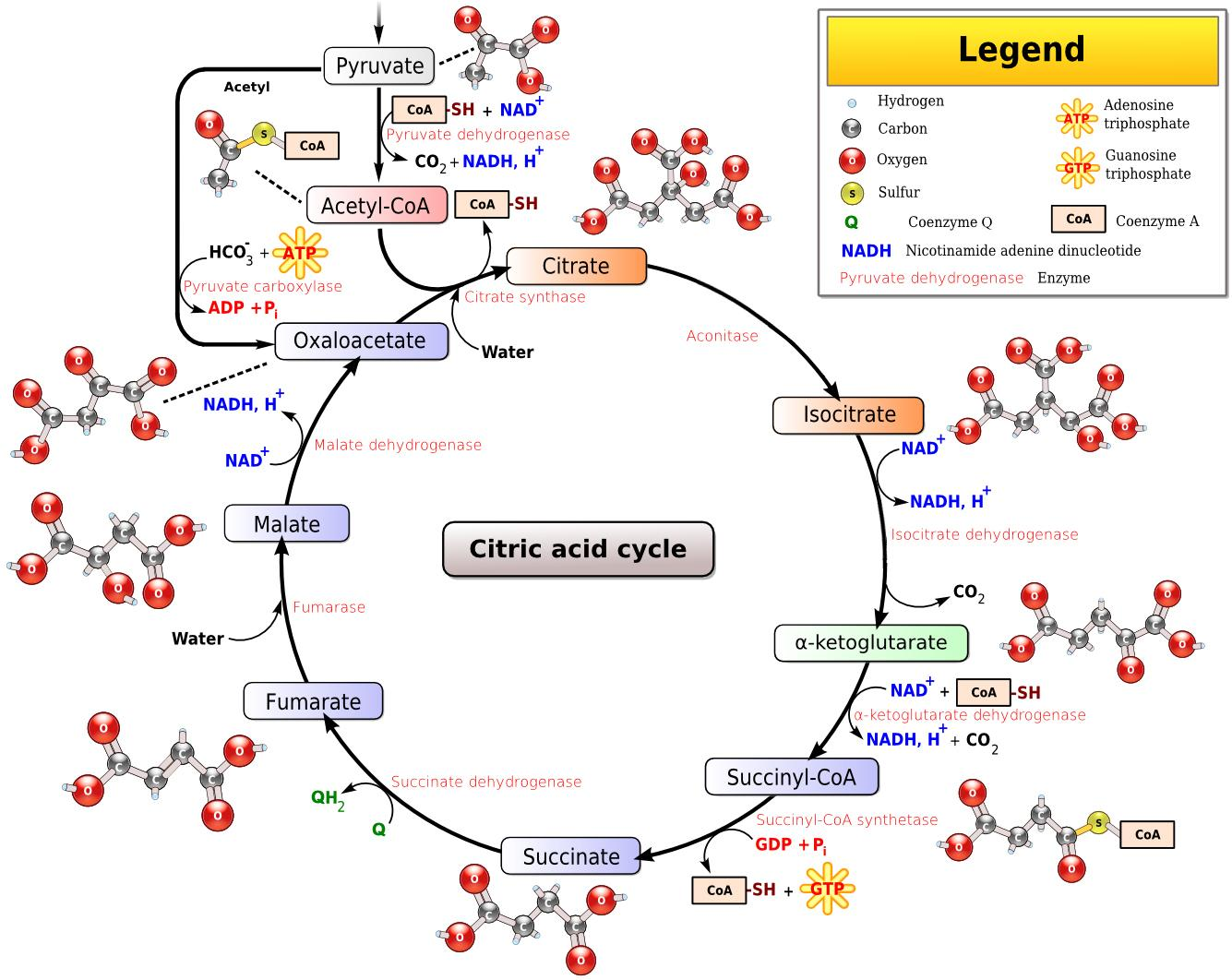
So, option C is the right answer to this question.
Note: TCA cycle takes place in the matrix of mitochondria. Its purpose is the complete oxidation of glucose and producing energy rich molecules that later produce ATP in the Electron transport chain.
Complete Answer:
TCA cycle: TCA cycle is also called the Citric acid cycle or Krebs cycle.
- This cycle was named after the name of its discoverer who was Hans Adolf Krebs.
- TCA cycle is a part of aerobic respiration (a process which occurs in the presence of Oxygen to convert food into carbon dioxide, water and energy).
- TCA cycle is a series of chemical reactions in all aerobic organisms to release energy.
- In the TCA cycle Acetyl coenzyme A gets oxidized.
- Acetyl coenzyme A is derived from the fats, proteins and carbohydrates.
- This cycle takes place in the matrix of Mitochondria of a cell.
Oxidative decarboxylation of pyruvate to Acetyl coenzyme A.
- This is the linkage step between the glycolysis and Kreb’s cycle.
- In this step, the end product of glycolysis i.e the pyruvate is oxidatively decarboxylated to acetyl coenzyme A and carbon dioxide with the help of enzyme pyruvate dehydrogenase.
There are a total 8 steps occurred in the TCA cycle. These all eight steps are enzyme catalysed.
| Sl.No. | Steps involved in Krebs cycle | Enzyme used |
| 1 | Condensation of acetyl coenzyme A with Oxaloacetate | Citrate synthase |
| 2 | Isomerisation of citrate into isocitrate | Aconitase |
| 3 | Oxidative decarboxylation of isocitrate | Isocitrate dehydrogenase |
| 4 | Oxidative decarboxylation of alpha-ketoglutarate | Alpha-ketoglutarate dehydrogenase |
| 5 | Conversion of succinyl-coA into succinate | Succinyl-coA synthase |
| 6 | Dehydration of succinate to fumarate | Succinate dehydrogenase |
| 7 | Hydration of fumarate to malate | Fumarate hydratase |
| 8 | Dehydration of malate to oxaloacetate | Malate dehydrogenase |
So, option C is the right answer to this question.
Note: TCA cycle takes place in the matrix of mitochondria. Its purpose is the complete oxidation of glucose and producing energy rich molecules that later produce ATP in the Electron transport chain.
Recently Updated Pages
Master Class 11 Computer Science: Engaging Questions & Answers for Success

Master Class 11 Business Studies: Engaging Questions & Answers for Success
Master Class 11 Economics: Engaging Questions & Answers for Success
Master Class 11 English: Engaging Questions & Answers for Success
Master Class 11 Maths: Engaging Questions & Answers for Success
Master Class 11 Biology: Engaging Questions & Answers for Success
Trending doubts
One Metric ton is equal to kg A 10000 B 1000 C 100 class 11 physics CBSE
There are 720 permutations of the digits 1 2 3 4 5 class 11 maths CBSE
Discuss the various forms of bacteria class 11 biology CBSE
Draw a diagram of a plant cell and label at least eight class 11 biology CBSE
State the laws of reflection of light
Explain zero factorial class 11 maths CBSE