




Taungya is
(a) A method of shifting cultivation
(b) Type of agroforestry practice
(c) Protection forestry
(d) Both (a) and (b)
Answer
 Verified
674.7k+ views
Hint: It reduces the loss of fertility and helps make the land naturally fertile again by abandoning. This helps the soil to regain its natural nutrients.
Complete answer: Taungya is a method of shifting cultivation and agroforestry.
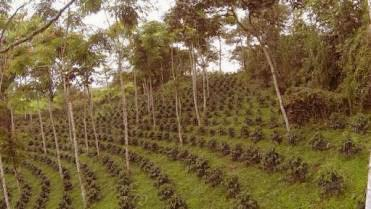
Cultivators are given the right to cultivate crops during the early stages of forest plantation establishment, in the taungya system. The cultivation of crops continues until the trees start shading the crops.
In shifting cultivation, an area is cleared and cultivated for a time until it loses its fertility. When the land becomes infertile for use, the farmer abandons it, shifts to a new plot for cultivation in the same process.
The land is left abandoned so that it could gain its natural fertility again. Some feel that this process harms the ecosystem and harms the economy while others take it as a method of conservation.
In agroforestry, the land is managed in a way that trees and shrubs are grown around crops.
Additional information:
1. The taungya system helps in growing a tree crop at a lesser cost and also increases food production.
2. Food crops may be damaged during tree-harvesting. Trees that together form a part of agroforestry systems may be the hosts of insects and birds that can damage crops.
3. Protection forestry is the forest that prevents the impact of a natural hazard, over the people and their assets living in the mountainous areas
So the correct answer is ‘Taungya is a method of shifting cultivation and also a type of agroforestry practice’
Notes:
1. American economic geographer J. Russell Smith in his book Tree Crops: A Permanent Agriculture (1929) outlined agroforestry. He believed that tree-based agriculture was better than permanent agriculture.
2. Protection forestry protects against rockfall, avalanche, erosion, landslide, debris flow, or flooding.
Complete answer: Taungya is a method of shifting cultivation and agroforestry.
Cultivators are given the right to cultivate crops during the early stages of forest plantation establishment, in the taungya system. The cultivation of crops continues until the trees start shading the crops.
In shifting cultivation, an area is cleared and cultivated for a time until it loses its fertility. When the land becomes infertile for use, the farmer abandons it, shifts to a new plot for cultivation in the same process.
The land is left abandoned so that it could gain its natural fertility again. Some feel that this process harms the ecosystem and harms the economy while others take it as a method of conservation.
In agroforestry, the land is managed in a way that trees and shrubs are grown around crops.
Additional information:
1. The taungya system helps in growing a tree crop at a lesser cost and also increases food production.
2. Food crops may be damaged during tree-harvesting. Trees that together form a part of agroforestry systems may be the hosts of insects and birds that can damage crops.
3. Protection forestry is the forest that prevents the impact of a natural hazard, over the people and their assets living in the mountainous areas
So the correct answer is ‘Taungya is a method of shifting cultivation and also a type of agroforestry practice’
Notes:
1. American economic geographer J. Russell Smith in his book Tree Crops: A Permanent Agriculture (1929) outlined agroforestry. He believed that tree-based agriculture was better than permanent agriculture.
2. Protection forestry protects against rockfall, avalanche, erosion, landslide, debris flow, or flooding.
Recently Updated Pages
Master Class 10 Computer Science: Engaging Questions & Answers for Success

Differentiate between voluntary action and reflex class 10 biology CBSE
The uses of bleaching powder are A It is used bleaching class 10 chemistry CBSE
Fill in the blanks with abstract nouns of the words class 10 english CBSE
How many threedigit numbers are there class 10 maths CBSE
What is a reflex arc class 10 biology CBSE
Trending doubts
In basketball, how many quarters are played in an NBA game?
10 examples of evaporation in daily life with explanations
Which country is known as "The land of Fire and Ice"?
What is the full form of POSCO class 10 social science CBSE
In which year voting age was reduced from 21 to 18?
Which metal is used to connect solar cells to solar class 10 chemistry CBSE