




Sundew is also known as
(A) Dionaea
(B) Nepenthes
(C) Drosera
(D) Striga
Answer
 Verified
617.7k+ views
Hint: Insectivorous plants are the plants that trap and digest the insects for their nutrients. All the options given in the question are insectivorous plants. These plants intake the insects and digest them with the help of enzymes synthesized by them. This provides the plants with nitrogenous nutrition that cannot be provided by the soil which is poor.
Complete Answer:
Drosera is the largest genera of the carnivorous plants. It is the insectivorous plant that covers its leaves by the mucilaginous substance that appears as the morning dew. Hence it is known as the sun dew. The nature and the characteristics of these plants vary from place to place.
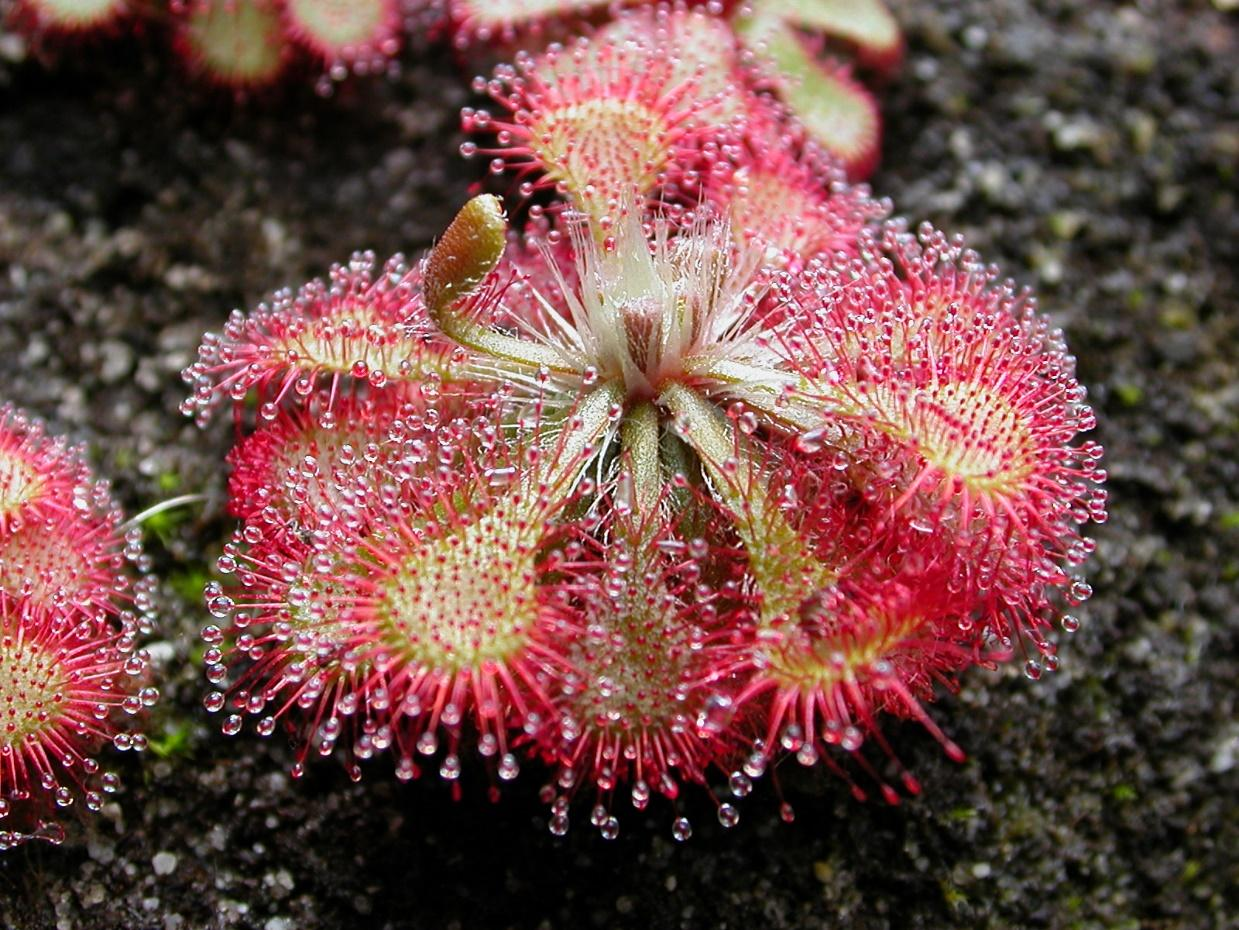
These drosera are the perennial plants which are herbaceous in nature. They are provided with the climbing and scrambling stems to reach long heights. Based on the several habitats these drosera plants are classified into temperate, subtropical, pygmy, tuberous and Queensland sundews. These insectivorous plants are mainly attractive in nature. Hence when the insects see these plants they move and sit in the leaves of the plants. Since the plant leaves are sticky in nature due to the presence of mucilaginous substance, they got easily eaten by the plants. After taking them the insects are digested by the enzymes secreted by the two glands namely stalked glands and the sessile glands.
Thus, the option (C) is correct.
Note: The stalked glands in these plants secretes mucilage and the enzymes for the digestion where the sessile glands in them absorbs the necessary nutrients from the digested insects for its energy for growth and development. The enzymes include asteraceae, protease, peroxides and phosphatase.
Complete Answer:
Drosera is the largest genera of the carnivorous plants. It is the insectivorous plant that covers its leaves by the mucilaginous substance that appears as the morning dew. Hence it is known as the sun dew. The nature and the characteristics of these plants vary from place to place.
These drosera are the perennial plants which are herbaceous in nature. They are provided with the climbing and scrambling stems to reach long heights. Based on the several habitats these drosera plants are classified into temperate, subtropical, pygmy, tuberous and Queensland sundews. These insectivorous plants are mainly attractive in nature. Hence when the insects see these plants they move and sit in the leaves of the plants. Since the plant leaves are sticky in nature due to the presence of mucilaginous substance, they got easily eaten by the plants. After taking them the insects are digested by the enzymes secreted by the two glands namely stalked glands and the sessile glands.
Thus, the option (C) is correct.
Note: The stalked glands in these plants secretes mucilage and the enzymes for the digestion where the sessile glands in them absorbs the necessary nutrients from the digested insects for its energy for growth and development. The enzymes include asteraceae, protease, peroxides and phosphatase.
Recently Updated Pages
Master Class 12 Economics: Engaging Questions & Answers for Success

Master Class 12 English: Engaging Questions & Answers for Success
Master Class 12 Social Science: Engaging Questions & Answers for Success
Master Class 12 Maths: Engaging Questions & Answers for Success
Master Class 12 Physics: Engaging Questions & Answers for Success
Master Class 9 General Knowledge: Engaging Questions & Answers for Success
Trending doubts
Explain the Treaty of Vienna of 1815 class 10 social science CBSE
Why is it 530 pm in india when it is 1200 afternoon class 10 social science CBSE
What is the full form of POSCO class 10 social science CBSE
Define Potential, Developed, Stock and Reserved resources
Which Country Has the Largest Border with India?
Complete the sentence with the most appropriate word class 10 english CBSE