




Stomochord is not similar to notochord because it is
(a) Hollow
(b) Outgrowth of gut
(c) Outgrowth of the nerve cord
(d) Ingrowth of body wall
Answer
 Verified
611.7k+ views
Hint: ‘Stomochord’ has ‘stomo’ which is related to the digestive system. This is a conspicuous dorsal extension of the pharynx from an anterior buccal tube or stomochord and this lacks the fibrous sheath of the chordates notochord.
Complete step by step answer:
Hemichordates have pharyngeal slits and dorsal nerve cord which may not be hollow. However, they do not appear to have a notochord merely a stomocord and have no post- anal tail. The stomochord is a short hollow diverticulum of the foregut.
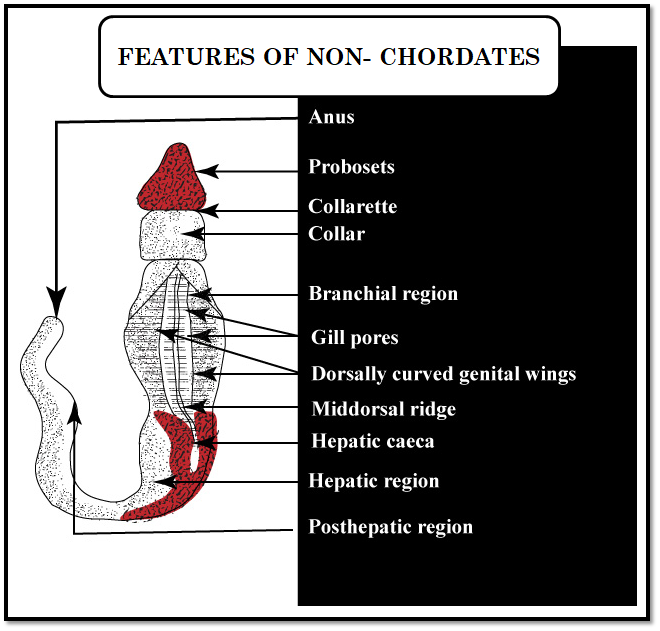
- Acorn worm is an example which belongs to Phylum - Hemichordata and, from class 1- Enteropneusta.
- Their body is divided into three parts: Proboscis, collar, and trunk.
- The anterior end is a muscular, extensible proboscis used to burrow and collect food.
- The presence of slender stalks supported by cartilage skeleton joins proboscis to the collar.
- The trunk is behind the collar and consists of many pairs of small external gills slits through which water exits.
- Mouth is located at the proboscis collar junction, which directly joins into a pharynx.
- Acorn worms have well- developed gill slits and stomochord.
- They have a dorsal strand of nerve cells that are the precursor of dorsal hollow nerve cord.
So, the correct answer is ‘(b) outgrowth of the gut.’
Note:
Chordates are distinguished from non- chordates based on three main characteristics:
- Notochord: A strong but flexible rod present beneath the nerve cord called the notochord.
- A dorsal tubular central nervous system or dorsal tubular nerve cord.
- Pharyngeal gill clefts: Embryos have gill slits on the walls of pharynx functions in both feeding and respiration.
Complete step by step answer:
Hemichordates have pharyngeal slits and dorsal nerve cord which may not be hollow. However, they do not appear to have a notochord merely a stomocord and have no post- anal tail. The stomochord is a short hollow diverticulum of the foregut.
- Acorn worm is an example which belongs to Phylum - Hemichordata and, from class 1- Enteropneusta.
- Their body is divided into three parts: Proboscis, collar, and trunk.
- The anterior end is a muscular, extensible proboscis used to burrow and collect food.
- The presence of slender stalks supported by cartilage skeleton joins proboscis to the collar.
- The trunk is behind the collar and consists of many pairs of small external gills slits through which water exits.
- Mouth is located at the proboscis collar junction, which directly joins into a pharynx.
- Acorn worms have well- developed gill slits and stomochord.
- They have a dorsal strand of nerve cells that are the precursor of dorsal hollow nerve cord.
So, the correct answer is ‘(b) outgrowth of the gut.’
Note:
Chordates are distinguished from non- chordates based on three main characteristics:
- Notochord: A strong but flexible rod present beneath the nerve cord called the notochord.
- A dorsal tubular central nervous system or dorsal tubular nerve cord.
- Pharyngeal gill clefts: Embryos have gill slits on the walls of pharynx functions in both feeding and respiration.
Recently Updated Pages
Master Class 11 Social Science: Engaging Questions & Answers for Success

Master Class 11 English: Engaging Questions & Answers for Success
Master Class 11 Maths: Engaging Questions & Answers for Success
Master Class 11 Chemistry: Engaging Questions & Answers for Success
Master Class 11 Biology: Engaging Questions & Answers for Success
Master Class 11 Physics: Engaging Questions & Answers for Success
Trending doubts
One Metric ton is equal to kg A 10000 B 1000 C 100 class 11 physics CBSE
Difference Between Prokaryotic Cells and Eukaryotic Cells
How many of the following diseases can be studied with class 11 biology CBSE
Draw a diagram of a plant cell and label at least eight class 11 biology CBSE
Two of the body parts which do not appear in MRI are class 11 biology CBSE
10 examples of friction in our daily life