




Spicules occur in
(A) Annelida
(B) Mollusca
(C) Porifera
(D) Platyhelminthes
Answer
 Verified
584.7k+ views
Hint: The spicules provide the structural support to the animals and they act as the defense mechanism when the predators attack them. These spicules vary in size. The large spicules are called megascleres and the small spicules are microscleres.
Complete Answer:
(A) Annelida:
The segmented worms are placed under the phylum Annelida. They have a soft body and do not possess any spicules of thrones. Example of this type is earthworm.
(B) Mollusca:
These are soft and the bilaterally symmetrical body. They have the calcium carbonate shell surrounding its body.
(C) Porifera:
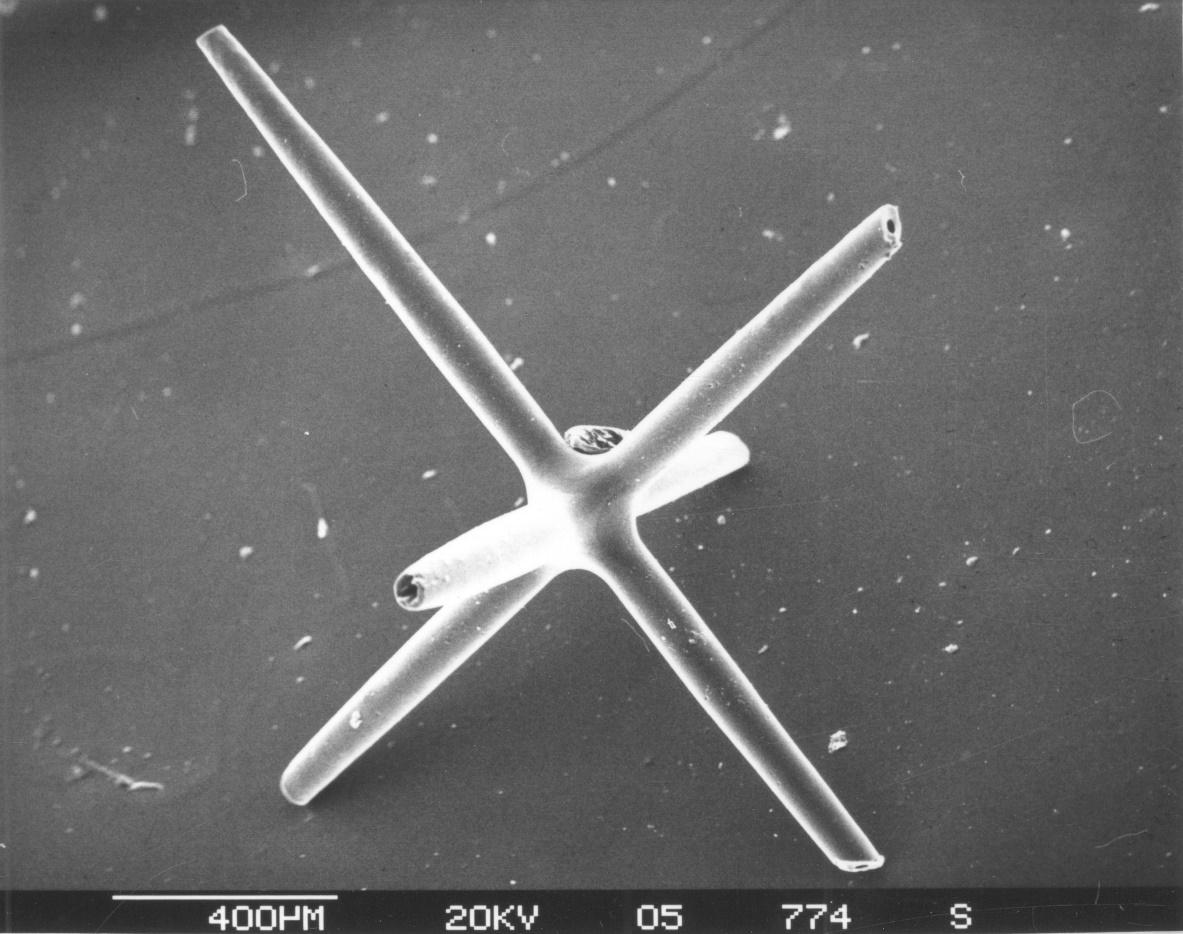
Spicules are the structures that are present especially in the skeletal structures of the sponges. These are made up of calcium carbonate and are calcareous in nature. They are chalky in nature. Some spicules in the sponges consist of the layers of silicon and hence they are siliceous in nature. The sponges belong to the phylum Porifera. And hence the spicules occur in the porifera.
(D) Platyhelminthes:
The flat worms belonged to this category. The body is triploblastic and bilaterally symmetrical in nature and does not possess any thorns.
Thus, the option (C) is correct.
Note: The spicules in the sponges under the class Hexactinellida are made up of silica and the spicules in the sponges belonged to the class Calcarea is made up of calcium carbonate. They are calcareous and hence the class they belong to is called calcarea.
Complete Answer:
(A) Annelida:
The segmented worms are placed under the phylum Annelida. They have a soft body and do not possess any spicules of thrones. Example of this type is earthworm.
(B) Mollusca:
These are soft and the bilaterally symmetrical body. They have the calcium carbonate shell surrounding its body.
(C) Porifera:
Spicules are the structures that are present especially in the skeletal structures of the sponges. These are made up of calcium carbonate and are calcareous in nature. They are chalky in nature. Some spicules in the sponges consist of the layers of silicon and hence they are siliceous in nature. The sponges belong to the phylum Porifera. And hence the spicules occur in the porifera.
(D) Platyhelminthes:
The flat worms belonged to this category. The body is triploblastic and bilaterally symmetrical in nature and does not possess any thorns.
Thus, the option (C) is correct.
Note: The spicules in the sponges under the class Hexactinellida are made up of silica and the spicules in the sponges belonged to the class Calcarea is made up of calcium carbonate. They are calcareous and hence the class they belong to is called calcarea.
Recently Updated Pages
Master Class 11 Computer Science: Engaging Questions & Answers for Success

Master Class 11 Business Studies: Engaging Questions & Answers for Success
Master Class 11 Economics: Engaging Questions & Answers for Success
Master Class 11 English: Engaging Questions & Answers for Success
Master Class 11 Maths: Engaging Questions & Answers for Success
Master Class 11 Biology: Engaging Questions & Answers for Success
Trending doubts
One Metric ton is equal to kg A 10000 B 1000 C 100 class 11 physics CBSE
There are 720 permutations of the digits 1 2 3 4 5 class 11 maths CBSE
Discuss the various forms of bacteria class 11 biology CBSE
Draw a diagram of a plant cell and label at least eight class 11 biology CBSE
State the laws of reflection of light
Explain zero factorial class 11 maths CBSE