




What is Spermatogenesis? Explain with the help of a diagram.
Answer
 Verified
534.3k+ views
Hint: Spermatozoa achieve progressive motility in the epididymis. It activates the CatSper protein. It is the reason for capacitation and acrosome reaction. Capacitation is the process in which multiple changes occur to activate the sperm in the female genital tract at the final process of fertilization. In acrosomal reaction, proteolytic enzymes digest protein structure elements of tissue cells which adhere in the ovum. Testosterone is responsible for growth and division of germ cells.
Complete answer:
Spermatogenesis is the process of synthesis and the development of sperm cells and it occurs in the male reproductive tract or organ called the testes. Sperm cells produced in the testes are called the seminiferous tubules. Spermatogenesis is classified into three phases. They are proliferation, meiosis and spermiogenesis. Spermiogenesis converts the round spermatids as the complex cell called the spermatozoon after the meiosis process. Spermatogenesis is the process of sperm cell development. Under successive mitotic and meiotic divisions the sperm is converted into the spermatozoon. This can be seen in the below diagram.
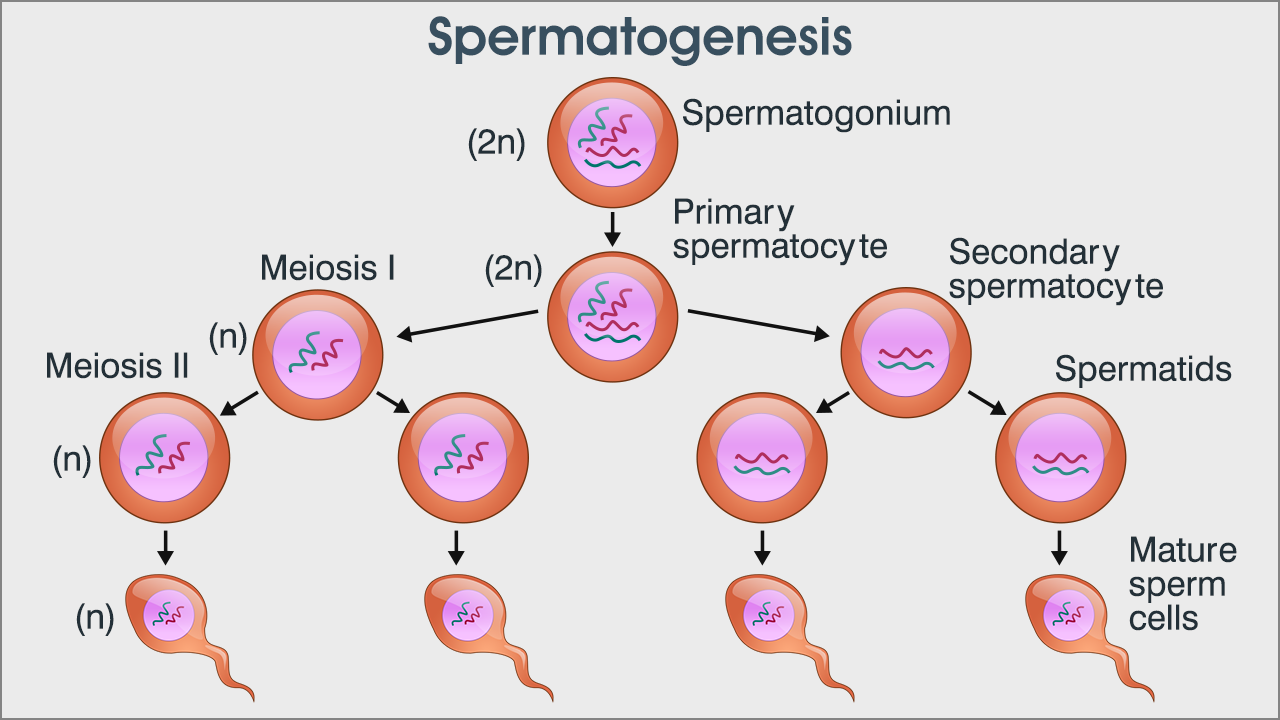
Spermiogenesis occurs after the spermatocytes complete two quick meiotic divisions. By this process the haploid round spermatids will be produced.
Follicle stimulating hormone and testosterone are the hormones which are used in the process called spermatogenesis. This process is a continuous process during adult life. Sperm is produced in the seminiferous tubules. The immature cells are called spermatogonia. It is derived from the stem cells at the outer wall of seminiferous tubules. Stem cells are made by the full of nuclear material. The importance of this process is to produce the mature gametes. So this is called sperm or spermatozoa. It will fertilize the female gametes which are called oocytes. By this process single cell zygotes will be produced. So this zygote will grow in offspring by conception.
Note:
Purpose of spermatogenesis is the formation of male gamete, which is sperm. There are five stages in this process. They are spermatocytogenesis, spermatidogenesis, spermiogenesis, spermiation and maturation. Haploid gamete cell contains the head, body and tail structure. Axoneme looks like a micro tubular structure which is in the tail. It propels the sperm. Acrosome is a membrane bounded sac which is derived from the Golgi apparatus. It has the hydrolytic enzymes for fertilization.
Complete answer:
Spermatogenesis is the process of synthesis and the development of sperm cells and it occurs in the male reproductive tract or organ called the testes. Sperm cells produced in the testes are called the seminiferous tubules. Spermatogenesis is classified into three phases. They are proliferation, meiosis and spermiogenesis. Spermiogenesis converts the round spermatids as the complex cell called the spermatozoon after the meiosis process. Spermatogenesis is the process of sperm cell development. Under successive mitotic and meiotic divisions the sperm is converted into the spermatozoon. This can be seen in the below diagram.
Spermiogenesis occurs after the spermatocytes complete two quick meiotic divisions. By this process the haploid round spermatids will be produced.
Follicle stimulating hormone and testosterone are the hormones which are used in the process called spermatogenesis. This process is a continuous process during adult life. Sperm is produced in the seminiferous tubules. The immature cells are called spermatogonia. It is derived from the stem cells at the outer wall of seminiferous tubules. Stem cells are made by the full of nuclear material. The importance of this process is to produce the mature gametes. So this is called sperm or spermatozoa. It will fertilize the female gametes which are called oocytes. By this process single cell zygotes will be produced. So this zygote will grow in offspring by conception.
Note:
Purpose of spermatogenesis is the formation of male gamete, which is sperm. There are five stages in this process. They are spermatocytogenesis, spermatidogenesis, spermiogenesis, spermiation and maturation. Haploid gamete cell contains the head, body and tail structure. Axoneme looks like a micro tubular structure which is in the tail. It propels the sperm. Acrosome is a membrane bounded sac which is derived from the Golgi apparatus. It has the hydrolytic enzymes for fertilization.
Recently Updated Pages
Master Class 12 Business Studies: Engaging Questions & Answers for Success

Master Class 12 Chemistry: Engaging Questions & Answers for Success
Master Class 12 Biology: Engaging Questions & Answers for Success
Class 12 Question and Answer - Your Ultimate Solutions Guide
Master Class 11 English: Engaging Questions & Answers for Success
Master Class 11 Social Science: Engaging Questions & Answers for Success
Trending doubts
Which are the Top 10 Largest Countries of the World?
Draw a labelled sketch of the human eye class 12 physics CBSE
Differentiate between homogeneous and heterogeneous class 12 chemistry CBSE
Differentiate between Pyramid of energy and pyramid class 12 biology CBSE
Why is the cell called the structural and functional class 12 biology CBSE
Draw the diagram of the pyramid of energy Explain In class 12 biology CBSE