




Sketch, label and describe zygotene.
Answer
 Verified
532.8k+ views
Hint: This stage is a part of the stage prophase in meiosis, and is followed by leptotene, during which homologous chromosomes start to pair.
Complete answer:
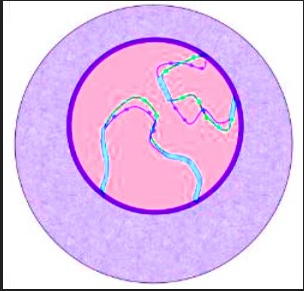
Zygotene is the second stage of the prophase of meiosis, following leptotene, during which homologous chromosomes start to pair. It is a substage of meiosis where synapsis between homologous chromosomes starts. This synapsis can form up and down the chromosomes to make various points of contact called 'synaptonemal complex', coiling of chromatin.
Meiosis is a form of cell division that gives rise to genetically diverse sex cells or gametes. It comprises two successive nuclear divisions namely meiosis l and meiosis ll.
Meiosis I comprises four stages: prophase l, metaphase l, anaphase l, and telophase l. Prophase l is the very first stage of meiosis I and it contains the following sub-stages: leptotene, zygotene, pachytene, diplotene, and diakinesis.
The zygotene is the prophase I stage that follows after leptotene and then pachytene. Before zygotene, the chromosomes start to condense into long strands inside the nucleus and the chromosomes appear threadlike. Zygotene is that phase wherein the homologous chromosomes pair or come together in the synapse. The pairing of homologous chromosomes is called synapsis and is facilitated by the synaptonemal complex.
The pairing is zipper-like in fashion. At any part of the chromosomes, the pairing may start, e.g., near the end of the centromere. The pairing is also particular, i.e., homologous chromosomes that come in pairs must be of equal length and have the same centromere position. The paired chromosomes are termed bivalent or tetrad chromosomes.
Note:
-The term zygotene is derived from Greek words that mean paired threads.
-The zygotene stage is also described as a bouquet stage since the telomeres cluster at one end of the nucleus. It is also known as zygonema.
Complete answer:
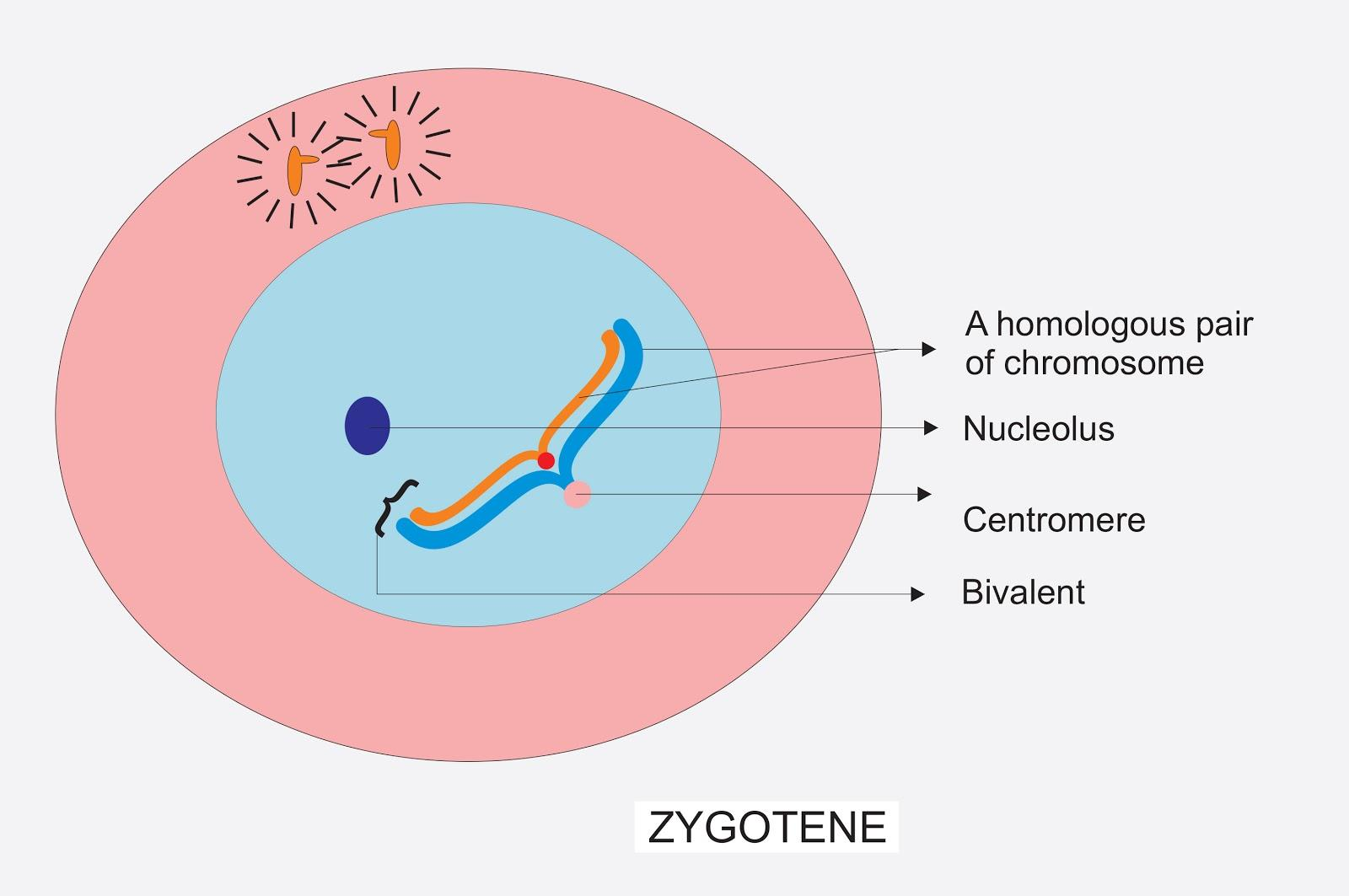
Zygotene is the second stage of the prophase of meiosis, following leptotene, during which homologous chromosomes start to pair. It is a substage of meiosis where synapsis between homologous chromosomes starts. This synapsis can form up and down the chromosomes to make various points of contact called 'synaptonemal complex', coiling of chromatin.
Meiosis is a form of cell division that gives rise to genetically diverse sex cells or gametes. It comprises two successive nuclear divisions namely meiosis l and meiosis ll.
Meiosis I comprises four stages: prophase l, metaphase l, anaphase l, and telophase l. Prophase l is the very first stage of meiosis I and it contains the following sub-stages: leptotene, zygotene, pachytene, diplotene, and diakinesis.
The zygotene is the prophase I stage that follows after leptotene and then pachytene. Before zygotene, the chromosomes start to condense into long strands inside the nucleus and the chromosomes appear threadlike. Zygotene is that phase wherein the homologous chromosomes pair or come together in the synapse. The pairing of homologous chromosomes is called synapsis and is facilitated by the synaptonemal complex.
The pairing is zipper-like in fashion. At any part of the chromosomes, the pairing may start, e.g., near the end of the centromere. The pairing is also particular, i.e., homologous chromosomes that come in pairs must be of equal length and have the same centromere position. The paired chromosomes are termed bivalent or tetrad chromosomes.
Note:
-The term zygotene is derived from Greek words that mean paired threads.
-The zygotene stage is also described as a bouquet stage since the telomeres cluster at one end of the nucleus. It is also known as zygonema.
Recently Updated Pages
Master Class 11 Economics: Engaging Questions & Answers for Success

Master Class 11 English: Engaging Questions & Answers for Success
Master Class 11 Maths: Engaging Questions & Answers for Success
Class 11 Question and Answer - Your Ultimate Solutions Guide
Master Class 11 Social Science: Engaging Questions & Answers for Success
Master Class 11 Business Studies: Engaging Questions & Answers for Success
Trending doubts
Differentiate between an exothermic and an endothermic class 11 chemistry CBSE
One Metric ton is equal to kg A 10000 B 1000 C 100 class 11 physics CBSE
There are 720 permutations of the digits 1 2 3 4 5 class 11 maths CBSE
In what year Guru Nanak Dev ji was born A15 April 1469 class 11 social science CBSE
Difference Between Prokaryotic Cells and Eukaryotic Cells
Draw a diagram of a plant cell and label at least eight class 11 biology CBSE