




Simplest amino acid is
(a)Glycine
(b)Leucine
(c)Lysine
(d)Valine
Answer
 Verified
623.4k+ views
Hint: It is an amino acid that has the simplest structure having one hydrogen atom in its side chains. It is usually found in almost all the stored foods and is named due to its special characteristic feature called sweet taste.
Complete answer:
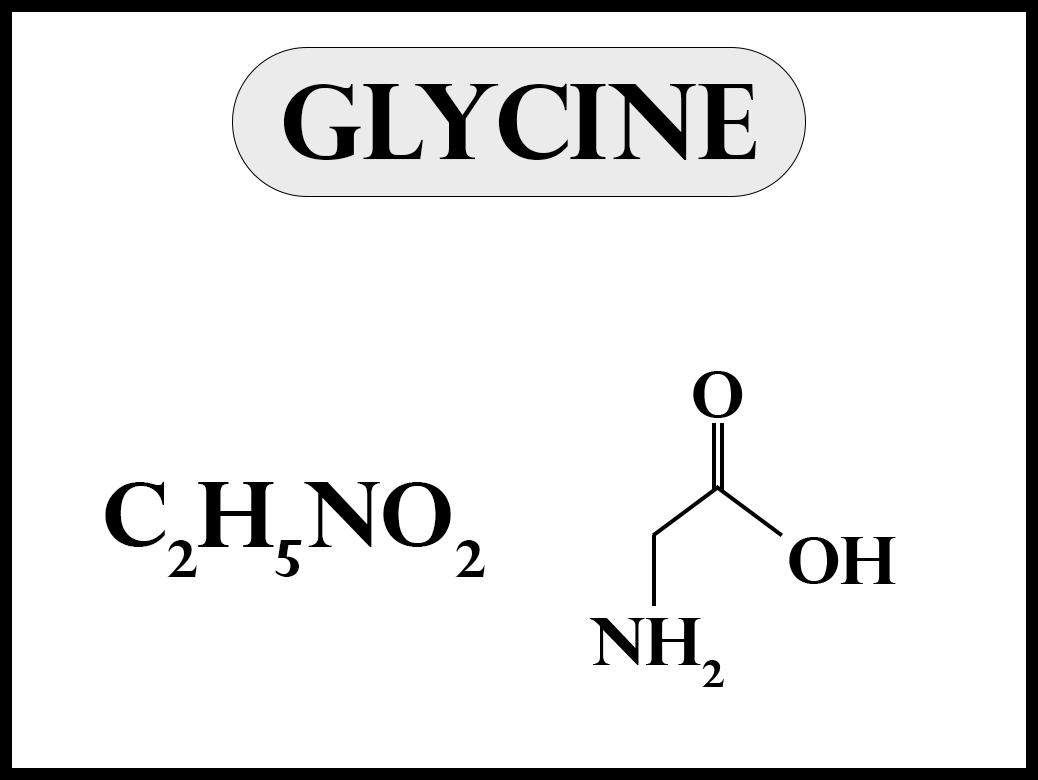
-The simplest amino acid known is Glycine. It is proteinaceous in nature and consists of only one hydrogen atom in its side chains.
-Its codon starts from the coding sequence GG, and its chemical formula is ${ NH }_{ 2 }{ -CH }_{ 2 }{ -COOH }$.
-It is found to be colorless and is in the form of a crystalline solid.
Additional Information: -The amino acids are the fundamental building block of proteins. The proteins consist of around 20 amino acids that form a large protein molecule when they are linked together.
-These amino acids perform various functions including DNA replication, repair damage, cell metabolic processes, the structure of cells, and organisms.
-The amino acids contain two functional groups, an amino group, and a carboxyl group.
-The amino acids are used as fertilizers, food, drugs, and supplements of nutrition.
-Glycine is the proteinogenic amino acid having a function of a neurotransmitter inhibitor that may cause spontaneous paralysis due to uncontrolled muscle contraction.
-Glycine is found in almost all the food products or vegetables and meat that are sold out commercially.
So, the correct answer is ‘Glycine’.
Note: In 1820 the French chemist Henri Branconnont discovered the amino acid Glycine. The term Glycine was derived from the Greek word, meaning ‘sweet-tasting’. It was earlier called Sugar of gelatin. The first amino acids were discovered from the asparagus named asparagine. It was discovered by the two French chemists Louis-Nicolas Vauquelin and Pierre Jean Robiquet in 1806.
Complete answer:
-The simplest amino acid known is Glycine. It is proteinaceous in nature and consists of only one hydrogen atom in its side chains.
-Its codon starts from the coding sequence GG, and its chemical formula is ${ NH }_{ 2 }{ -CH }_{ 2 }{ -COOH }$.
-It is found to be colorless and is in the form of a crystalline solid.
Additional Information: -The amino acids are the fundamental building block of proteins. The proteins consist of around 20 amino acids that form a large protein molecule when they are linked together.
-These amino acids perform various functions including DNA replication, repair damage, cell metabolic processes, the structure of cells, and organisms.
-The amino acids contain two functional groups, an amino group, and a carboxyl group.
-The amino acids are used as fertilizers, food, drugs, and supplements of nutrition.
-Glycine is the proteinogenic amino acid having a function of a neurotransmitter inhibitor that may cause spontaneous paralysis due to uncontrolled muscle contraction.
-Glycine is found in almost all the food products or vegetables and meat that are sold out commercially.
So, the correct answer is ‘Glycine’.
Note: In 1820 the French chemist Henri Branconnont discovered the amino acid Glycine. The term Glycine was derived from the Greek word, meaning ‘sweet-tasting’. It was earlier called Sugar of gelatin. The first amino acids were discovered from the asparagus named asparagine. It was discovered by the two French chemists Louis-Nicolas Vauquelin and Pierre Jean Robiquet in 1806.
Recently Updated Pages
Master Class 11 English: Engaging Questions & Answers for Success

Master Class 11 Social Science: Engaging Questions & Answers for Success
Master Class 11 Maths: Engaging Questions & Answers for Success
Master Class 11 Biology: Engaging Questions & Answers for Success
Master Class 11 Physics: Engaging Questions & Answers for Success
Master Class 11 Chemistry: Engaging Questions & Answers for Success
Trending doubts
One Metric ton is equal to kg A 10000 B 1000 C 100 class 11 physics CBSE
Difference Between Prokaryotic Cells and Eukaryotic Cells
1 ton equals to A 100 kg B 1000 kg C 10 kg D 10000 class 11 physics CBSE
Find the value of the expression given below sin 30circ class 11 maths CBSE
Two of the body parts which do not appear in MRI are class 11 biology CBSE
Draw a diagram of a plant cell and label at least eight class 11 biology CBSE