




Segregation of Mendelian factors like no linkage or no crossing over occurs during
A. Anaphase I
B. Anaphase II
C. Diplotene
D. Metaphase I
Answer
 Verified
626.7k+ views
Hint: The crossing over is a characteristic of meiosis or reductional division. In addition, it happens when the chromatids are moving towards the poles.
Complete answer: Mitosis is the equational division in which the daughter cells get the equal number of chromosomes as the parent cell carries. It is further divided into prophase, metaphase, anaphase, telophase and cytokinesis. Meiosis is a reductional division in which the daughter cells carry half the number of chromosomes as the parent cell carries. This type of cell division occurs in a germ cell during gamete formation.
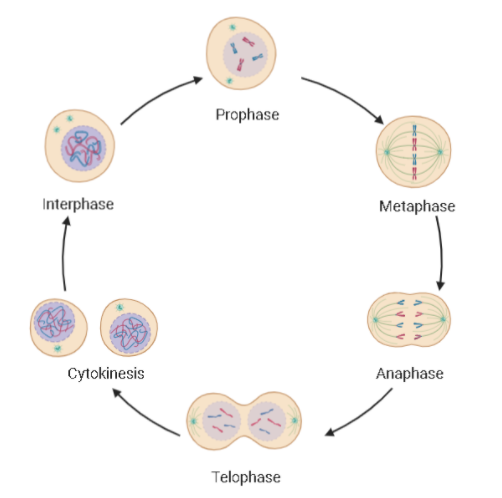
According to the options given:
In option A, Anaphase I is regarding the separation of whole chromosomes instead of the chromatids. In this step, the chromosomes divide half in number.
In option B, Anaphase II is regarded similar to Anaphase of mitosis. Here the chromosomes that are aligned on the metaphase plate are separated equally i.e. only the chromatids separate.
Option C, Diplotene is a subpart of prophase I, and actual crossing over occurs in this stage.
In option D, Metaphase I all the chromosomes arrange on the metaphase plate. In this step there is no chromosome separation occurring, just the chromosomes stay there.
Hence, option B Anaphase II is the correct answer.
Note: Meiosis and mitosis are important cell division cycles important for human survival. Crossing over is important during germ cell formation as it is the main step which leads to variation. Crossing over ensures the blending of characters and ensures a wide range of characters are expressed and checking offspring is not an exact copy of the parents.
Complete answer: Mitosis is the equational division in which the daughter cells get the equal number of chromosomes as the parent cell carries. It is further divided into prophase, metaphase, anaphase, telophase and cytokinesis. Meiosis is a reductional division in which the daughter cells carry half the number of chromosomes as the parent cell carries. This type of cell division occurs in a germ cell during gamete formation.
According to the options given:
In option A, Anaphase I is regarding the separation of whole chromosomes instead of the chromatids. In this step, the chromosomes divide half in number.
In option B, Anaphase II is regarded similar to Anaphase of mitosis. Here the chromosomes that are aligned on the metaphase plate are separated equally i.e. only the chromatids separate.
Option C, Diplotene is a subpart of prophase I, and actual crossing over occurs in this stage.
In option D, Metaphase I all the chromosomes arrange on the metaphase plate. In this step there is no chromosome separation occurring, just the chromosomes stay there.
Hence, option B Anaphase II is the correct answer.
Note: Meiosis and mitosis are important cell division cycles important for human survival. Crossing over is important during germ cell formation as it is the main step which leads to variation. Crossing over ensures the blending of characters and ensures a wide range of characters are expressed and checking offspring is not an exact copy of the parents.
Recently Updated Pages
The given figure shows two endocrine glands marked class 11 biology NEET_UG

Match columnI with columnII and select the correct class 11 biology NEET
Match column I with column II and select the correct class 11 biology NEET_UG
Which floral family has left 9 right + 1 arrangement class 11 biology NEET_UG
Which is not a variety of sheep A Lohi B Beetal C Nellore class 11 biology NEET_UG
Match column I with column II and select the correct class 11 biology NEET_UG
Trending doubts
One Metric ton is equal to kg A 10000 B 1000 C 100 class 11 physics CBSE
Draw a diagram of a plant cell and label at least eight class 11 biology CBSE
Difference Between Prokaryotic Cells and Eukaryotic Cells
Draw a well labelled diagram of reflex arc and explain class 11 biology CBSE
Two of the body parts which do not appear in MRI are class 11 biology CBSE
1 ton equals to A 100 kg B 1000 kg C 10 kg D 10000 class 11 physics CBSE