




Sea fur is
(a) Hydra
(b) Obelia
(c) Adamsia
(d) Gorgonia
Answer
 Verified
627k+ views
Hint: It is typically marine, colonial, and sedentary, having cosmopolitan distribution. And it occurs as a delicate whitish or light brown, almost fur-like growth on seaweeds or timber. It can consist of branched filaments approximately the thickness of fine sewing cotton.
Complete step by step answer:
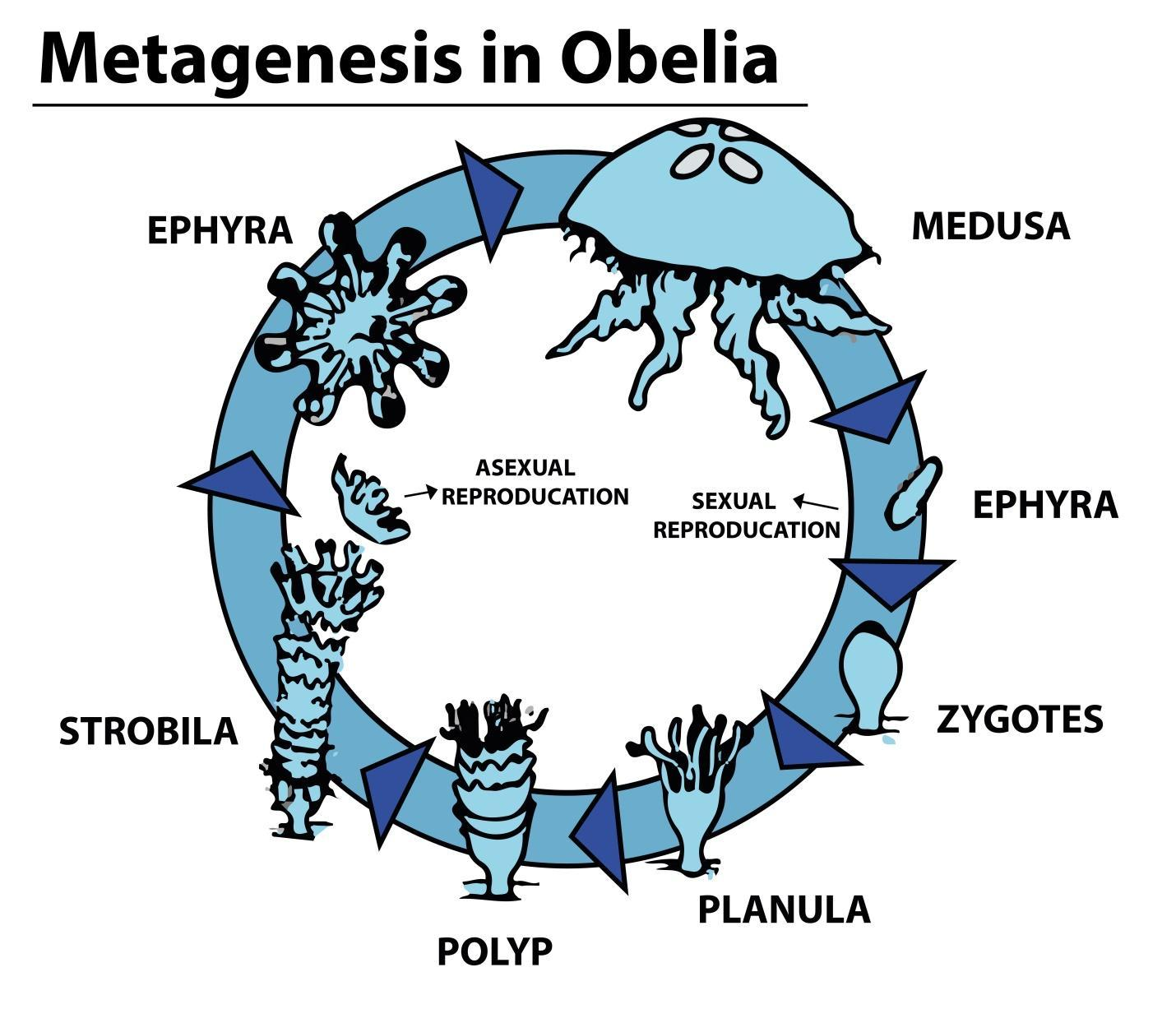
The common name of the freshwater or marine hydrozoan Obelia is the sea fur, which belongs to the Cnidaria phylum and it has the polyp and medusa stages in their life cycle. It is settled up to a depth of 80 meters. The polyp is the metagenesis stages of obelia which represent the asexual phase which is a prominent branched hydroid colony found attached to rocks, stones, shells of animals, wooden pilings, etc. The medusa stages, on the other hand, represent the sexual phase.
So, the correct answer is ‘Obelia’.
Additional information: The stage of the obelia is a branched filament-like structure and it remains attached to the substratum. The colony is polymorphic, consisting of several individuals or zooids that are morphologically as well as functionally different from each other. The colony of Obelia consists of two portions, first one is the horizontal portion called the hydrorhiza, and the vertical portion, bearing the zooids, called hydrocaulus. Hydrorhiza is the branched structure which gives only mechanical anchorage to the whole colony. From the hydrorhiza arises the vertical hydrocaulus. Each hydrocaulus branches in an alternate manner.
Note: Hydrorhiza and hydrocaulus, both are hollow tubes which are known as coenosarc, covered externally with perisarc. Coenosarc is made up of two cellular layers, the outer ectoderm, and the inner endoderm. In between these two cellular layers, there is a thin non-cellular Meso-lamella. The coenosarc contains a tubular cavity, at the center known as coelenteron which is continuous throughout the colony.
Complete step by step answer:
The common name of the freshwater or marine hydrozoan Obelia is the sea fur, which belongs to the Cnidaria phylum and it has the polyp and medusa stages in their life cycle. It is settled up to a depth of 80 meters. The polyp is the metagenesis stages of obelia which represent the asexual phase which is a prominent branched hydroid colony found attached to rocks, stones, shells of animals, wooden pilings, etc. The medusa stages, on the other hand, represent the sexual phase.
So, the correct answer is ‘Obelia’.
Additional information: The stage of the obelia is a branched filament-like structure and it remains attached to the substratum. The colony is polymorphic, consisting of several individuals or zooids that are morphologically as well as functionally different from each other. The colony of Obelia consists of two portions, first one is the horizontal portion called the hydrorhiza, and the vertical portion, bearing the zooids, called hydrocaulus. Hydrorhiza is the branched structure which gives only mechanical anchorage to the whole colony. From the hydrorhiza arises the vertical hydrocaulus. Each hydrocaulus branches in an alternate manner.
Note: Hydrorhiza and hydrocaulus, both are hollow tubes which are known as coenosarc, covered externally with perisarc. Coenosarc is made up of two cellular layers, the outer ectoderm, and the inner endoderm. In between these two cellular layers, there is a thin non-cellular Meso-lamella. The coenosarc contains a tubular cavity, at the center known as coelenteron which is continuous throughout the colony.
Recently Updated Pages
Master Class 11 English: Engaging Questions & Answers for Success

Master Class 11 Physics: Engaging Questions & Answers for Success
Master Class 11 Computer Science: Engaging Questions & Answers for Success
Master Class 11 Chemistry: Engaging Questions & Answers for Success
Master Class 11 Social Science: Engaging Questions & Answers for Success
Master Class 11 Accountancy: Engaging Questions & Answers for Success
Trending doubts
Difference Between Prokaryotic Cells and Eukaryotic Cells
Two of the body parts which do not appear in MRI are class 11 biology CBSE
10 examples of friction in our daily life
Draw a diagram of nephron and explain its structur class 11 biology CBSE
One Metric ton is equal to kg A 10000 B 1000 C 100 class 11 physics CBSE
Draw a diagram of a plant cell and label at least eight class 11 biology CBSE