




Sclerotic is the outermost layer of
(a) Nose
(b) Ear
(c) Heart
(d) Eye
Answer
 Verified
628.2k+ views
Hint: They are a crucial and one among the foremost complex sensory receptors that we humans are endowed with. It assists us in visualizing objects and also in light perception, color, and depth perception. Besides, these sense organs are just about like cameras.
Complete Answer
Sclerotic or sclera is the outermost layer of the eye. It is composed of dense connective tissue and contains collagen and elastic fibers. It maintains the form of the eye and also protects it. The sclera is perforated by many nerves and vessels passing through the posterior scleral foramen, the opening that's formed by the optic nerve. The anterior portion of the sclera is named the cornea which absorbs oxygen from the air and helps to focus the sunshine rays entering the attention.
Human eyes are somewhat distinctive within the animal kingdom therein the sclera is extremely plainly visible whenever the attention is open. This is often not just thanks to the white color of the human sclera, which many other species share, but also to the very fact that the human iris is comparatively small and comprises a significantly smaller portion of the exposed eye surface compared to other animals. It’s theorized that this adaptation evolved due to our social nature because the eye became a useful communication tool additionally to a sensory organ. It’s believed that the conspicuous sclera of the human eye makes it easier for one individual to spot where another individual is looking, increasing the efficacy of this particular sort of nonverbal communication.
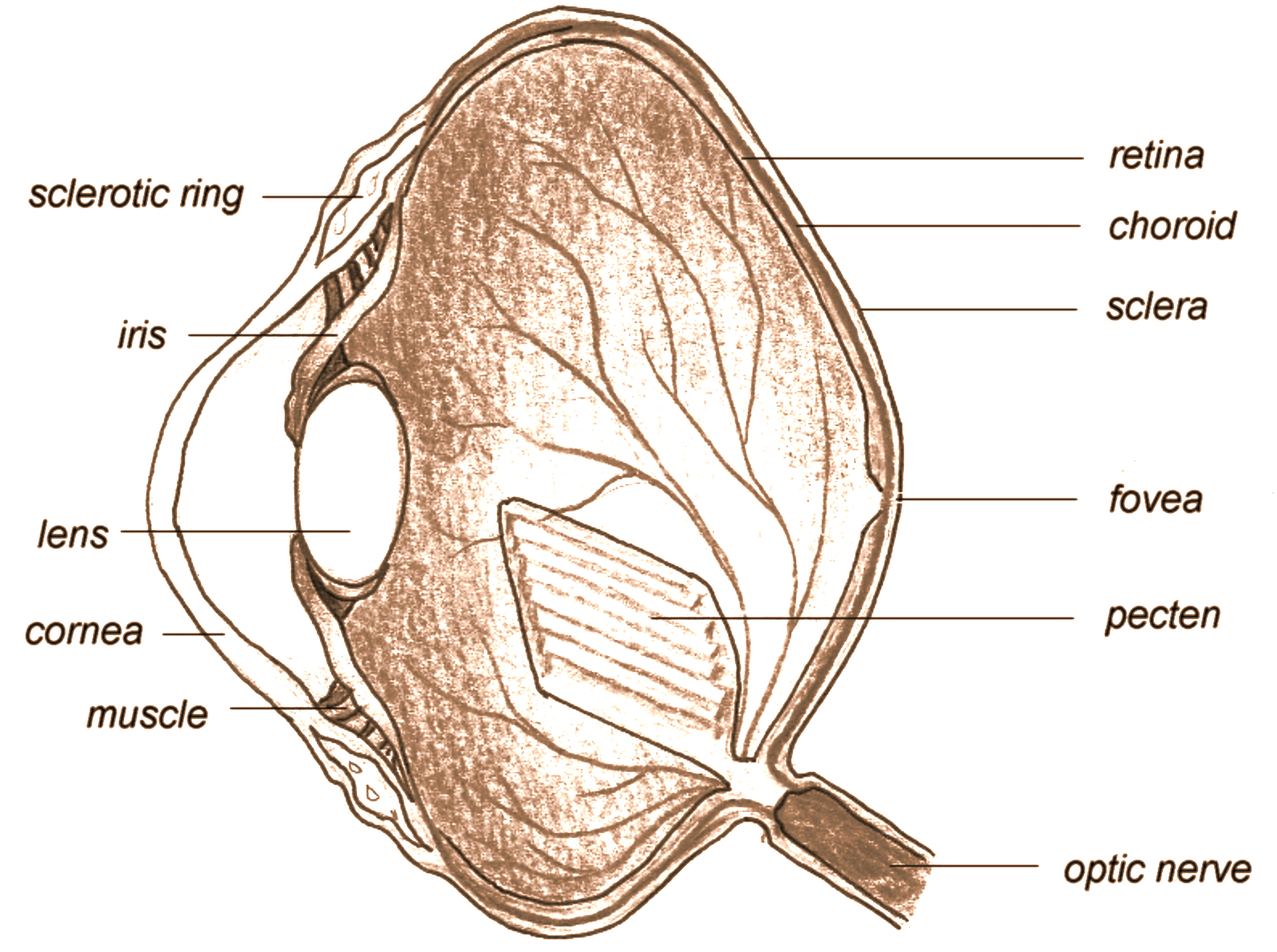
So, the correct answer is 'Eye'.
Note: Very similar to the device, the human eye also focuses and allows light to supply images. So basically, light rays that are deflected from or by distant objects land on the retina after they undergo various mediums just like the cornea, lens, aqueous humor, the lens, and vitreous humor.
Complete Answer
Sclerotic or sclera is the outermost layer of the eye. It is composed of dense connective tissue and contains collagen and elastic fibers. It maintains the form of the eye and also protects it. The sclera is perforated by many nerves and vessels passing through the posterior scleral foramen, the opening that's formed by the optic nerve. The anterior portion of the sclera is named the cornea which absorbs oxygen from the air and helps to focus the sunshine rays entering the attention.
Human eyes are somewhat distinctive within the animal kingdom therein the sclera is extremely plainly visible whenever the attention is open. This is often not just thanks to the white color of the human sclera, which many other species share, but also to the very fact that the human iris is comparatively small and comprises a significantly smaller portion of the exposed eye surface compared to other animals. It’s theorized that this adaptation evolved due to our social nature because the eye became a useful communication tool additionally to a sensory organ. It’s believed that the conspicuous sclera of the human eye makes it easier for one individual to spot where another individual is looking, increasing the efficacy of this particular sort of nonverbal communication.
So, the correct answer is 'Eye'.
Note: Very similar to the device, the human eye also focuses and allows light to supply images. So basically, light rays that are deflected from or by distant objects land on the retina after they undergo various mediums just like the cornea, lens, aqueous humor, the lens, and vitreous humor.
Recently Updated Pages
Master Class 11 English: Engaging Questions & Answers for Success

Master Class 11 Social Science: Engaging Questions & Answers for Success
Master Class 11 Maths: Engaging Questions & Answers for Success
Master Class 11 Biology: Engaging Questions & Answers for Success
Master Class 11 Physics: Engaging Questions & Answers for Success
Master Class 11 Chemistry: Engaging Questions & Answers for Success
Trending doubts
One Metric ton is equal to kg A 10000 B 1000 C 100 class 11 physics CBSE
Difference Between Prokaryotic Cells and Eukaryotic Cells
Find the value of the expression given below sin 30circ class 11 maths CBSE
Difference between physical and chemical change class 11 chemistry CBSE
Two of the body parts which do not appear in MRI are class 11 biology CBSE
Draw a diagram of a plant cell and label at least eight class 11 biology CBSE