




Sarcoplasmic reticulum of the muscle fibres is the storehouse of -
(a) Calcium
(b) Sodium
(c) Chloride
(d) Potassium
Answer
 Verified
594.9k+ views
Hint: The sarcoplasmic reticulum or SR of the muscle fibres must store an ion that is responsible for the contraction of muscles and whose storage is necessary for the functioning of the muscles and the bones.
Complete answer:
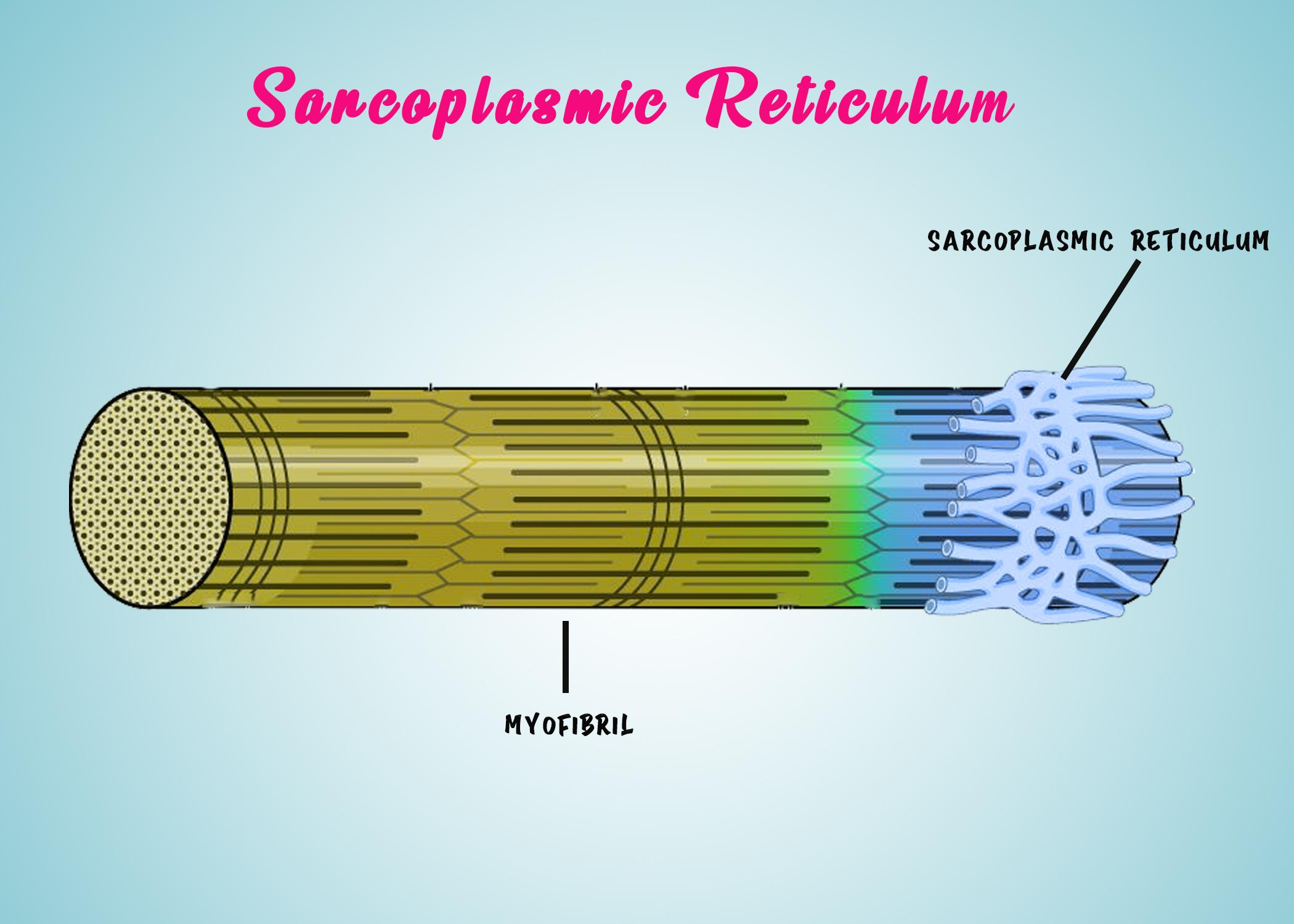
- The sarcoplasmic reticulum is the endoplasmic reticulum specific to muscle cells. It is the intracellular system of membrane-bound structures involved in the storage of intracellular calcium in striated or skeletal muscle cells.
- The concentration of calcium ions inside and outside the cell is kept constant. Since calcium is a second messenger, it is important to detect the smallest increases of the ions.
- Regulation of calcium concentration is important for muscle contraction.
- Muscle contraction begins when the neurotransmitter acetylcholine generates an action potential in the sarcolemma, which releases calcium ions from the storage in the sarcoplasmic reticulum. This initiates contraction, which requires ATP.
Additional Information:
- The reticulum structure consists of a network of tubules that wrap around the myofibrils in a cuff-like form.
- During contraction, the muscle fiber continues to shorten as long as calcium ions are present in the sarcoplasm and ATP is available.
- The mechanism of sarcoplasmic reticulum is essential for the excitation-contraction coupling in skeletal, smooth, and cardiac muscle.
So, the correct answer is ‘(a) Calcium’.
Note:
- Calcium is also an important effector of coupling between coupling depolarization and contraction in cardiac cells.
- The proteins involved in the inhibition of muscle contraction are troponin and tropomyosin.
- The pumping of calcium ions is carried out by the presence of ${ Ca }^{ 2+ }$ ion channel pumps.
Complete answer:
- The sarcoplasmic reticulum is the endoplasmic reticulum specific to muscle cells. It is the intracellular system of membrane-bound structures involved in the storage of intracellular calcium in striated or skeletal muscle cells.
- The concentration of calcium ions inside and outside the cell is kept constant. Since calcium is a second messenger, it is important to detect the smallest increases of the ions.
- Regulation of calcium concentration is important for muscle contraction.
- Muscle contraction begins when the neurotransmitter acetylcholine generates an action potential in the sarcolemma, which releases calcium ions from the storage in the sarcoplasmic reticulum. This initiates contraction, which requires ATP.
Additional Information:
- The reticulum structure consists of a network of tubules that wrap around the myofibrils in a cuff-like form.
- During contraction, the muscle fiber continues to shorten as long as calcium ions are present in the sarcoplasm and ATP is available.
- The mechanism of sarcoplasmic reticulum is essential for the excitation-contraction coupling in skeletal, smooth, and cardiac muscle.
So, the correct answer is ‘(a) Calcium’.
Note:
- Calcium is also an important effector of coupling between coupling depolarization and contraction in cardiac cells.
- The proteins involved in the inhibition of muscle contraction are troponin and tropomyosin.
- The pumping of calcium ions is carried out by the presence of ${ Ca }^{ 2+ }$ ion channel pumps.
Recently Updated Pages
Master Class 11 English: Engaging Questions & Answers for Success

Master Class 11 Social Science: Engaging Questions & Answers for Success
Master Class 11 Maths: Engaging Questions & Answers for Success
Master Class 11 Biology: Engaging Questions & Answers for Success
Master Class 11 Physics: Engaging Questions & Answers for Success
Master Class 11 Chemistry: Engaging Questions & Answers for Success
Trending doubts
One Metric ton is equal to kg A 10000 B 1000 C 100 class 11 physics CBSE
Difference Between Prokaryotic Cells and Eukaryotic Cells
Find the value of the expression given below sin 30circ class 11 maths CBSE
Difference between physical and chemical change class 11 chemistry CBSE
Two of the body parts which do not appear in MRI are class 11 biology CBSE
Draw a diagram of a plant cell and label at least eight class 11 biology CBSE