




Saffron is obtained from
A) Styles and stigmas of Crocus
B) Stamens of Hibiscus
C) Petals of Hibiscus
D) Stamens of Crocus
Answer
 Verified
657k+ views
Hint: Crocus sativus, commonly known as saffron crocus, or autumn crocus, is a species of flowering plant of the Crocus genus in the iris family Iridaceae. The saffron spice is obtained from the parts of the flower that constitute its pistil.
Complete answer:
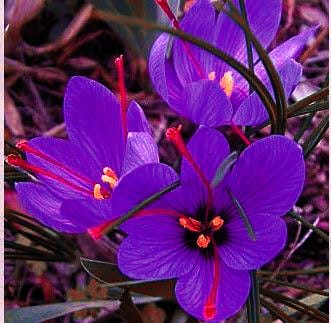
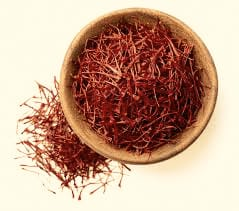
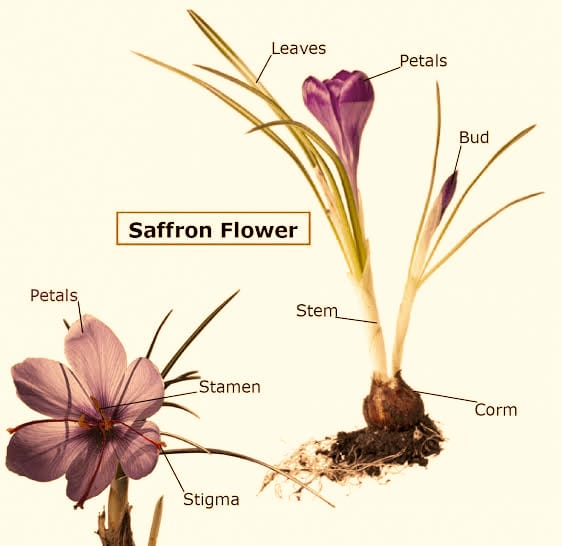
Saffron is an expensive spice derived from the blueish purple flowers of Crocus sativus. It has vibrant crimson colored stigma and styles, which are called threads. These threads are collected and dried. They are mainly used as a seasoning and coloring agent in food. The domesticated saffron that is unknown in the wild is the crocus. The Crocus sativus is an autumn-flowering perennial plant.
Additional Information:
The iodoform-like or hay-like, taste and fragrance, of Saffron result from the phytochemicals picrocrocin and safranal. The rich golden-yellow hue to dishes and textiles are added by the presence of the carotenoid pigment, crocin.
So, the correct answer is that saffron is obtained from the styles and stigmas of Crocus.
Note:
1) Crocus sativus is a sterile triploid form. It means that three homologous sets of chromosomes make up each specimen's genetic complement.
2) It bears eight chromosomal bodies per set, making for 24 in total.
3) Since it is sterile, the purple flowers fail to produce viable seeds and so reproduction takes place through clusters of corms which are underground bulb-like starch-storing organs.
Complete answer:
Saffron is an expensive spice derived from the blueish purple flowers of Crocus sativus. It has vibrant crimson colored stigma and styles, which are called threads. These threads are collected and dried. They are mainly used as a seasoning and coloring agent in food. The domesticated saffron that is unknown in the wild is the crocus. The Crocus sativus is an autumn-flowering perennial plant.
Additional Information:
The iodoform-like or hay-like, taste and fragrance, of Saffron result from the phytochemicals picrocrocin and safranal. The rich golden-yellow hue to dishes and textiles are added by the presence of the carotenoid pigment, crocin.
So, the correct answer is that saffron is obtained from the styles and stigmas of Crocus.
Note:
1) Crocus sativus is a sterile triploid form. It means that three homologous sets of chromosomes make up each specimen's genetic complement.
2) It bears eight chromosomal bodies per set, making for 24 in total.
3) Since it is sterile, the purple flowers fail to produce viable seeds and so reproduction takes place through clusters of corms which are underground bulb-like starch-storing organs.
Recently Updated Pages
Class 10 Question and Answer - Your Ultimate Solutions Guide

Master Class 12 Economics: Engaging Questions & Answers for Success
Master Class 12 Social Science: Engaging Questions & Answers for Success
Master Class 12 English: Engaging Questions & Answers for Success
Master Class 12 Maths: Engaging Questions & Answers for Success
Master Class 12 Physics: Engaging Questions & Answers for Success
Trending doubts
Explain the Treaty of Vienna of 1815 class 10 social science CBSE
The slogan Jai Hind was given by A Lal Bahadur Shastri class 10 social science CBSE
10 examples of evaporation in daily life with explanations
What is the full form of POSCO class 10 social science CBSE
Identify the feminine form of noun nephew a shenephew class 10 english CBSE
CSIR full form?