




What is the role of microbes in compost production?
Answer
 Verified
639.9k+ views
Hint: Microorganisms have a potential benefit to the environment. It can act as a degrading material. Microorganisms make a symbiotic relationship with the plants root in the soil.
Complete answer:
Composting is a type of waste which is biodegradable so that it can be broken down into different substances. So here microbes carry out the respiration and get their energy from the waste and hence their survival reason is from waste only and they need this energy to grow the byproduct as Compost. Compost is great for gardens as we know it provides us the basic nutrients and minerals in the soil.
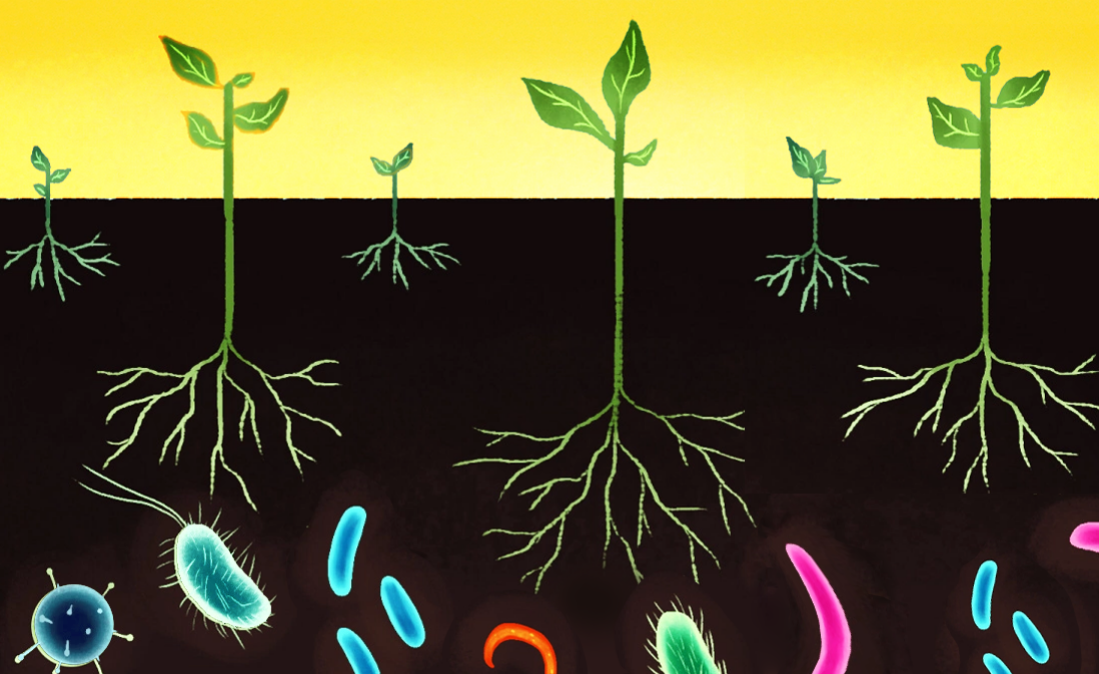
These microbes are known as beneficial indigenous organisms (BIO) or effective microorganisms. Compost is a microbially driven process where organic material progresses by certain stages of decomposition as well as stabilisation in a very limited period of time. Stages may include soil heating stabilising which is further controlled by a different group of microorganisms.
Monitoring temperature, and Carbon Dioxide enables us to determine the composed phase, chemical phase and physical and biological condition of a compost phase.
Mostly composed contains molds and yeast in higher amounts and they are further helping in decomposition and forms soil and composition. So, microbes break the organic material to produce heat, Carbon Dioxide and water, which further provides rich soil to improve plant quality.
The beneficial microorganisms include actinomycetes cities rhizobium and helps in enhancing the nutrient quality and further in production of growth hormones. If we want to add the microbes to the soil in more amounts, we have to add manure, wood chips, dung, etc. and keep planting so as to give nutrients to the microbes growing there.
Note: Fungi are the one of most important composting material because they have been broken down through the process of debris formation.
Complete answer:
Composting is a type of waste which is biodegradable so that it can be broken down into different substances. So here microbes carry out the respiration and get their energy from the waste and hence their survival reason is from waste only and they need this energy to grow the byproduct as Compost. Compost is great for gardens as we know it provides us the basic nutrients and minerals in the soil.
These microbes are known as beneficial indigenous organisms (BIO) or effective microorganisms. Compost is a microbially driven process where organic material progresses by certain stages of decomposition as well as stabilisation in a very limited period of time. Stages may include soil heating stabilising which is further controlled by a different group of microorganisms.
Monitoring temperature, and Carbon Dioxide enables us to determine the composed phase, chemical phase and physical and biological condition of a compost phase.
Mostly composed contains molds and yeast in higher amounts and they are further helping in decomposition and forms soil and composition. So, microbes break the organic material to produce heat, Carbon Dioxide and water, which further provides rich soil to improve plant quality.
The beneficial microorganisms include actinomycetes cities rhizobium and helps in enhancing the nutrient quality and further in production of growth hormones. If we want to add the microbes to the soil in more amounts, we have to add manure, wood chips, dung, etc. and keep planting so as to give nutrients to the microbes growing there.
Note: Fungi are the one of most important composting material because they have been broken down through the process of debris formation.
Recently Updated Pages
Master Class 12 Economics: Engaging Questions & Answers for Success

Master Class 12 English: Engaging Questions & Answers for Success
Master Class 12 Social Science: Engaging Questions & Answers for Success
Master Class 12 Maths: Engaging Questions & Answers for Success
Master Class 12 Physics: Engaging Questions & Answers for Success
Master Class 9 General Knowledge: Engaging Questions & Answers for Success
Trending doubts
Explain the Treaty of Vienna of 1815 class 10 social science CBSE
Why is it 530 pm in india when it is 1200 afternoon class 10 social science CBSE
What is the full form of POSCO class 10 social science CBSE
Define Potential, Developed, Stock and Reserved resources
The speaker of the Lok Sabha is elected by the APresident class 10 social science CBSE
Complete the sentence with the most appropriate word class 10 english CBSE